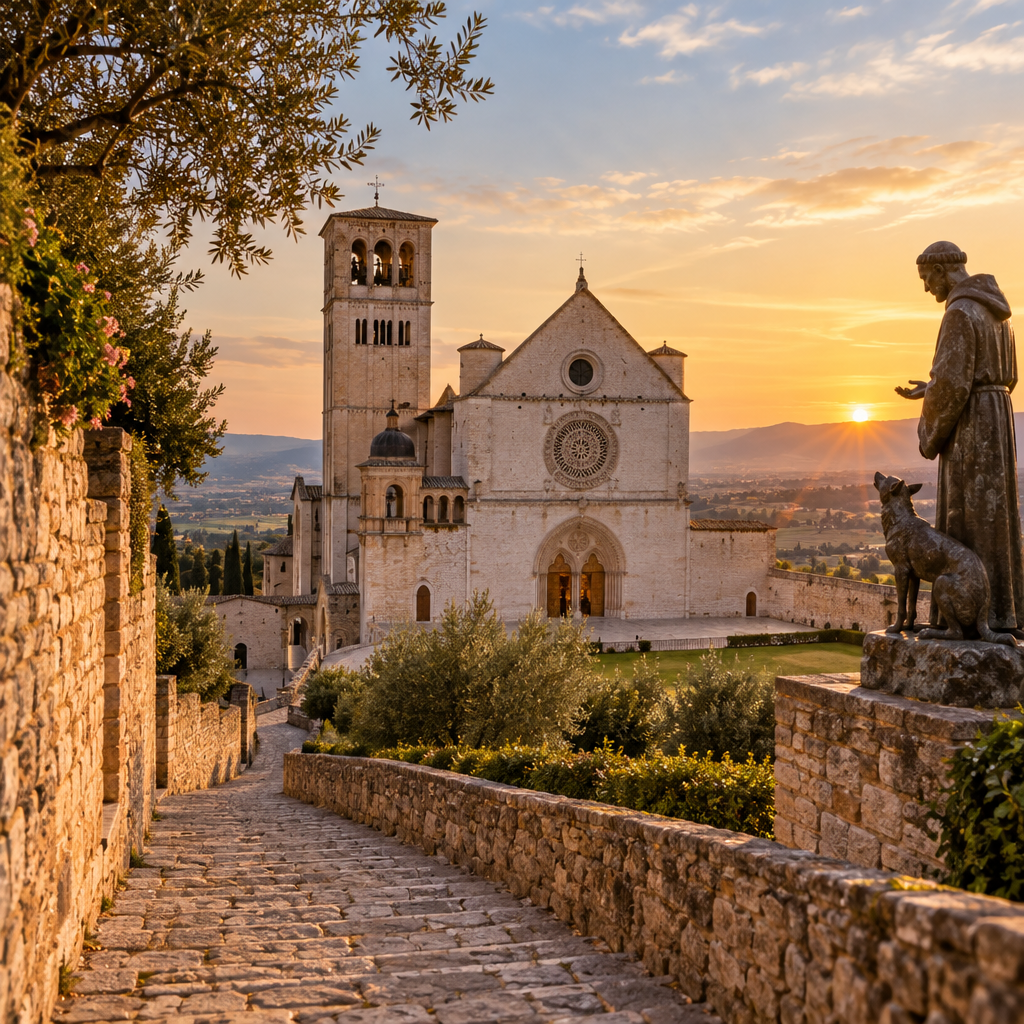
A Pilgrim’s Guide to Walsingham: Walking England’s Holy Mile
Discover Walsingham’s sacred history, its Catholic and Anglican shrines, and practical advice for a prayerful Norfolk pilgrimage.
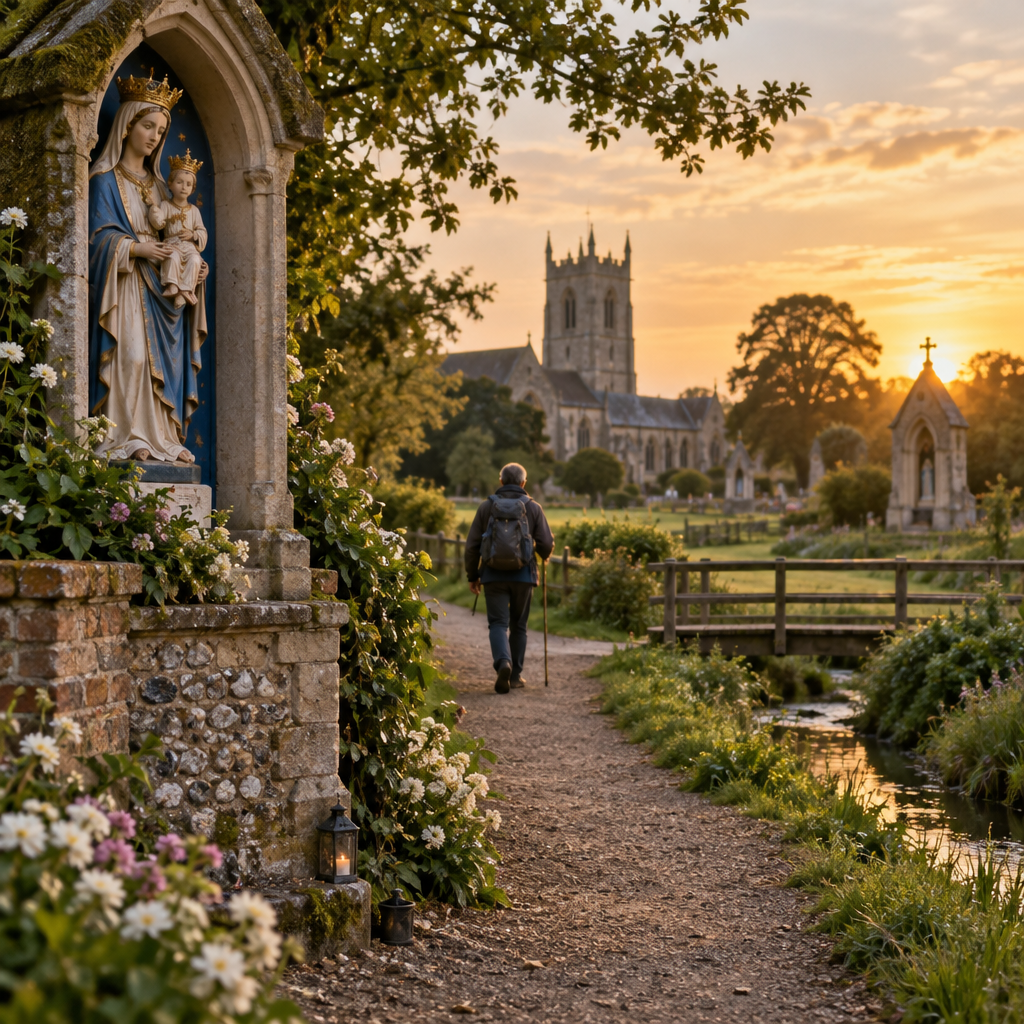
A quiet Norfolk lane can become a place of encounter. At Walsingham, the journey between a village and a small medieval chapel invites pilgrims to slow down, entrust their burdens to God, and consider Mary’s willingness to welcome Christ.
For Monday, 26 October 2026, this guide offers a pilgrimage close to home for many British readers, yet rich in the sense of stepping beyond ordinary routines. You need not arrive with perfect faith or carefully composed prayers. A willing heart is enough to begin.
Why Walsingham became a place of pilgrimage
According to tradition, in 1061 a noblewoman named Richeldis de Faverches received a vision of the Virgin Mary, who showed her the house at Nazareth where the Annunciation took place. Richeldis was asked to build a replica in Walsingham.
The resulting Holy House became one of medieval England’s great pilgrimage destinations. Kings and ordinary travellers came to honour Our Lady of Walsingham and contemplate the mystery of the Incarnation: God’s Son taking flesh and dwelling among us.
An Augustinian priory grew around the shrine. In 1538, during the English Reformation, the priory was dissolved and the shrine destroyed.
Pilgrimage returned in later centuries. Catholic devotion found a renewed home at the Slipper Chapel, while the Anglican shrine developed in the village. Walsingham now holds both the joy of renewed prayer and the sorrow of Christian division. It is a fitting place to pray for unity without pretending that differences do not matter.
Begin at the Catholic shrine
The Catholic National Shrine of Our Lady is centred on the Slipper Chapel at Houghton St Giles, roughly a mile from Little Walsingham.
This small, fourteenth-century chapel survived the destruction of the original shrine, though it spent centuries in secular use before its restoration to Catholic worship. Traditionally, pilgrims removed their shoes here before completing the final mile to the Holy House.
Inside, allow time for silence before the image of Our Lady of Walsingham. Catholic devotion to Mary always leads towards her Son: we ask for her prayers, while worship belongs to God alone.
The shrine grounds also include the larger Chapel of Reconciliation. Consult the current programme for Mass, Confession and other services; do not assume that every devotion is offered daily. If you are not Catholic, you are warmly welcome to attend Mass and remain in prayer during Holy Communion.
Walk the Holy Mile
The traditional Holy Mile links the Slipper Chapel with the village. You can make the journey in either direction, depending on your transport and the services you hope to attend.
Walk gently rather than treating it as a distance to conquer. You might pray a decade of the Rosary, carry a particular intention, or reflect on Mary’s response to God in Luke 1:26–38.
For an October pilgrimage, sturdy shoes are wiser than attempting the historic barefoot custom. Follow current local route guidance and take care wherever the walk meets traffic. Mud, wet leaves and uneven ground can make a short distance more demanding than expected.
If walking is not possible, travelling between the sites by vehicle does not make your pilgrimage less meaningful. The essential journey is towards Christ.
Explore the village and its sacred places
At the Anglican Shrine of Our Lady of Walsingham, visit the Holy House within the shrine church. The present Holy House dates from 1931 and expresses the renewed devotion that helped bring pilgrimage back to the village.
Catholic visitors can enter respectfully, give thanks for the faith of fellow Christians, and pray for the unity Christ desires for his followers.
Walsingham Abbey Grounds contain remains of the medieval priory, including its striking surviving arch. Despite the familiar name “Abbey”, the religious community here was a priory. Check seasonal opening arrangements and admission charges before planning a visit.
Leave room simply to wander the village. Its historic buildings help make the past tangible, but a pilgrimage need not become a checklist of sights.
Getting there and choosing your time
Walsingham is in rural north Norfolk. By car, plan separately for the Catholic shrine and the village, checking current parking arrangements at each.
For public transport, King’s Lynn is a useful rail gateway, with onward bus journeys towards Fakenham and Walsingham requiring careful planning. Verify connections and the last return service before travelling; a pre-booked taxi may be helpful for part of the journey.
Spring and early autumn often offer a comfortable balance of daylight and walking weather. Late October can be peaceful, but daylight is shorter and conditions changeable. Major pilgrimage events are inspiring, though accommodation and transport may need booking well ahead.
What to bring—and what to leave behind
Pack waterproof clothing, comfortable footwear, drinking water, any medication, and a small torch. Download directions before setting out, and check accessibility directly with each site if you have mobility or sensory needs.
Bring a Rosary or notebook if either helps you pray. Leave space in the day for lunch, rest and unhurried silence.
Above all, leave behind the pressure to feel something extraordinary. God may meet you through a quiet chapel, a tired footstep, or the simple courage to begin again.