Shrine of the Week: Basilica of Saint Francis, Assisi
Walk in the footsteps of Saint Francis in Assisi, with a guide to his basilica, its history, sacred art and practical pilgrimage tips.
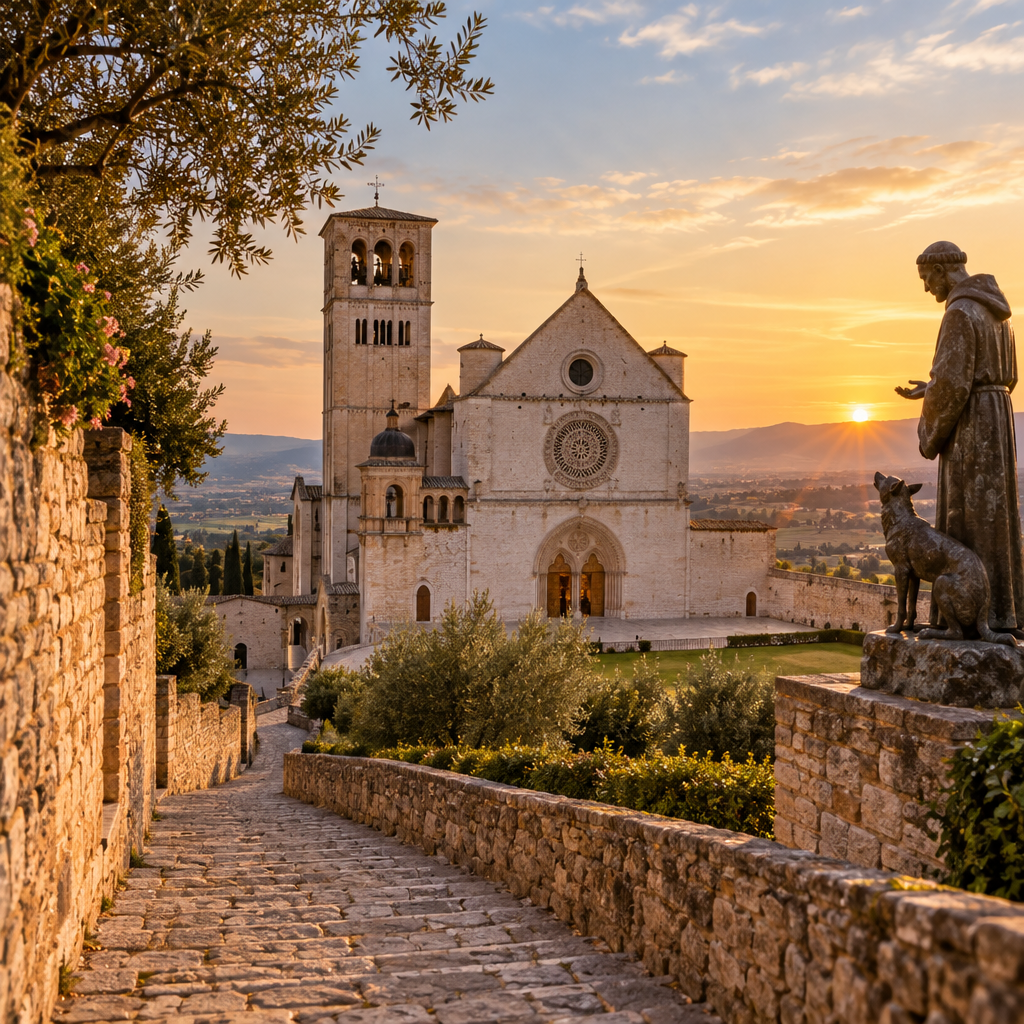
The hillside town of Assisi invites us to slow down. Above the Umbrian plain, its pale stone streets lead towards a place where beauty and simplicity meet: the Basilica of Saint Francis. Here, pilgrims come not only to admire extraordinary art, but to pray beside the tomb of a man who sought to follow Jesus with an undivided heart.
For our pilgrimage this Saturday, 24 October 2026, we turn towards this beloved Catholic holy place, where Francis’s witness still asks a searching question: what would it mean to live the Gospel more freely?
A church built around a Gospel life
Francis died in 1226 and was canonised by Pope Gregory IX in 1228. Construction of the basilica began that same year. His remains were brought there in 1230, and Pope Innocent IV consecrated the basilica in 1253.
The complex has two principal churches, one above the other, with the saint’s tomb beneath the lower church. Its grandeur may initially seem surprising beside Francis’s love of poverty. Yet it grew as a place of worship and a testimony to the Gospel life that had touched so many people through him.
Francis’s burial place was rediscovered in 1818 after centuries during which its precise location had been concealed. Today, pilgrims can descend to the tomb and linger in prayer.
Assisi is not a shrine centred on an apparition. Its heart is the enduring witness of a saint: conversion, love for Christ, care for the poor and reverence for God’s creation.
What to see inside the basilica
Begin in the Lower Church, where low vaults and richly painted chapels create an atmosphere of recollection. Allow your eyes time to adjust, and resist the temptation to hurry from one artwork to another.
The frescoes include works by major medieval painters such as Cimabue, Simone Martini and Pietro Lorenzetti. Together, they offer more than a history of art: they draw the visitor into the lives of Christ, Our Lady and the saints.
Below lies the tomb of Saint Francis. This is the spiritual centre of the visit. You need no elaborate words here. Bring a particular burden, a person you love, or a desire to begin again. Sit quietly if space and visiting arrangements allow.
The Upper Church feels strikingly different: taller, brighter and filled with colour. Its famous cycle of scenes from Francis’s life is traditionally attributed to Giotto and his workshop, though the attribution remains debated by scholars. Look for the ways these paintings connect everyday human encounters with the call of God.
Remember that both churches remain places of worship. Give priority to prayer and any services taking place.
Extend your pilgrimage through Assisi
If you have a full day, continue to the Basilica of Saint Clare, where the original San Damiano crucifix is kept. According to the early accounts of Francis’s life, Christ spoke to him through this crucifix, calling him to repair his Church.
San Damiano itself lies downhill from the town. It became closely associated with Saint Clare and her community, and offers a quieter setting for reflection.
Below Assisi, the Basilica of Santa Maria degli Angeli shelters the Porziuncola, the little chapel closely connected with the beginnings of the Franciscan movement. Visiting it helps place the great basilica in perspective: Francis’s story is rooted in small beginnings, prayer and surrender.
Do not feel obliged to fit everything into one day. One unhurried hour can be more fruitful than a crowded itinerary.
Getting there and choosing your time
Assisi railway station is in Santa Maria degli Angeli, below the historic town, rather than beside the basilica. Local buses and taxis connect the station with Assisi. Check current timetables before travelling, especially for your return journey.
If driving, use designated parking outside the historic centre and follow local restrictions. The town has steep streets, steps and uneven paving. Visitors with limited mobility should contact the basilica beforehand about suitable entrances and access arrangements.
Spring and autumn generally offer comfortable walking weather. Late October can be quieter than the busiest summer months, but rain and cool evenings are possible. Weekdays and earlier visits often allow more space for recollection, although services and organised pilgrimages affect visitor numbers.
Before departure, consult the basilica’s official information for current opening times, Masses, confession, guided visits and any access restrictions.
What to bring—and what to leave behind
Wear comfortable shoes and clothing suitable for a church, with shoulders and knees covered. Bring water, a light waterproof layer and a small prayer book or notebook. Follow posted rules on photography, bags and silence.
Leave room in the day for rest, too. Pilgrimage is not an endurance test.
Above all, bring a willingness to listen. Francis’s example points beyond himself to Jesus: towards reconciliation, generosity and the quiet courage of a changed life. May your steps through Assisi become a small beginning in that direction.