A Pilgrim’s Guide to Lourdes: Bringing Our Burdens to Mary
Discover Lourdes: its Catholic history, places to pray, and practical advice for a gentle pilgrimage to the foothills of the Pyrenees.
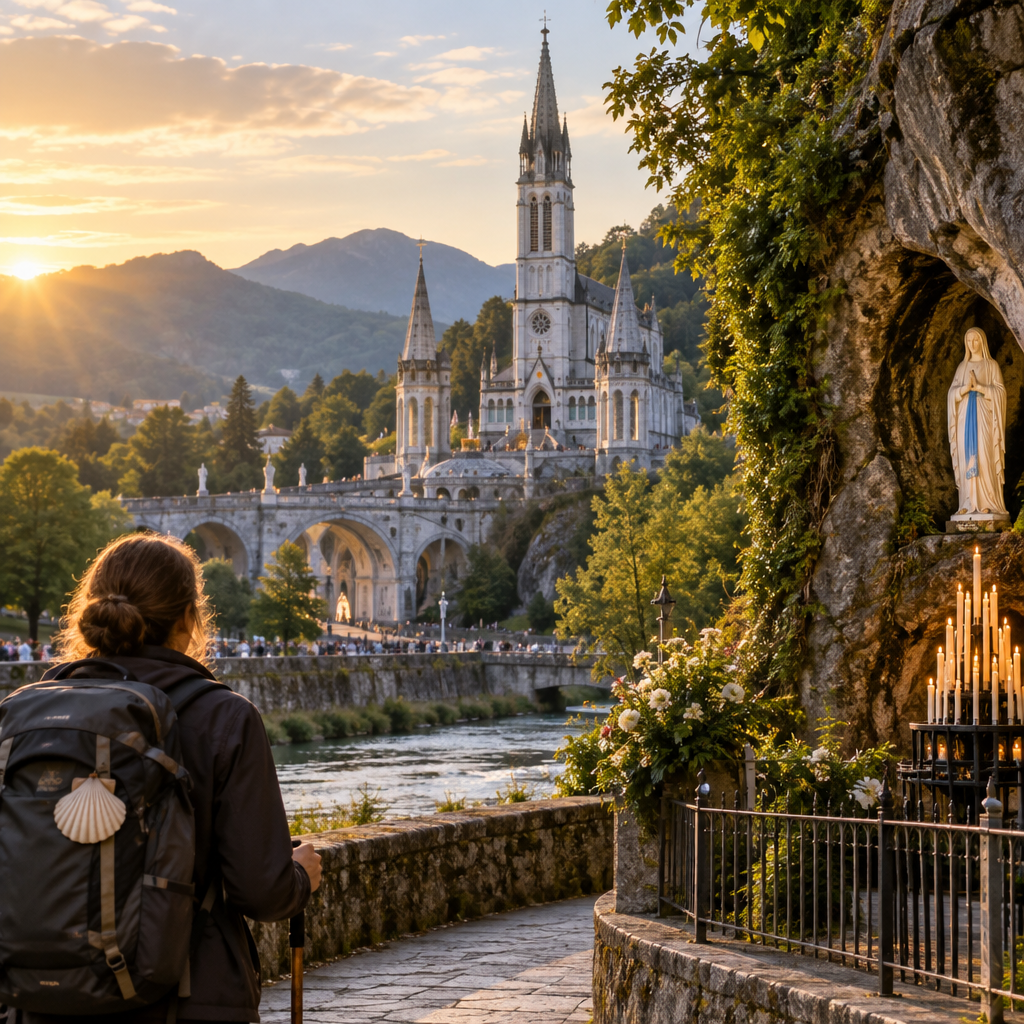
Some journeys begin with a prayer we cannot quite put into words. At Lourdes, in the foothills of the French Pyrenees, pilgrims arrive carrying illness, gratitude, grief and hope. Here, the sick are not pushed to the edges: their presence helps shape the life of the sanctuary.
For this Tuesday, 20 October 2026, our pilgrimage guide leads to a place where Mary’s invitation is simple: turn towards her Son, pray, and make room for one another.
The story of Lourdes
In 1858, fourteen-year-old Bernadette Soubirous reported eighteen apparitions of a lady at the Grotto of Massabielle, beside the River Gave de Pau. Bernadette came from a poor local family and was gathering firewood when the first apparition occurred on 11 February.
During the apparitions, Bernadette was directed to drink and wash at a spring, and the lady asked for a chapel and for people to come in procession. On 25 March, she identified herself as the Immaculate Conception.
The local bishop recognised the apparitions as worthy of belief in 1862. Bernadette later entered religious life at Nevers, where she died in 1879. She was canonised in 1933.
Catholics understand approved apparitions as private revelations: they do not add to the Gospel or replace the sacraments. Lourdes matters because it draws people towards Christ through prayer, repentance and loving service.
Begin at the Grotto
The Grotto of Massabielle is the heart of the pilgrimage. The rock face, the statue of Our Lady and the quiet movement of pilgrims offer a striking contrast to the busy streets outside the sanctuary.
Allow time simply to sit or stand in silence. You do not need an elaborate prayer. Bring before God the person or burden that prompted your journey.
Follow the stewards’ directions when approaching the rock or joining a queue. Masses and other organised prayers affect access, so a little flexibility will make your visit more peaceful.
Churches, candles and the story of Bernadette
Above the grotto stands the Basilica of the Immaculate Conception. Below it, the Basilica of Our Lady of the Rosary is especially known for its mosaics depicting the mysteries of the Rosary. The vast underground Basilica of St Pius X serves large gatherings and offers a different experience of communal worship.
When scheduled, the evening Marian torchlight procession is a particularly moving part of Lourdes. Pilgrims pray in different languages, yet walk together with one intention: to place their lives before God. Check the sanctuary’s published programme for your visit rather than assuming a particular time.
In the town, visit the Boly Mill, Bernadette’s birthplace, and the Cachot, the cramped former prison room where her family lived at the time of the apparitions. These places help keep her story grounded in real poverty and ordinary family life. Check their opening hours separately.
Water, healing and hope
Water from the spring is closely associated with Lourdes. Pilgrims may drink it or take some home, following the signs and guidance at the designated taps.
The water is not magic, and a visit cannot promise physical healing. The Church examines claims of miraculous cures carefully; Lourdes also bears witness to quieter graces, including reconciliation, courage and renewed trust.
Arrangements at the baths, including the opportunity for a water gesture, can change. Ask the sanctuary directly about the current practice and accessibility. Whatever is available, remember that God’s mercy is not dependent on completing a particular devotional action.
Getting there and choosing your time
Lourdes has a railway station with connections through the French rail network. Tarbes–Lourdes–Pyrénées Airport is the nearest airport; onward transport options and flight routes should be checked before booking. From the station, the sanctuary is reachable on foot for many visitors, though luggage, hills and mobility needs may make a taxi preferable.
Spring and autumn often offer a gentler pace than peak summer, although major pilgrimage groups can still make the town busy. October weather can be cool and wet. Winter can be quieter, but accommodation, transport and sanctuary activities may be more limited.
For an October 2026 visit, confirm service times, procession arrangements and any accessibility requirements through the sanctuary’s official website shortly before travelling. If you need personal care or medical support, arrange this in advance; do not assume it will be available on arrival.
What to bring—and what to leave behind
Pack comfortable shoes, a waterproof coat, layers, necessary medicines and a reusable water bottle. A small prayer book or rosary may help, but neither is essential. Bring a suitable container if you hope to take spring water home, and observe airline liquid restrictions.
Leave space in your itinerary. A pilgrimage need not become a checklist of churches and devotions. One unhurried Mass, a quiet visit to the grotto and a small act of kindness may be enough for a meaningful day.
What burden—or thanksgiving—would you bring to Christ at Lourdes?