A Pilgrim’s Guide to Ávila: Walking with St Teresa of Jesus
Explore St Teresa’s Ávila: its Carmelite history, places of prayer and practical advice for a pilgrimage to this walled Spanish city.
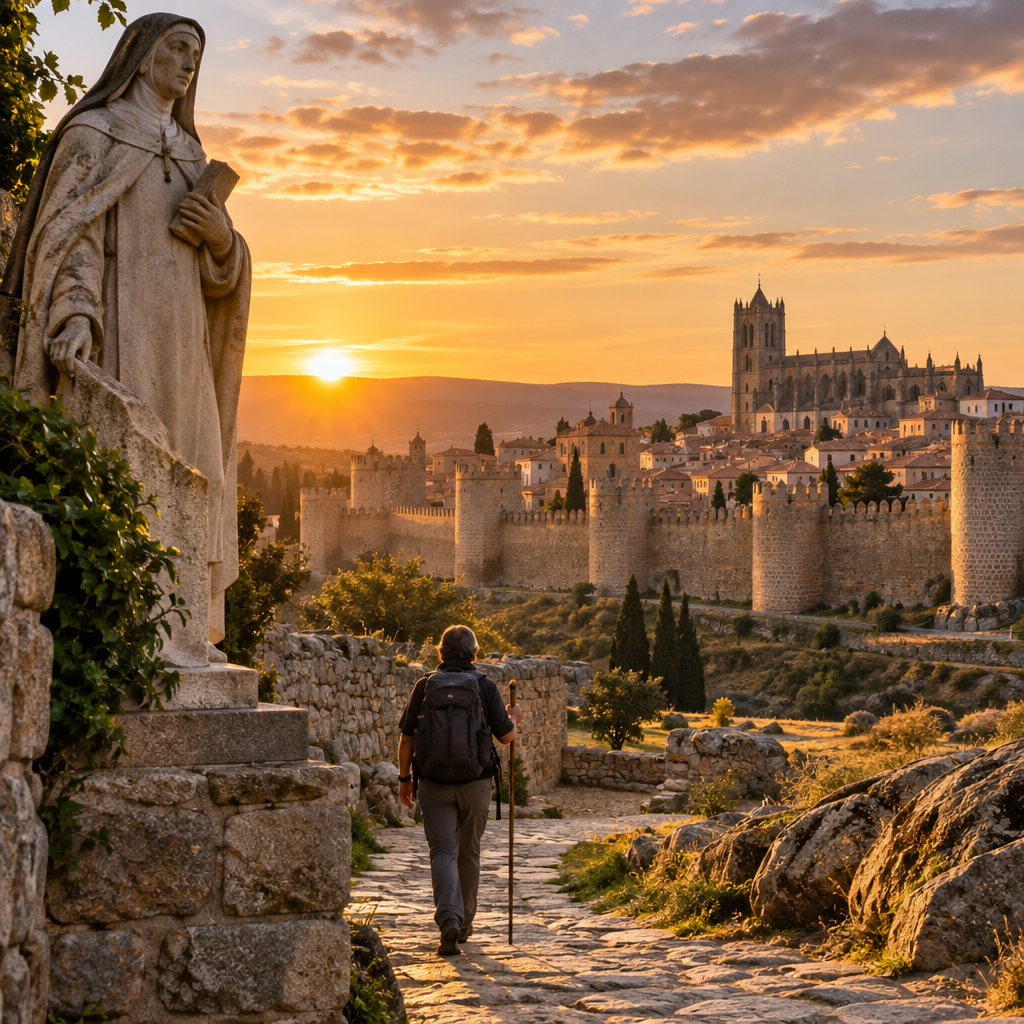
Stone walls encircle Ávila, but the invitation at its heart is inward: to make room for God. In this high, windswept city in central Spain, St Teresa of Jesus learned that prayer was not reserved for unusually gifted souls. It was a relationship with Christ, sustained through ordinary faithfulness.
On Sunday, 1 November 2026, the Solemnity of All Saints offers a fitting starting point for this pilgrimage. Teresa’s life reminds us that holiness does not require a flawless temperament or an easy path, but a willingness to let God lead.
Why Ávila matters
Teresa was born in 1515 and entered the Carmelite Monastery of the Incarnation in Ávila as a young woman. Her religious life included illness, inner struggles and a deepening commitment to prayer.
In 1562, she founded the Convent of St Joseph in the city, beginning her reform of Carmelite life. She sought small communities marked by poverty, recollection and friendship with Christ. Working alongside St John of the Cross, she helped establish the reform from which the Discalced Carmelites developed.
Her writings, especially The Life, The Way of Perfection and The Interior Castle, continue to guide Christians in prayer. In 1970, Pope Paul VI declared her a Doctor of the Church, recognising the enduring importance of her teaching.
Ávila is therefore more than a backdrop to a famous saint. It is a place to consider how daily life might become more attentive to God.
Begin at the Monastery of the Incarnation
Outside the city walls, the Monastery of the Incarnation is essential to understanding Teresa. She lived here for many years before founding St Joseph’s, and later returned as prioress.
The monastery’s museum introduces visitors to her life and to the Carmelite community in which her vocation matured. Check current visiting arrangements before setting out: a working religious house cannot always accommodate visitors like an ordinary museum.
Give yourself time for silence as well as exhibits. Teresa’s story challenges the notion that spiritual growth should be swift. Much of it happens slowly, through renewed beginnings.
Visit St Joseph’s and Teresa’s birthplace
The Convent of St Joseph, often called San José, stands outside the eastern side of the walls. Founded in 1562, it was Teresa’s first reformed convent. Its significance lies not in grandeur but in the kind of life she hoped to nurture: prayerful, simple and centred on Christ.
Respect the enclosure of the community. Visit only areas open to the public, and confirm church or museum access locally.
Within the old city, the church and convent of Santa Teresa occupy the site of her family home. The present complex was built after her death. Its church and associated visitor spaces offer another opportunity to reflect on the beginnings of a vocation that eventually reached far beyond Spain.
One important distinction: Teresa’s tomb is not in Ávila. It is in Alba de Tormes, a separate pilgrimage destination near Salamanca.
Pray in the cathedral and walk the walls
Ávila’s Cathedral of Christ the Saviour has a striking fortress-like appearance, with its apse incorporated into the city’s defences. Its architecture helps explain the close relationship between the medieval city and its walls.
If possible, attend Mass rather than treating the cathedral solely as a monument. Check worship times separately from tourist opening hours, and allow services to take priority over sightseeing.
A walk along an accessible section of the walls gives a memorable view of the city and the surrounding landscape. Steps and uneven surfaces mean the full experience will not suit everyone; ask about suitable access points before buying tickets.
Getting there and planning your visit
Ávila has rail connections with Madrid, and the journey commonly takes around an hour and a half to two hours, depending on the service. Check the departure station and current timetable when booking. From Ávila’s station, allow roughly twenty minutes to walk towards the old city, or take a taxi.
An overnight stay makes a gentler pilgrimage than a hurried day trip. It leaves room for Mass, unplanned prayer and a quiet evening walk.
Spring and early autumn usually offer more comfortable walking conditions. Summers can be hot, while winters are cold. Ávila’s elevation means November can feel especially sharp, particularly in the wind.
All Saints’ Day is a public holiday in Spain. For a visit on 1 November, confirm transport, accommodation and individual opening arrangements in advance.
What to bring—and what to leave space for
Bring supportive shoes, warm layers, a waterproof jacket, water and sun protection. A small notebook and a short passage from Teresa’s writings can be more useful than an overfilled itinerary.
Dress respectfully for churches, silence your phone and ask before photographing interiors.
Most of all, leave room to stop. You need not arrive knowing how to pray well. Begin by placing yourself before Christ, honestly and without hurry. Let this pilgrimage be an invitation to carry that friendship home.