A Pilgrim’s Guide to Monte Cassino: St Benedict, Prayer and Hope
Discover Monte Cassino’s Benedictine heritage, places of prayer and practical advice for a pilgrimage rooted in peace and resurrection hope.
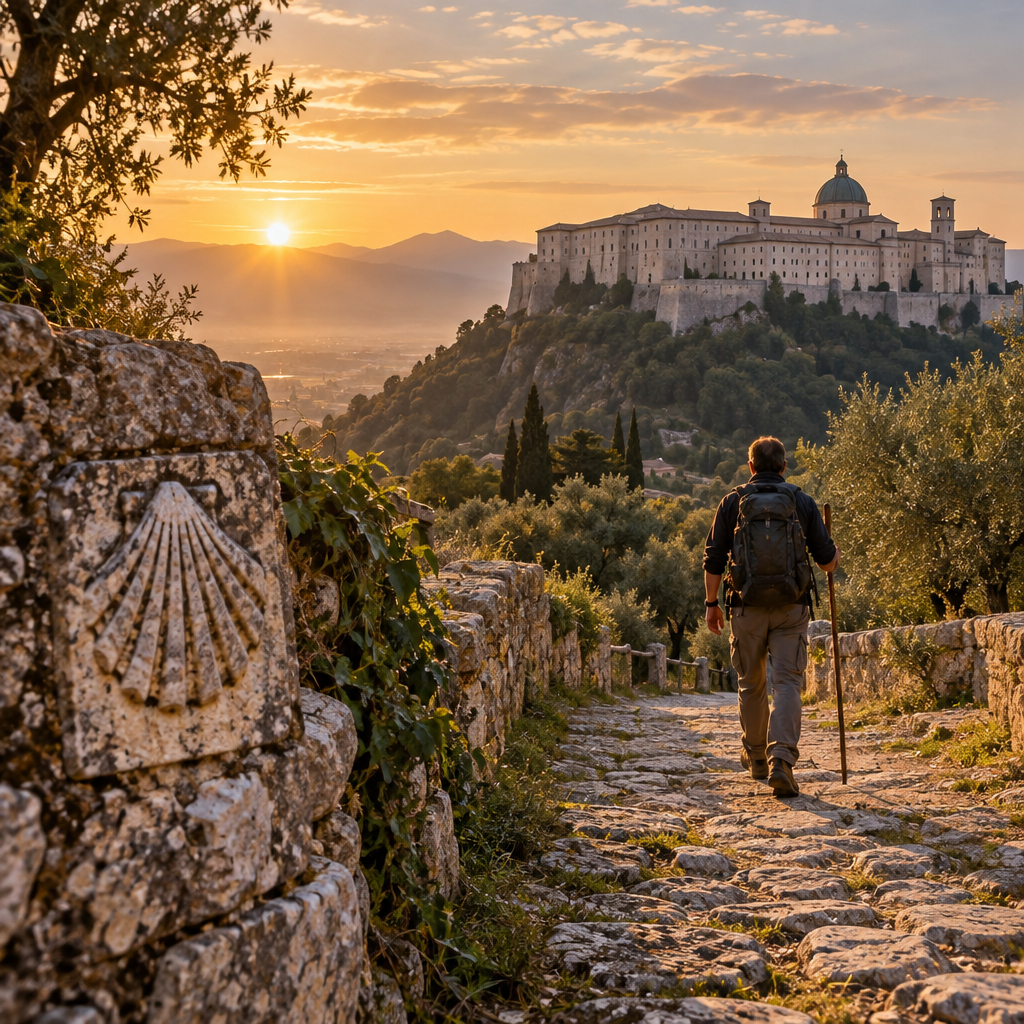
Some places teach hope not by escaping sorrow, but by bearing its scars. High above the Italian town of Cassino, the Abbey of Monte Cassino offers pilgrims a place to contemplate prayer, destruction and the patient work of beginning again.
For Monday, 2 November 2026, All Souls’ Day, this is a particularly fitting pilgrimage. Here, the memory of St Benedict meets the grief of war, inviting us to pray for the departed and entrust them to God’s mercy.
A monastery built around seeking God
Tradition dates St Benedict’s foundation at Monte Cassino to around 529. Having lived at Subiaco, he established a community on this hilltop, where an ancient pagan sanctuary had stood.
His Rule shaped a way of life centred on prayer, work, hospitality and attentive listening. Its influence spread far beyond this mountain, helping to form Western monastic life for centuries. For a visitor, that inheritance is more than history: it offers a gentle challenge to make room for God amid ordinary responsibilities.
The abbey has suffered repeated destruction. Its most widely remembered devastation came on 15 February 1944, when Allied bombing destroyed much of the monastery during the fighting around Cassino. Civilians sheltering there were among those killed.
Rebuilt after the war, the abbey church was consecrated by Pope St Paul VI in 1964. What pilgrims encounter today is therefore both a restored monastery and a witness to renewal after profound loss.
What to see and where to pray
Begin with the cloisters. Their ordered spaces, open sky and views across the surrounding countryside help mark the transition from sightseeing to pilgrimage. Walk slowly, allowing a few minutes without photographs or conversation.
The basilica is the heart of the visit. Its richly decorated interior may surprise anyone expecting Benedictine simplicity, but its purpose remains worship. If a service is taking place, let prayer take precedence over exploring.
The tomb beneath the high altar is traditionally venerated as the burial place of St Benedict and his sister, St Scholastica. Their memory invites prayer for families, religious communities and all who are learning to love God faithfully in daily life.
The crypt’s mosaics and decoration offer another place for quiet attention. Access to individual areas may vary, so follow the arrangements in place during your visit.
If open, the abbey museum gives further context through sacred art and objects connected with the monastery’s history. Check admission arrangements separately rather than assuming every area is included in general access.
Remembering those who died
Near the abbey, the Polish war cemetery commemorates soldiers who died in the Battle of Monte Cassino. Down in the town, Cassino War Cemetery holds Commonwealth war graves. Either can form a sober, prayerful extension to the pilgrimage.
On All Souls’ Day, Catholics pray especially for the faithful departed, asking God to purify them and bring them into the fullness of his presence. This is not an attempt to explain away grief. It is an act of trust in Christ, whose death and resurrection are the foundation of our hope.
You might carry a small list of names and pause to pray for each person. Remember, too, those whose graves receive no visitors and whose names are no longer spoken at home.
Getting there
Cassino lies on the railway route between Rome and Naples. Services and journey times vary; check current timetables before travelling, especially if making a day trip.
From Cassino station, the abbey requires a separate journey uphill. A pre-booked taxi is a straightforward option. Confirm the return journey in advance rather than relying on finding a vehicle at the summit. Check locally for any current public transport service to the abbey.
Drivers approach by a winding mountain road. Allow extra time and check parking arrangements. Walking up is physically demanding: research a recognised route, assess the weather and daylight, and do not assume the road provides a comfortable pedestrian approach.
Best time and what to bring
Spring and autumn generally offer gentler temperatures than high summer. In November, expect changeable weather, potentially cold conditions on the hill and limited daylight. Mist can obscure the views, while rain can make outdoor surfaces slippery.
Bring comfortable shoes with grip, a waterproof layer, drinking water and any necessary medication. Dress respectfully for the church. A small prayer book or notebook can help keep the visit centred on prayer rather than a checklist.
Before setting out, consult the abbey’s official visitor information for opening hours, Mass times, access restrictions and museum arrangements. If you need step-free access, ask specifically about the areas you hope to visit.
Take something home besides photographs
You need not adopt a monastic timetable to learn from St Benedict. Begin with one manageable practice: a few minutes of morning prayer, a task completed with care, or a welcome offered without hurry.
Monte Cassino reminds us that ruins need not have the final word. Carry home that hope, and let it become a prayer for the living and the dead.