A Pilgrimage to Walsingham: Walking England’s Holy Mile
Discover Walsingham’s history, sacred places and Holy Mile, with practical advice for a prayerful pilgrimage to Norfolk.
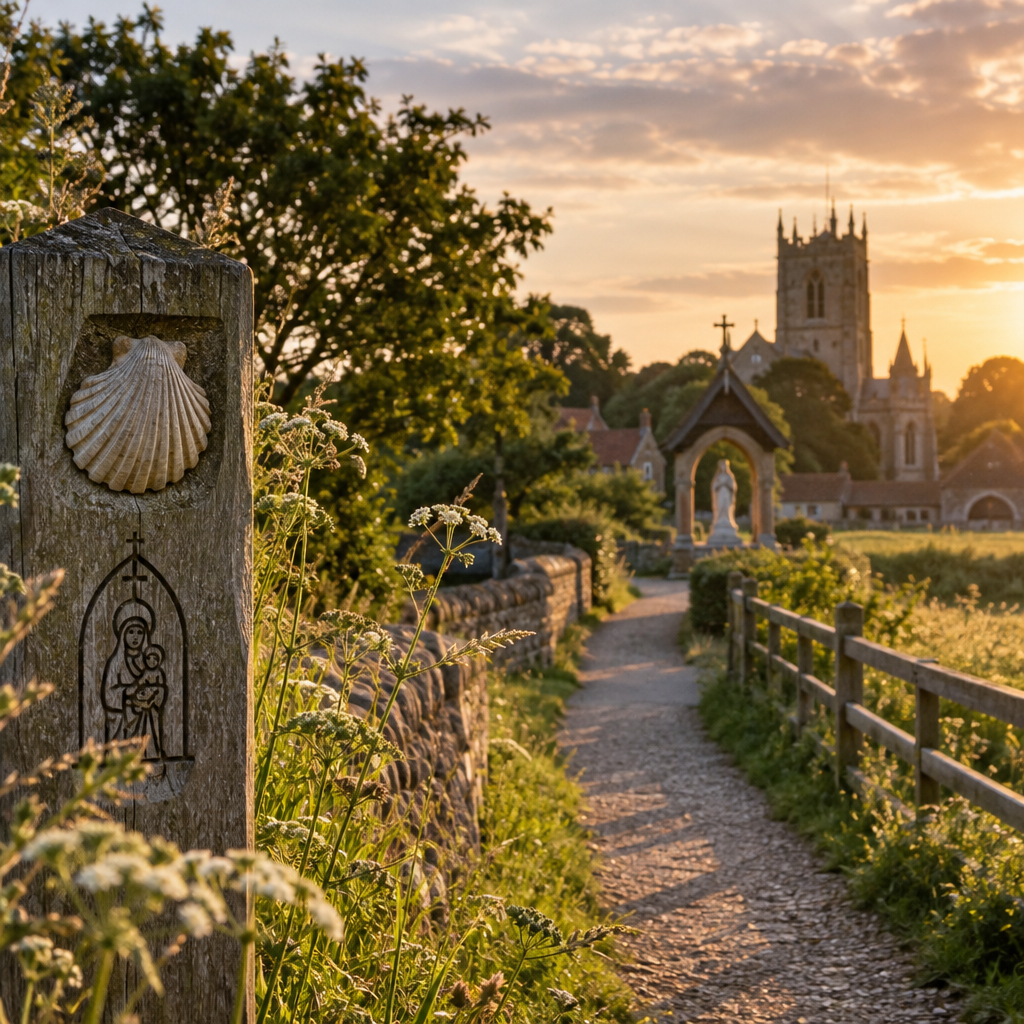
Some pilgrimages begin not with a mountain to climb, but with a quiet invitation to make room for God. At Walsingham, in the Norfolk countryside, that invitation takes the shape of a home: Nazareth, where Mary welcomed the Word made flesh.
For this Monday, 19 October 2026, our pilgrimage guide leads to one of England’s best-loved Marian destinations. Whether you arrive with a parish group, a companion or questions you cannot yet put into words, Walsingham offers space to walk, pray and listen.
Why Walsingham matters
Tradition holds that in 1061, an English noblewoman, Richeldis de Faverches, received a vision in which Our Lady showed her the house at Nazareth where the Annunciation took place. Richeldis was asked to build a replica in Walsingham.
The Holy House became the heart of a major medieval pilgrimage centre. An Augustinian priory grew around it, and pilgrims ranging from ordinary travellers to English monarchs came to honour Our Lady and seek her prayers.
In 1538, during the suppression of the monasteries under Henry VIII, the priory was dissolved and the shrine destroyed. Yet Walsingham’s story did not end there. Pilgrimage gradually revived, and both Catholic and Anglican communities established places of worship that now welcome visitors throughout the year.
For Catholics, devotion to Mary always leads towards Jesus. Walsingham’s deepest invitation is to contemplate the Incarnation: God entering our ordinary human life, and Mary receiving him with faith (Luke 1:26–38).
Begin at the Catholic shrine
The Catholic National Shrine of Our Lady is at Houghton St Giles, roughly a mile from Little Walsingham. Its historic heart is the Slipper Chapel, a small fourteenth-century building that once stood on the pilgrims’ approach to the medieval shrine.
Traditionally, pilgrims removed their shoes here before walking the final stretch barefoot. There is no need to imitate that practice today: sturdy footwear and a willing heart are quite enough.
After centuries of other uses, the chapel was restored to Catholic worship. It became the focus of the Catholic national shrine in 1934.
Make time to pray quietly in the Slipper Chapel, before the image of Our Lady of Walsingham. The larger Chapel of Reconciliation accommodates major liturgies and pilgrimage groups. Check the shrine’s current programme for Mass, confession and other services rather than assuming a particular timetable.
You need not arrive with an elaborate prayer. Simply bringing the names of those you love can be a good beginning.
Walk the Holy Mile
The route between the Catholic shrine and Little Walsingham is commonly called the Holy Mile. Walking it links today’s pilgrimage with the approach taken by generations of earlier visitors.
Allow around 30–45 minutes at a gentle pace, longer if you pause to pray. Follow locally signed pedestrian routes, remain attentive near roads and check conditions before setting out. If walking is difficult, travelling between the sites by vehicle is entirely appropriate.
You might pray a decade of the Rosary, reflect on Mary’s trust or spend part of the journey in silence. Pilgrimage is not a test of endurance. It is a way of offering our movement—and our limitations—to God.
Explore the village and its sacred places
In Little Walsingham, the grounds known as Walsingham Abbey contain the remains of the medieval priory. The surviving great east window arch gives a striking sense of the church that once stood here. The grounds also preserve the location associated with the original Holy House. Admission arrangements and seasonal access should be checked before visiting.
The Anglican Shrine of Our Lady of Walsingham contains a twentieth-century Holy House and a richly devotional shrine church. Catholic visitors can appreciate its prayerful atmosphere while recognising that it is a distinct Anglican place of worship.
Leave time simply to walk through the village. Its historic buildings and quiet corners reward an unhurried visit; not every moment needs to become another stop on an itinerary.
Getting there and planning your visit
Walsingham lies inland from the north Norfolk coast. Driving is often the simplest option; check parking information separately for the Catholic shrine and the village.
For public transport, Norwich and King’s Lynn are useful rail gateways. Onward travel requires local buses, taxis or a combination of both. Check current connections carefully, especially the final return journey. Do not confuse the seasonal Wells–Walsingham light railway with a mainline rail connection.
Spring and early autumn often suit walking, while major pilgrimage days offer a stronger sense of shared celebration but larger crowds. An October visit can be peaceful, though daylight is shorter and Norfolk weather changeable.
Bring waterproof clothing, comfortable shoes, drinking water, any necessary medication and a small prayer book or rosary if helpful. Check accessibility, accommodation and opening times directly with the places you intend to visit.
Carry Nazareth home
Walsingham points beyond itself, towards a home made ready for Christ. Before leaving, consider one small way to welcome him more generously: a daily moment of prayer, a patient conversation or a practical kindness.
May your pilgrimage continue in the ordinary places where God has already called you to love.