Walking the Via Francigena: A Pilgrim’s Guide to the Final Stretch into Rome
Discover the Via Francigena’s history, sacred places and practical essentials for walking the final stretch through Lazio into Rome.
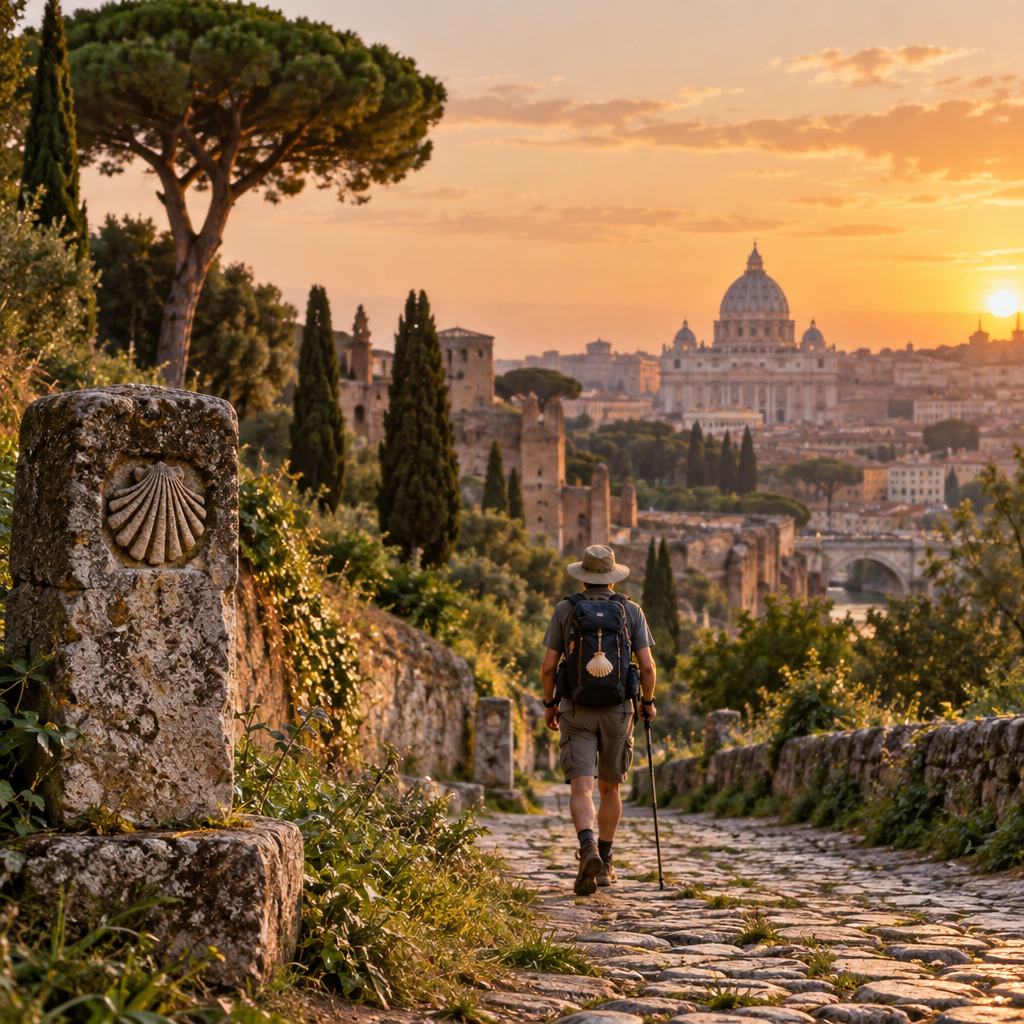
An ancient road towards the Apostles
The Via Francigena connects Canterbury with Rome through England, France, Switzerland and Italy. Across roughly 2,000 kilometres, its paths invite pilgrims into a slower rhythm: walking, praying, receiving hospitality and learning to trust the next step.
Its best-known early witness is Sigeric, Archbishop of Canterbury. In 990, he travelled to Rome to receive the pallium, a woollen vestment associated with his pastoral office. The record of his return journey names 79 stopping places between Rome and the Channel coast. That itinerary helped shape the revival of the route today, although modern paths do not follow every medieval footstep.
For Christians, Rome offers more than a finish line. It is a place of pilgrimage to the tombs of Saints Peter and Paul, witnesses whose lives point beyond themselves to Christ.
Where do the final 100 kilometres begin?
Montefiascone, a hill town overlooking Lake Bolsena, is commonly promoted as the starting point for the “last 100 kilometres”. Take that phrase as a pilgrimage shorthand rather than a precise distance: following the marked walking route to St Peter’s can mean approximately 120–140 kilometres, depending on variants and accommodation.
Viterbo is another practical starting point, with a shorter approach to Rome. If receiving the Testimonium, the certificate recognising the pilgrimage, matters to you, check the current qualifying distance and collection arrangements before booking. Walking pilgrims generally need to document at least the final 100 kilometres.
Allow six or seven walking days from Montefiascone, with extra time for Rome. Consult current stage maps rather than relying on town-to-town road distances.
A gentle outline of the journey
Montefiascone to Viterbo: Begin at Montefiascone’s Cathedral of Santa Margherita, whose great dome rises above the town. The Church of San Flaviano is another remarkable stop. The route towards Viterbo includes stretches associated with the ancient Via Cassia and opens onto the countryside of northern Lazio.
Viterbo to Vetralla: Make time for Viterbo’s medieval San Pellegrino quarter and the Palace of the Popes. Viterbo hosted several popes during the thirteenth century. Beyond the city, the pilgrimage returns to rural tracks and quieter landscapes.
Vetralla to Sutri: Woodland and agricultural country lead towards Sutri. Its Roman amphitheatre, cut into volcanic tuff, is a striking place to pause. The rock-cut Church of the Madonna del Parto is also worth visiting when open; check access locally.
Sutri to Campagnano di Roma: This can be a demanding day. Depending on the chosen route, Monterosi and the Monte Gelato waterfalls offer points of interest. Check the current alignment and consider splitting the stage if suitable accommodation is available.
Campagnano to La Storta: The route passes through landscapes associated with the Veio Regional Park and through Formello. At La Storta, a chapel recalls the vision experienced by St Ignatius of Loyola in 1537, a significant moment in his understanding of his mission.
La Storta to Rome: The final approach combines green spaces with suburban and city walking. Monte Mario can offer a memorable view towards St Peter’s dome. Follow current directions carefully: access through parks and urban sections can change.
Arriving at St Peter’s
Allow time to arrive without rushing. Entering St Peter’s Square after days on foot can bring joy, relief or unexpected quiet. None is a measure of how well you have made your pilgrimage.
Within the basilica, the papal altar stands above the place venerated as St Peter’s tomb. You might attend Mass, seek Confession or simply sit in prayer. Check current opening times, security arrangements and pilgrim services; access to particular areas may require advance booking.
Wear clothing that covers shoulders and knees. Leave walking poles and luggage arrangements to be checked against current security rules rather than assuming everything can be carried inside.
Practical preparations
Getting there: Rome is the most convenient major arrival point. Viterbo has rail connections with Rome, although routes and journey times vary. For Montefiascone, check onward bus or taxi options carefully: its railway station lies outside the hilltop centre.
Best time: April to June and September to October usually offer more comfortable walking than midsummer. Heat can still be significant, while autumn rain can make paths muddy. Start early and check forecasts.
What to bring: Choose broken-in footwear, blister supplies, sun protection, waterproofs and a light pack. Carry enough water and food for gaps between services. Download offline maps and bring a power bank; waymarking should not be your only navigation aid.
Accommodation and credentials: Book ahead, especially around holidays. Pilgrim hostels, religious houses and ordinary guesthouses have different reception hours and facilities. Obtain a pilgrim credential and collect dated stamps along the way. The European Association of the Via Francigena Ways provides useful route-planning resources; confirm certificate requirements separately with the issuing pilgrim office.
Let the road become prayer
You need not arrive with perfect fitness or perfect faith. Prepare responsibly, respect your limits and leave room for silence. Offer each day for someone, give thanks for hospitality, and let a changed plan become an invitation to patience.
May the road to Rome help you recognise Christ walking beside you.