The Desert Fathers and Mothers: Ancient Wisdom for a Restless World
Meet the early Christian monks and women ascetics whose lives of prayer still teach us about silence, humility and love.
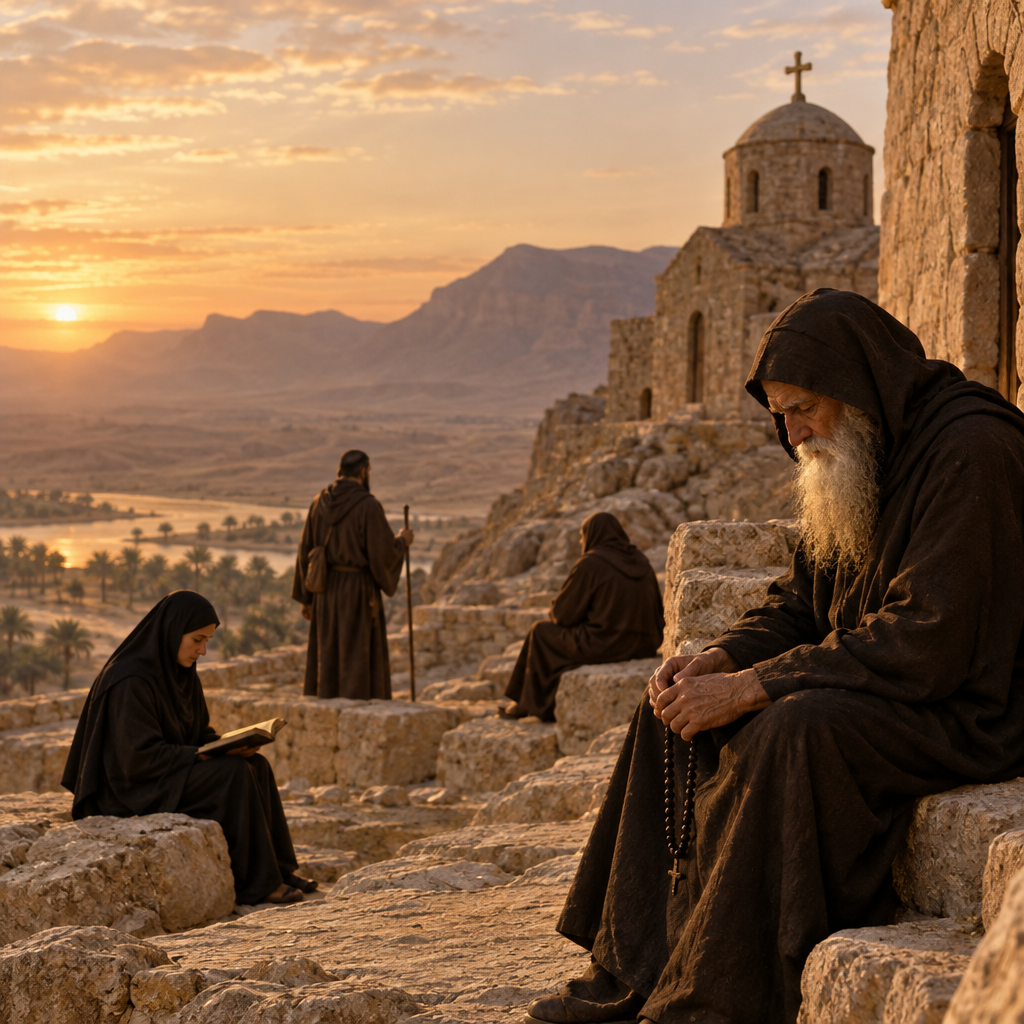
Why did Christians go into the desert?
In the third and fourth centuries, Christians began seeking a life of intense prayer and simplicity in the deserts of Egypt. Related movements flourished in Palestine and Syria. These men and women became known as the Desert Fathers and Mothers.
Some lived largely alone; others gathered around an experienced spiritual guide or joined organised communities. Their surroundings differed, but their purpose was shared: to follow Christ with an undivided heart.
The desert was not simply an escape from an unpleasant world. In Scripture, it was a place of testing and encounter with God. Jesus himself prayed and faced temptation there (Matthew 4:1–11). These early ascetics entered the wilderness expecting to confront their own pride, anger and disordered desires—not to leave their humanity behind.
Antony, Pachomius and the beginnings of monastic life
Saint Antony of Egypt, who died in 356, became one of the best-known desert monks. He was not the first Christian ascetic, but his example helped inspire generations.
According to the biography written by Saint Athanasius, Antony heard the Gospel account of Jesus inviting a rich young man to surrender his possessions and follow him. Antony responded by giving away his property and beginning a life of prayer and renunciation.
Athanasius’s account spread widely, helping make the desert ideal known far beyond Egypt.
Saint Pachomius, meanwhile, helped establish organised monastic communities in which monks shared prayer, work, meals and a common discipline. The desert therefore gave Christianity more than one pattern of life: solitude and community could both become schools of charity.
These traditions helped shape later monastic life in both Eastern and Western Christianity. Saint Benedict’s Rule, for example, recommends writings associated with the desert tradition, including those of Saint John Cassian.
The women of the desert
The story belongs to women as well as men.
Amma Syncletica, Amma Sarah and Amma Theodora are among the women remembered in early monastic literature. “Amma” means mother, just as “Abba” means father: these were titles expressing spiritual respect.
Their teachings address perseverance, humility and the patient struggle against temptation. They remind us that spiritual wisdom is not measured by status, learning or public recognition.
Our knowledge of individual Desert Mothers is often limited. Their sayings and lives were preserved through traditions shaped by oral transmission and later written collections. Some biographical details remain uncertain, so these accounts should not be treated as modern, fully documented biographies. Nevertheless, they preserve an important witness to women’s place in early Christian ascetic life.
What did their days look like?
Desert life usually combined prayer, manual labour and the recitation or meditation of Scripture, especially the Psalms. Work such as basket-making could support a monk’s modest needs and provide something to give to others.
Fasting and keeping vigil were part of their discipline, but severe practices were not an end in themselves. The wiser teachers repeatedly emphasised discernment: a practice that fed pride or destroyed charity had missed its purpose.
Their spiritual battles were often strikingly ordinary. They wrestled with resentment, distraction, discouragement and the temptation to judge a neighbour. Distance from crowded towns did not automatically bring peace of heart.
What can they teach us now?
Silence helps us notice what is happening within. We need not move to a wilderness. A few quiet minutes without a screen can reveal anxieties we have been avoiding—and make room to bring them honestly before God.
Humility matters more than appearing holy. The desert sayings frequently warn against judging others. Recognising our own need for mercy can soften the way we speak about another person’s failings.
Prayer belongs alongside ordinary work. Washing dishes, caring for a relative or completing an unglamorous task can become occasions for faithful attention and love.
Spiritual discipline needs wisdom. Their example is not an invitation to imitate extreme fasting or isolation. Practices should fit our health, responsibilities and circumstances, with sound guidance where needed.
The deepest lesson of the desert is not that the world is worthless. It is that a heart freed from pride and possessiveness becomes more capable of loving God and neighbour.
We may never enter a desert, but we can make a little room for God wherever we are.