San Giovanni Rotondo: A Pilgrim’s Guide to Padre Pio’s Shrine
Discover Padre Pio’s shrine in Puglia: its history, sacred places and practical advice for a prayerful pilgrimage to San Giovanni Rotondo.
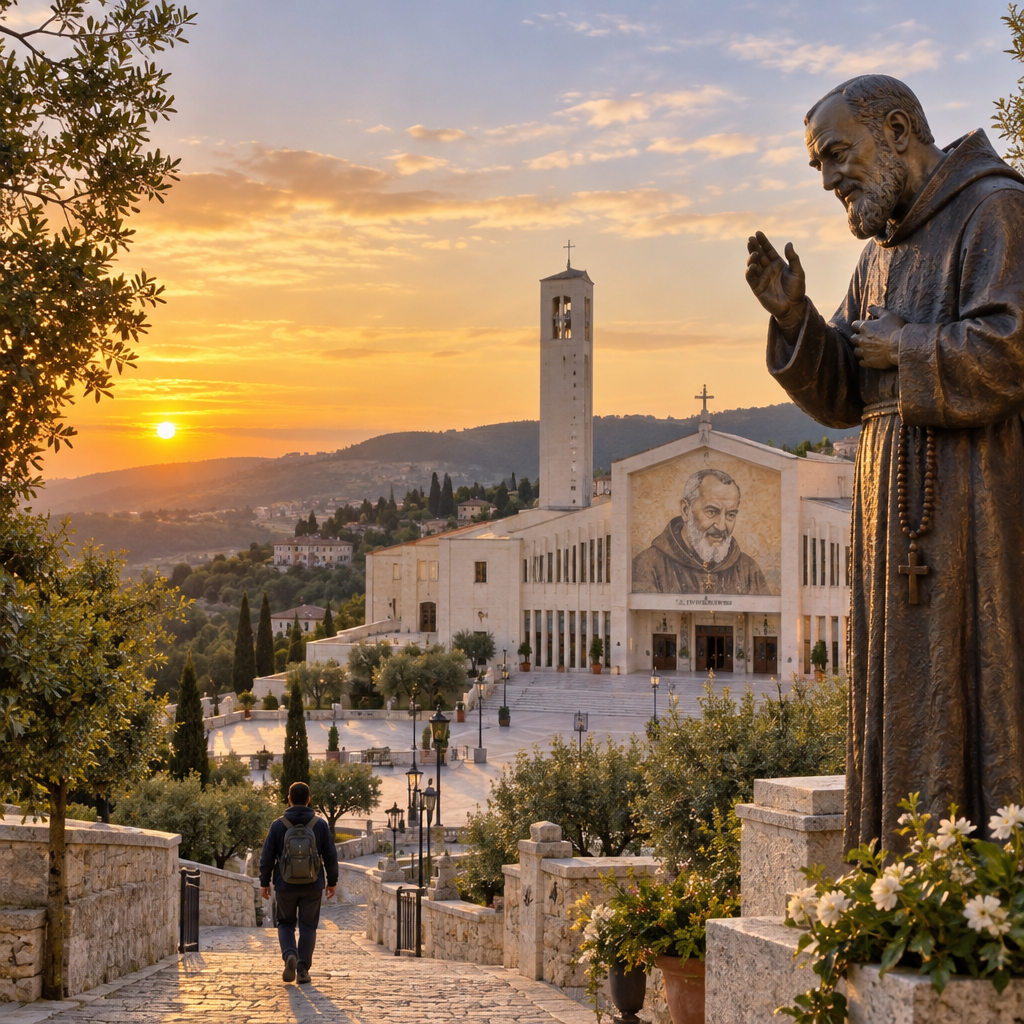
A pilgrimage to San Giovanni Rotondo is not simply a journey to a famous saint’s resting place. It is an invitation to slow down, seek God’s mercy and consider how prayer can become practical love for others.
Set in the Gargano uplands of Puglia, southern Italy, this town became known throughout the world through the life of a Capuchin friar: St Pio of Pietrelcina, affectionately called Padre Pio. Its churches welcome both devoted pilgrims and visitors who arrive with questions rather than certainty.
The friar who made this town his home
Born Francesco Forgione in Pietrelcina in 1887, Padre Pio entered the Capuchin order as a young man and was ordained a priest in 1910. He arrived in San Giovanni Rotondo in 1916 and remained there for most of his life, until his death in 1968.
His ministry centred on the Mass, confession and spiritual guidance. Large numbers of people sought his prayers and counsel. He was also known for the stigmata, wounds associated with Christ’s Passion, and experienced years of Church scrutiny and restrictions on his ministry.
Pope St John Paul II canonised him in 2002. For Catholics, honouring Padre Pio does not mean placing him above Christ: the saints point us towards Jesus and accompany us through their intercession.
His concern for suffering also took a concrete form. The hospital he founded, Casa Sollievo della Sofferenza, opened in 1956. Its name means “House for the Relief of Suffering”. Still a working hospital, it is a powerful reminder that care for the sick belongs at the heart of Christian life.
What to see at the shrine
The old church of Santa Maria delle Grazie offers a more intimate connection with Padre Pio’s daily life. This was the setting for much of his ministry. Allow time simply to sit: a pilgrimage need not become a checklist.
The larger church of Santa Maria delle Grazie, consecrated in 1959, was built to accommodate growing crowds. Together, these churches help visitors understand how a modest friary became an international place of pilgrimage.
The Church of Saint Pio, designed by architect Renzo Piano and inaugurated in 2004, is strikingly different in scale and appearance. Its broad spaces were created to welcome large congregations. The lower church houses Padre Pio’s remains and is a principal focus of prayer for pilgrims. Follow current signs and staff guidance, as access arrangements can change during major celebrations or maintenance.
The friary’s visitor route and displays, when accessible, provide glimpses of the saint’s surroundings and personal belongings. Rather than looking only for extraordinary stories, notice the ordinary framework of his vocation: prayer, community life and perseverance.
The nearby Way of the Cross offers another setting for reflection on Christ’s Passion. Its sloping route may be demanding for some visitors, so ask about accessibility before beginning.
Making room for prayer
Try to leave space between visits. Attend Mass if you can, spend a few quiet minutes before the Blessed Sacrament, or bring a particular intention to prayer. Check the shrine’s current timetable for services and confession languages rather than assuming an English-speaking priest will be available.
Catholics preparing for confession may find this a meaningful place to receive the sacrament. Other Christians and seekers are welcome to enter respectfully, sit quietly and pray. At Mass, those not receiving Holy Communion can remain in their place in prayer.
The deepest souvenir may be a renewed willingness to forgive, ask for help or care for someone who is suffering.
Getting to San Giovanni Rotondo
San Giovanni Rotondo has no railway station. A common public-transport approach is to travel by train to Foggia, then take an onward bus to the town. Check current regional bus timetables carefully, especially for Sundays, holidays and return journeys.
Bari Airport is a useful arrival point for international travellers. From there, plan onward connections via Bari and Foggia, or arrange a hire car or transfer. Driving offers flexibility for exploring the Gargano, but check parking and local access restrictions near the sanctuary. Choose accommodation within comfortable walking distance if reducing daily travel is important.
When to visit and what to bring
Spring and autumn often offer comfortable conditions for walking. Summer can be hot and busy, while the upland location can feel cold in winter. Padre Pio’s feast on 23 September draws substantial crowds; book accommodation well ahead if visiting around it.
Bring comfortable shoes, drinking water, sun protection and a light layer for cooler weather. Wear clothing suitable for churches, with shoulders and knees covered. A small prayer book, rosary or notebook may help you keep the visit reflective.
Before travelling, consult the shrine’s official information for opening times, accessibility, services and any booking requirements. Leave room in your plans for rest as well as prayer.
Come without pressure to feel something extraordinary. A quiet step towards Christ is already a worthwhile pilgrimage.