Saint of the Day: St Wilfrid (12 October)
Meet St Wilfrid, the courageous bishop remembered on 12 October, whose missionary zeal brought hope to communities in need.
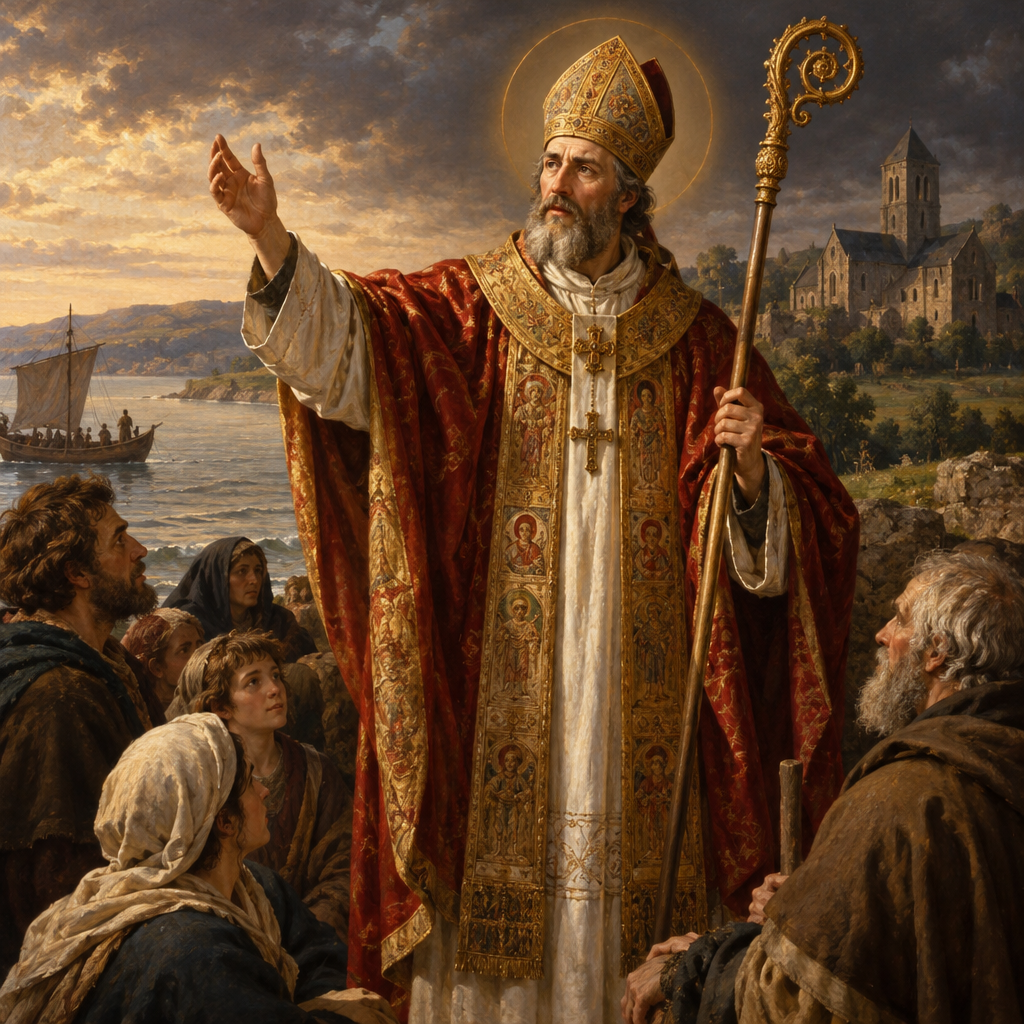
On Monday, 12 October 2026, we remember St Wilfrid, a seventh-century bishop and missionary whose life helped shape Christianity in England. His story includes monasteries, royal disputes, difficult journeys and fresh beginnings. Through it all runs a conviction that the Gospel is worth carrying wherever we find ourselves.
From Northumbria to Rome
Born in Northumbria around 634, Wilfrid entered religious life while still young. He spent time at Lindisfarne before travelling to the Continent and Rome, where he encountered the wider life of the Church.
Those journeys deeply influenced him. He returned to England with a strong attachment to the Church’s unity and to the traditions he had encountered abroad. As abbot of Ripon, he helped establish a flourishing centre of prayer and learning.
Wilfrid was energetic, capable and determined. These qualities helped him accomplish much, though they also brought him into conflict with powerful people.
Seeking unity in the Church
In 664, Wilfrid played a prominent part in the Synod of Whitby, where Christians in Northumbria considered differing practices, particularly the calculation of Easter. He argued for the practice followed at Rome, appealing to the authority associated with St Peter.
For modern readers, a disagreement about dates can seem remote. Yet beneath it lay a question Christians still recognise: how can communities with different inherited customs live in visible unity?
Wilfrid’s commitment reminds Catholics of the importance of communion with the successor of Peter. It also invites all Christians to pray for unity rooted in truth, humility and charity.
A bishop acquainted with setbacks
Wilfrid became a bishop, but his ministry was far from settled. Disputes involving rulers and Church leaders led to periods of removal from office and exile. He travelled to Rome to appeal his case.
His history is complex, and holiness does not require us to pretend that every disagreement had one simple cause. Wilfrid was a forceful personality living in a turbulent age.
What stands out is that setbacks did not end his service. While away from Northumbria, he undertook missionary work among the South Saxons, in what is now Sussex. He helped establish a Christian community at Selsey and brought the faith to people who had not yet received it.
Good news for the whole person
Tradition holds that, during a severe famine, Wilfrid taught local people to catch fish with nets, helping to relieve their hunger. The account offers a memorable picture of Christian mission: concern for souls must never become indifference to suffering bodies.
We may not travel across kingdoms or speak before rulers. We can still notice who is hungry, lonely or discouraged. A meal, a patient conversation or practical help can make the love we profess visible.
Wilfrid died in 709. Remembered especially for his missionary work and his devotion to the Church’s unity, he challenges us not to confuse a difficult season with the end of our usefulness to God.
A prayer for his intercession
St Wilfrid, faithful bishop and missionary, pray for us. Ask the Lord to deepen our love for his Church and give us courage when our plans are interrupted. Pray that we may seek unity without pride, serve our neighbours with practical compassion, and carry Christ’s hope into unfamiliar places. May our disappointments become opportunities for faithful service. Through Christ our Lord. Amen.
Even when the road changes, God can still lead us towards someone who needs his love.