Saint of the Day: St Ursula (21 October)
Remembered on 21 October, St Ursula invites us to courageous faith, faithful friendship and trust in Christ when the way ahead is uncertain.
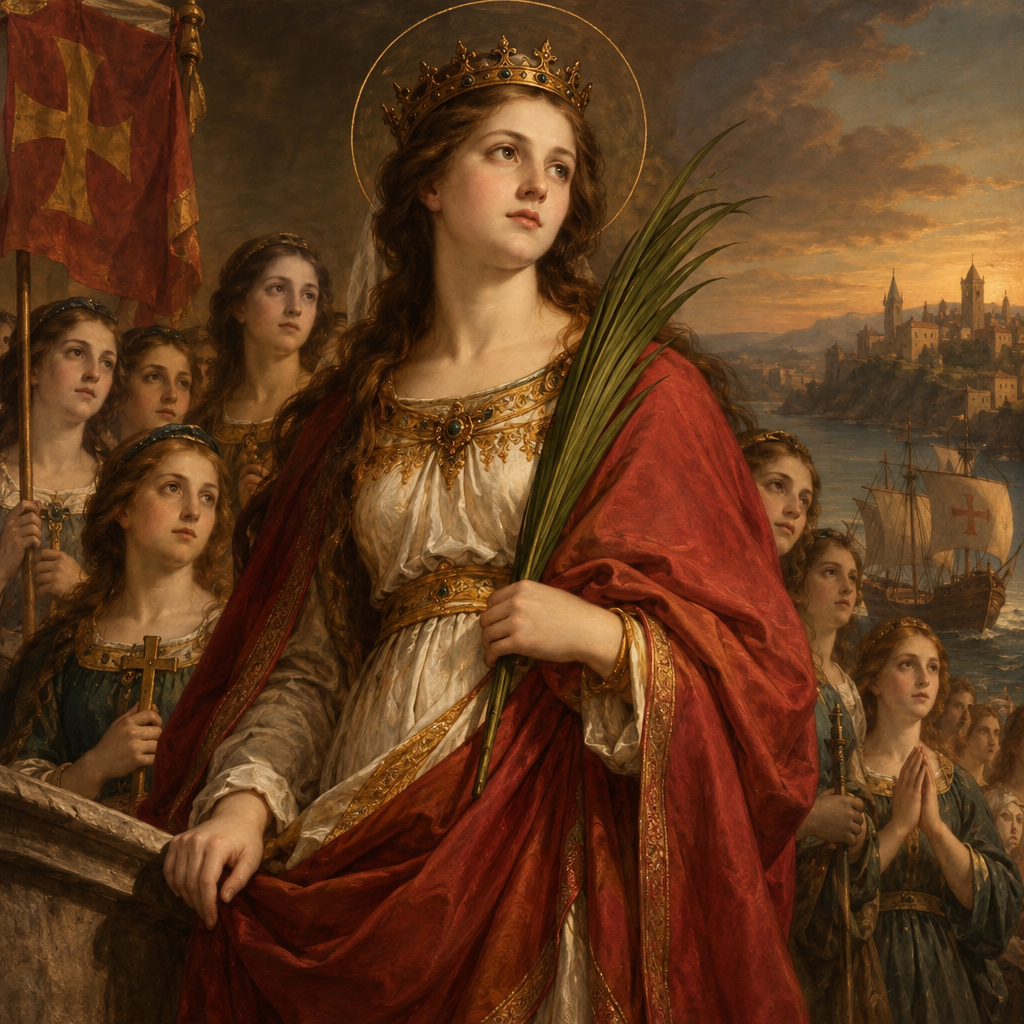
Fear of disappointing others can make it difficult to remain faithful to what we believe. We want to belong, yet sometimes following Christ means accepting misunderstanding or standing apart. The story handed down about St Ursula speaks to that struggle: a young woman whose commitment to Christ mattered more than her own security.
St Ursula, traditionally remembered on 21 October, is honoured as a virgin and martyr. Her story invites us to courage, but it also calls for honesty: many familiar details of her life belong to tradition rather than securely established history.
Who was St Ursula?
Tradition holds that Ursula was a Christian woman of noble birth from Britain who had dedicated herself to God. In the accounts that developed around her, she travelled with a company of young women and eventually reached Cologne, in what is now Germany.
There, tradition holds, Ursula and her companions were killed because of their fidelity to Christ. Later versions describe an attack by the Huns and Ursula’s refusal to marry their leader. These details cannot be treated as verified biography.
What we can say more confidently is that devotion to virgin martyrs at Cologne has ancient roots. A surviving inscription at the church associated with St Ursula records the restoration of a basilica in honour of holy virgins, although it does not establish the elaborate story told in later centuries.
A remembered witness, a developing story
Ursula’s name became closely associated with these martyrs, and her story spread widely through medieval Christian Europe. Churches, artwork and pilgrimages helped keep her memory alive.
The famous account of Ursula and eleven thousand companions is not a reliable historical count. The number belongs to the development of the legend, and its origin remains debated.
We need not choose between reverence and truthfulness. Catholic devotion does not require us to regard every later story about a saint as documented fact. We can honour Ursula as the Church has long honoured her, while acknowledging how little we know about the circumstances of her life and death.
Her influence also reached into education. When St Angela Merici founded the Company of St Ursula in 1535, she placed it under Ursula’s patronage. The Ursuline tradition became especially associated with the education of girls and young women.
Why she matters today
Ursula’s remembered witness asks a simple question: what helps us remain faithful when faith becomes costly?
For most of us, courage will not look like martyrdom. It may mean refusing a dishonest shortcut, defending someone being mocked, keeping a difficult promise or admitting that we need forgiveness.
The companions in Ursula’s story also remind us that Christian courage is not merely solitary determination. We need people who pray with us, speak truth gently and help us begin again. Seeking that support is not weakness; it is part of belonging to Christ’s body.
Jesus teaches that following him involves taking up our cross each day (Luke 9:23). Ursula’s memory encourages us to entrust that daily obedience to him, without pretending that fear disappears.
A prayer for courage
St Ursula, faithful witness to Christ, pray for us when fear makes us hesitate. Ask the Lord to strengthen our love, guide our choices and give us companions who help us follow him. Pray especially for young people facing pressure to abandon what is good. May we remain gentle, truthful and courageous, trusting Jesus with what we cannot see. Amen.
Take heart: the next small act of faithfulness matters to God.