Saint of the Day: St Luke (18 October)
Discover St Luke, the evangelist whose Gospel reveals Christ’s mercy, and ask his intercession for a compassionate, faithful heart.
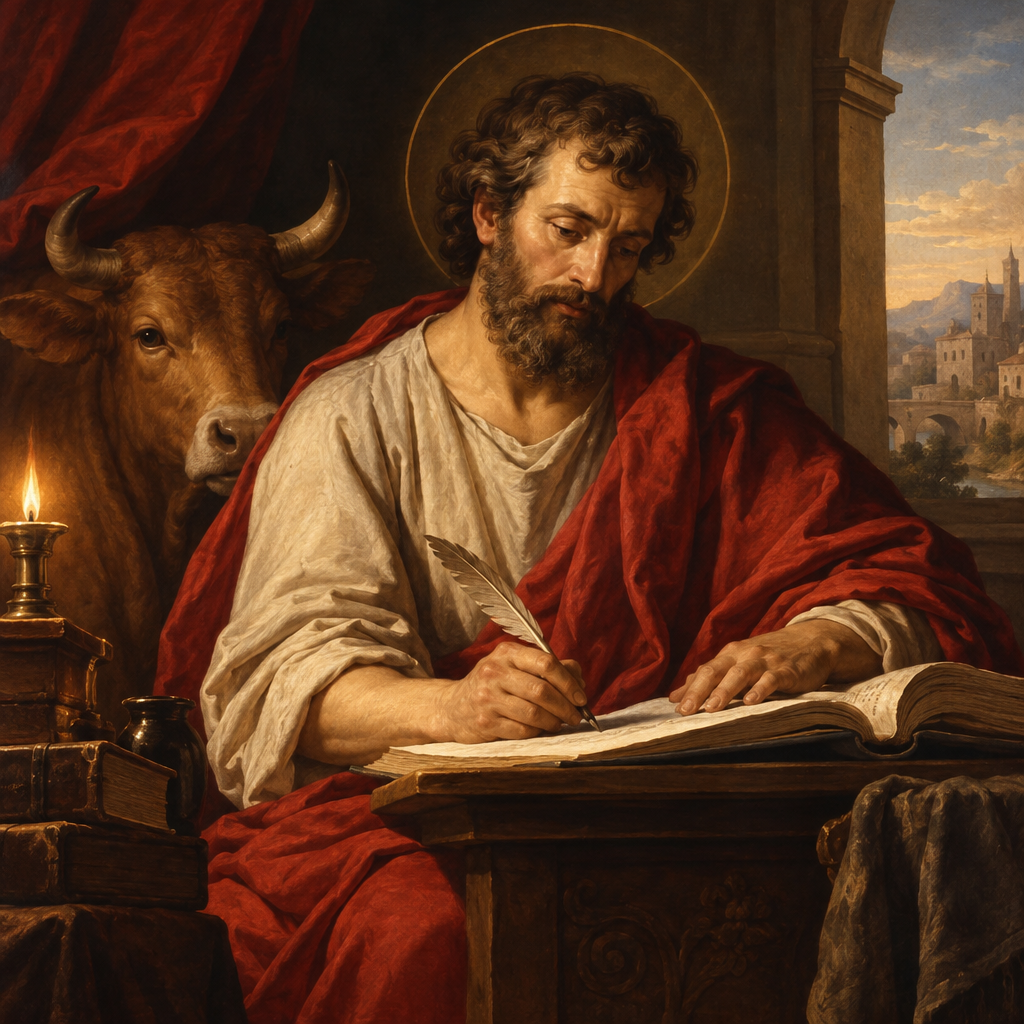
A wounded traveller lies beside the road. A father runs to embrace his returning son. A condemned man hears a promise of paradise. Without St Luke’s Gospel, we would not have these particular accounts of Christ’s mercy.
Luke’s writing keeps bringing us close to people whom others might overlook—and to the Saviour who never does.
Who was St Luke?
St Luke the Evangelist is traditionally honoured on 18 October. In 2026, that date falls on a Sunday, so the Church’s Sunday celebration takes precedence over his feast. Nevertheless, this remains a fitting day to learn from the saint associated with the third Gospel and the Acts of the Apostles.
Christian tradition identifies their author as Luke, a companion of St Paul. In Colossians 4:14, Paul refers to Luke as a beloved physician. Philemon 24 names him among Paul’s fellow workers, while 2 Timothy 4:11 presents him as a faithful presence when others are absent.
These brief references suggest a life of service, companionship and perseverance. Much about Luke’s birthplace, early years and death remains uncertain; we need not fill those silences with confident guesses.
A careful witness to the Good News
At the beginning of his Gospel, Luke explains that he has investigated the events carefully and drawn upon the testimony handed down by eyewitnesses. He writes so that his reader, Theophilus, may know the certainty of what he has been taught (Luke 1:1–4).
Luke does not present himself as one of the Twelve. His work reminds us that faithful listening can itself become a form of service: receiving the truth with care, then passing it on responsibly.
Acts continues the story through the Holy Spirit’s work in the early Church. It follows the proclamation of the risen Jesus from Jerusalem towards Rome, showing a community learning to pray, endure suffering and welcome people across old boundaries.
The Gospel of mercy and joy
Luke gives us the parables of the Good Samaritan and the Prodigal Son, the encounter with Zacchaeus, and Jesus’ promise to the repentant criminal beside him on the cross.
These passages do not suggest that sin is unimportant. They reveal that repentance is possible and that God’s mercy reaches people whom others have written off.
His Gospel also preserves the Annunciation, Mary’s visit to Elizabeth and her song of praise, the Magnificat. Through these accounts, Christians encounter Mary’s trusting response to God and her joy in his saving work.
Why Luke matters today
In a world quick to judge and slow to listen, Luke invites us to look again. Who is lying wounded beside our road? Who needs a welcome home? Whose story deserves patient attention?
Honoured as a patron of physicians, he also reminds us to pray for those who care for the sick. Their work calls for both knowledge and compassion.
We can honour Luke by reading a passage of his Gospel slowly, offering practical help to someone in need, and speaking about our faith with honesty and gentleness.
A prayer for St Luke’s intercession
St Luke, faithful evangelist and companion in the service of the Gospel, pray for us. Help us to listen carefully to God’s word, recognise Christ in those who suffer, and trust his mercy when we fall. Pray for doctors, carers and all who are ill. May the Holy Spirit make our lives witnesses to the hope you proclaimed. Through Christ our Lord. Amen.
Let Christ’s mercy shape one small act of love today.