Saint of the Day: St John of Capistrano (23 October)
From a prison cell to a life of Franciscan preaching, St John of Capistrano invites us to consider conversion, courage and charity.
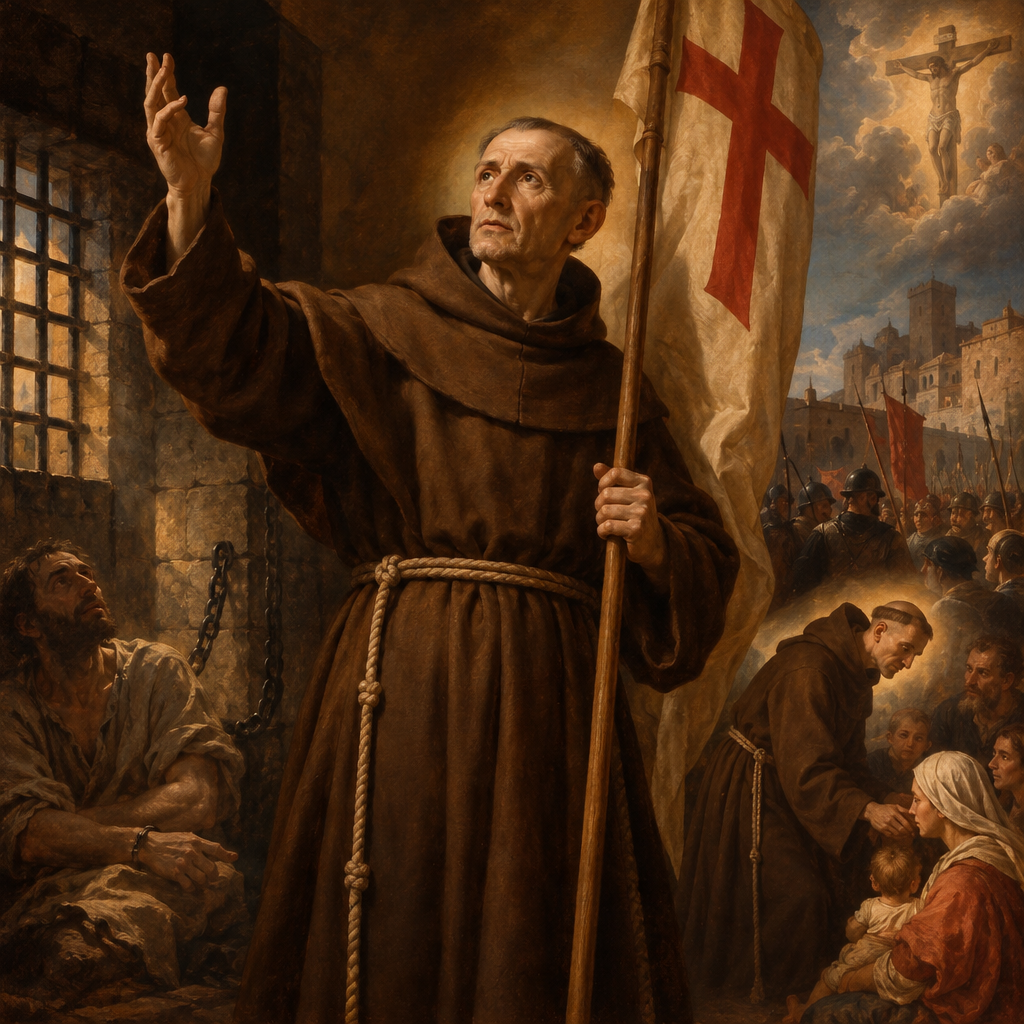
He once governed a city; he became a barefoot friar. St John of Capistrano exchanged public authority and worldly ambition for Franciscan poverty, carrying his formidable energy into a life of preaching, reform and service to the Church.
His story, remembered on Friday, 23 October 2026, offers both encouragement and a challenge: conversion can redirect our gifts, but zeal must always be examined in the light of Christ’s love.
A prison cell and a new beginning
John was born in 1386 in Capestrano, in the Abruzzo region of Italy. He studied law in Perugia and rose to become the city’s governor while still a young man.
Then his security collapsed. During conflict involving Perugia and neighbouring powers, he was imprisoned in 1415. The interruption became a turning point. Behind bars, he began to reconsider the life he had built and the future he wanted.
In 1416, John entered the Franciscans. The man accustomed to exercising authority now embraced a life shaped by prayer, poverty and obedience. His legal training and forceful personality did not disappear; they were redirected towards a different purpose.
Sometimes God’s invitation begins not with a clear road ahead, but with the closing of a door we thought essential.
A voice that travelled far
John became a priest and a widely travelled preacher. Associated closely with St Bernardine of Siena, he helped promote devotion to the Holy Name of Jesus and worked for renewal within the Franciscan family.
He preached across Italy and central Europe, drawing large crowds and urging repentance. He also undertook diplomatic missions for popes and laboured for unity within the Church.
Yet his legacy contains painful elements. His preaching and campaigns against Jewish communities contributed to persecution. These actions must not be excused or presented as models of Christian witness. The Church rejects antisemitism and teaches respect for the dignity of every person.
Remembering a saint faithfully does not require pretending that every judgement or action was right. It calls us to recognise God’s grace while remaining honest about the harm Christians have caused.
Courage at Belgrade
In 1456, as Ottoman forces besieged Belgrade, the elderly John helped rally its defenders and accompanied the Christian forces. The successful defence became the best-known event of his later life.
Exhausted by the campaign, he died at Ilok, in present-day Croatia, on 23 October 1456, amid an outbreak of disease.
His courage was remarkable. For Christians today, however, courage is not a licence to treat people of another faith as enemies. Our calling is to defend the vulnerable, seek peace and remain faithful to Christ without surrendering charity.
What his life asks of us
John’s journey poses a searching question: what might God do with the abilities we currently use chiefly for our own advancement?
Knowledge, leadership and determination can become gifts offered in service. But they need humility, prayer and correction. As St Paul teaches, even extraordinary gifts amount to nothing without love (1 Corinthians 13:1–3).
We need not wait for a dramatic turning point. Conversion can begin with one honest confession, one act of reconciliation or one decision to listen more carefully.
A prayer for his intercession
St John of Capistrano, pray for us. Ask the Lord to turn our ambitions towards his service, strengthen us in difficulty and temper our zeal with humility. May we honour every person’s dignity and follow Jesus with courage, truth and charity. Amen.