Saint of the Day: St Ignatius of Antioch (17 October)
Meet St Ignatius of Antioch, the early bishop and martyr whose letters still call Christians to unity, Eucharistic faith and courage.
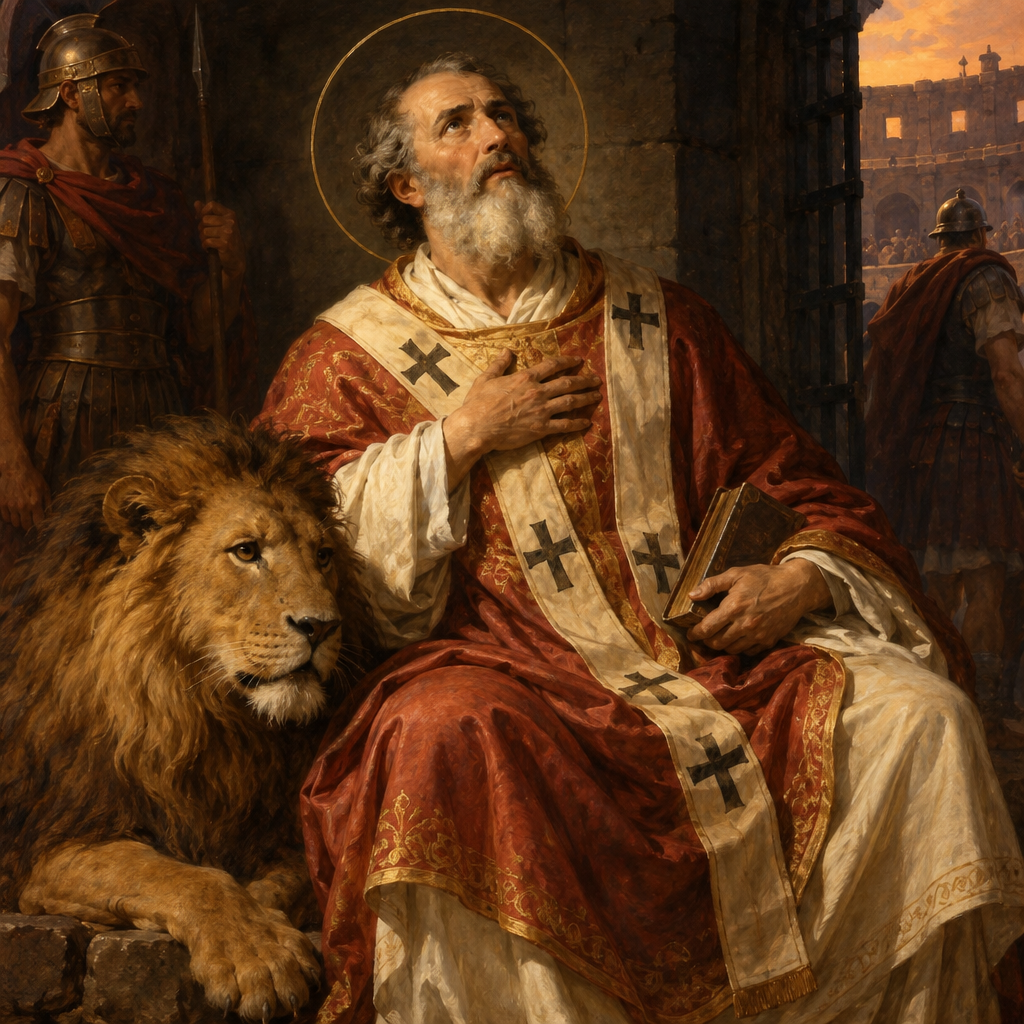
A shepherd remembered on 17 October
On Saturday, 17 October 2026, the General Roman Calendar celebrates the memorial of St Ignatius of Antioch, bishop and martyr. A shepherd of the early Church, Ignatius is remembered for his love of Jesus Christ, his concern for Christian unity and his courage as he faced death.
He belongs to the Apostolic Fathers: early Christian writers whose lives and teaching stand close to the time of the Apostles. His surviving letters offer a precious glimpse of the Church in the generations immediately after them.
From Antioch towards Rome
Ignatius served as bishop of Antioch in Syria, one of Christianity’s earliest and most important centres. It was at Antioch that the disciples were first called Christians (Acts 11:26).
Much about his early life is unknown. Tradition holds that he knew the Apostle John, although the details cannot be established with certainty. What emerges clearly from his letters is a pastor deeply devoted to Christ and to the people entrusted to his care.
Condemned because of his Christian faith, Ignatius was taken under military guard towards Rome. His journey is generally placed in the early second century, traditionally during the reign of Emperor Trajan. The precise date and circumstances of his death remain uncertain.
Along the way, Christians came to meet him. During this journey he wrote seven letters: to the Christians of Ephesus, Magnesia, Tralles, Rome, Philadelphia and Smyrna, and to St Polycarp, bishop of Smyrna.
These were not detached reflections from a place of safety. They were the words of a prisoner preparing to give his life for Christ.
Faith expressed in unity and the Eucharist
Ignatius urged Christian communities to remain united in faith and charity, gathered around their bishop, with their priests and deacons. For him, unity was not simply good organisation: it expressed the Church’s belonging to Jesus Christ.
He also defended the reality of Christ’s humanity against those who suggested that Jesus only appeared to suffer. The Lord truly became man, truly suffered and truly rose. Our salvation rests on God’s real entrance into human life, not on an appearance.
His writing witnesses powerfully to early Christian belief in the Eucharist as the flesh of Jesus Christ. His letter to the Smyrnaeans also contains the earliest surviving use of the expression “Catholic Church”.
Courage without contempt for life
In his letter to the Romans, Ignatius asked believers not to prevent his martyrdom. He anticipated death by wild beasts and used the image of wheat being ground into bread to express his desire to belong completely to Christ.
Tradition holds that he was killed by wild beasts in Rome. His witness should not be mistaken for a command to seek suffering or neglect the gift of life. Rather, he shows the depth of a love that would not abandon Christ even under threat of death.
Today, his example invites us to resist division, cherish the Eucharist and remain faithful in ordinary difficulties. Most of us will not face his trial. We can still choose patience over resentment, truth over convenience and love over fear.
A prayer for his intercession
St Ignatius of Antioch, faithful bishop and courageous martyr, pray for us. Ask the Lord to deepen our love for Jesus in the Eucharist, heal divisions among Christians and strengthen those persecuted for their faith. Help us to follow Christ with humility, courage and charity. Amen.
May we take one small, faithful step towards Christ today.