Saint of the Day: St Edward the Confessor (13 October)
Remembered on 13 October, St Edward the Confessor invites us to place prayer, humility and service at the heart of daily responsibility.
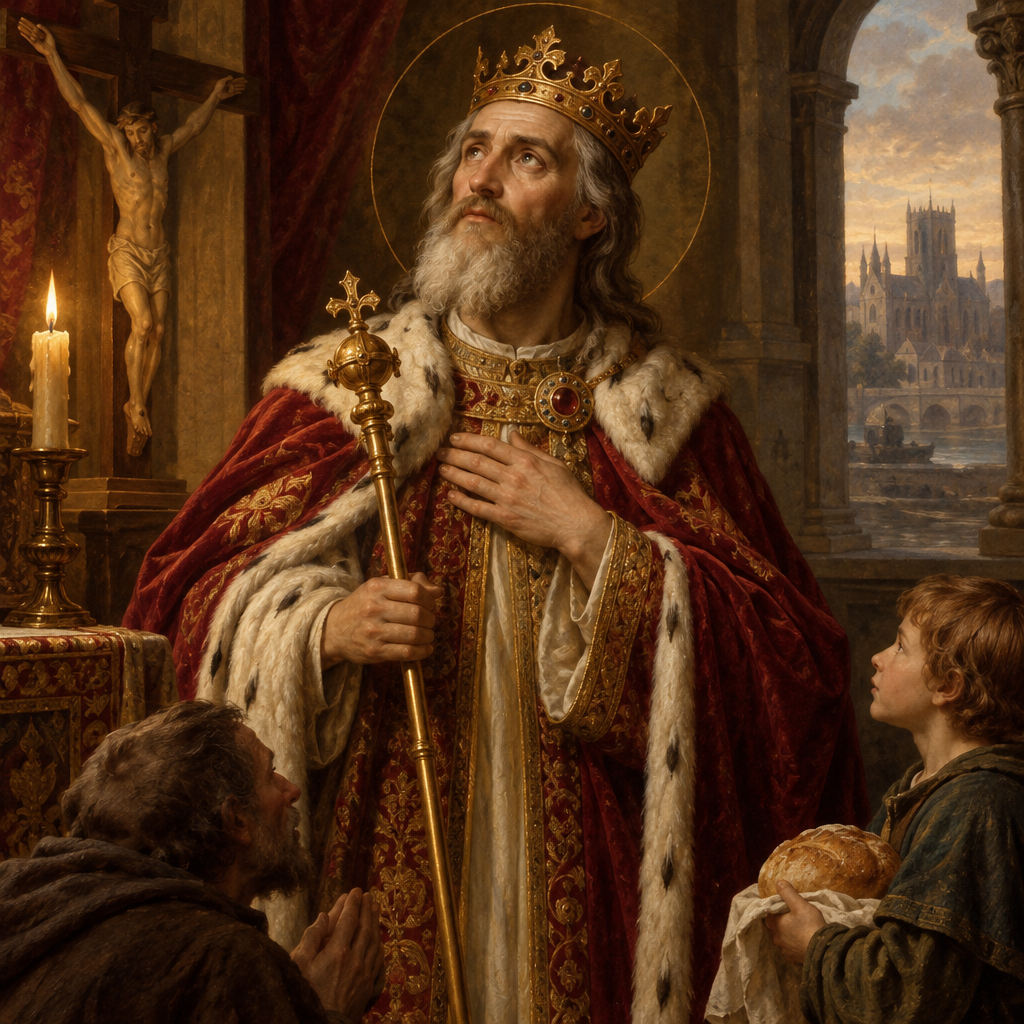
A king remembered for his faith
On 13 October, we remember St Edward the Confessor, the eleventh-century king of England whose enduring legacy is closely bound to Westminster Abbey. His remembrance on this date marks the transfer of his remains to a shrine at the abbey in 1163, rather than the anniversary of his death.
Edward’s title, “the Confessor”, does not mean that he was a priest who heard confessions. It honours someone who bore witness to Christ through his life without suffering martyrdom. His story invites us to consider how faith can shape the exercise of responsibility, even amid political uncertainty.
From exile to the English throne
Born around 1003, Edward was the son of King Æthelred and Emma of Normandy. His early life was unsettled by conflict over the English throne. He spent many years in Normandy, far from the kingdom he would eventually govern.
Edward became king in 1042 and was crowned at Winchester in 1043. In 1045, he married Edith, daughter of the powerful Earl Godwin. Their marriage produced no children, and the question of who would succeed Edward would become a source of profound uncertainty.
His reign involved difficult relationships with influential nobles and competing interests at home and abroad. It would be misleading to picture his kingship as an uninterrupted story of harmony. Nevertheless, he came to be remembered for his religious devotion, generosity and concern for peace.
The record of a medieval ruler is often complicated, and some accounts of Edward’s holiness were written to promote his reputation as a saint. We can honour him without pretending that every decision he made was beyond question.
A lasting house of prayer
Edward’s most visible legacy is his rebuilding of Westminster Abbey as a great Benedictine church. It was dedicated on 28 December 1065, shortly before his death. Too ill to attend the dedication, he died on 5 January 1066 and was buried there.
The abbey we see today largely reflects later rebuilding, but Edward’s foundation helped establish Westminster as a central place of prayer and national life. His shrine remains within the abbey.
Pope Alexander III canonised Edward in 1161. Two years later, on 13 October, his remains were transferred to a shrine. This is why he is traditionally remembered on this day.
What Edward can teach us today
Most of us will never carry the responsibilities of a monarch. Yet we all exercise influence: within a family, at work, in a parish or through the words we choose online.
Edward’s remembrance offers a gentle examination of conscience. Do we use our influence to protect our own importance, or to serve others? Do we make room for prayer before making difficult decisions? Are we willing to seek peace without avoiding truth?
His long years away from England also remind us that uncertainty need not be wasted time. When our future is unclear, faithfulness can begin with the duty immediately before us.
Saints are not substitutes for Christ. They are fellow members of his Body whose lives direct us towards him, and whose prayers we ask as we journey towards God.
A prayer for his intercession
St Edward the Confessor, pray for us, that we may carry our responsibilities with humility and place our trust in Christ. Ask the Lord to make us generous towards those in need, patient in uncertainty and faithful in prayer. May our homes and communities become places of peace and welcome. Through Christ our Lord. Amen.
Whatever responsibility you carry today, may you carry it with a servant’s heart.