Saint of the Day: St Callistus I (14 October)
Remembered on 14 October, St Callistus I reminds us that repentance opens the way to mercy, healing and a new beginning in Christ.
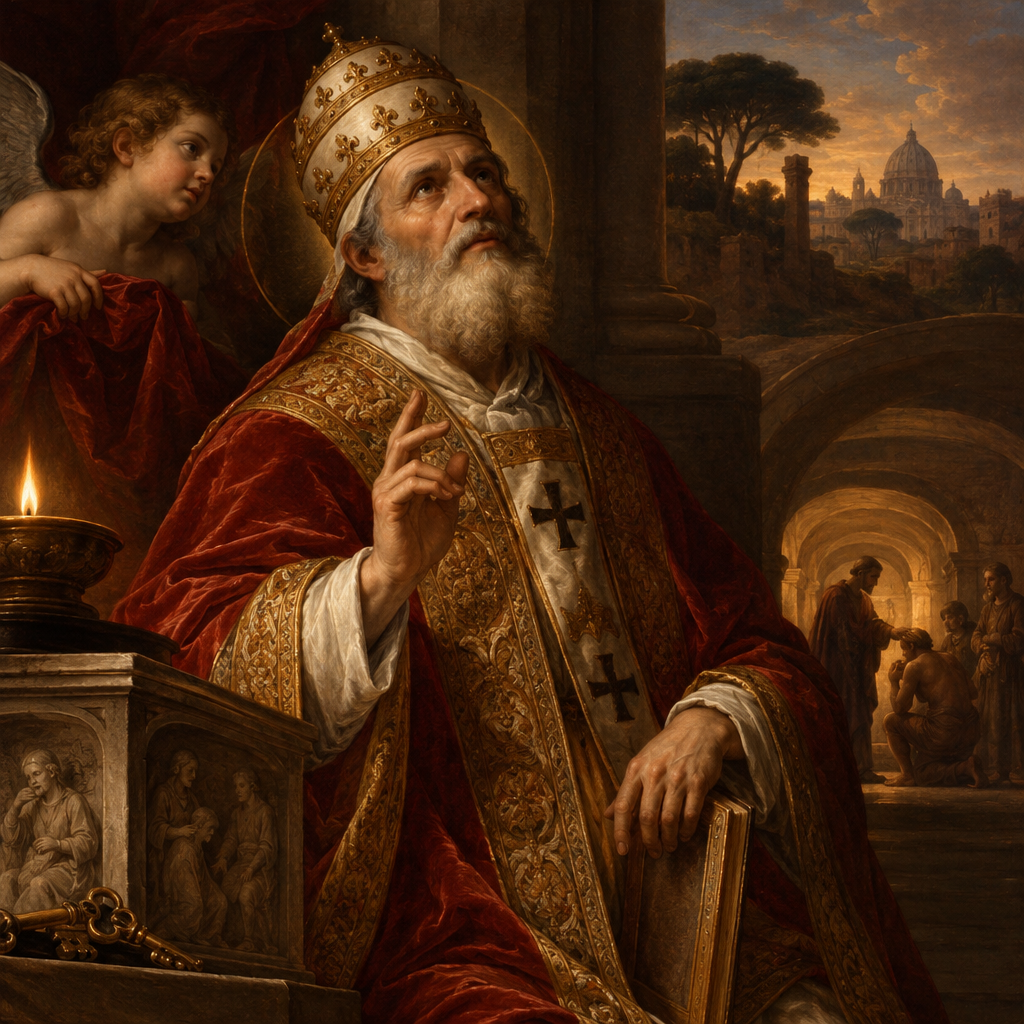
A shepherd shaped by hardship
On Wednesday, 14 October 2026, we remember St Callistus I, pope and martyr, who led the Church in Rome in the early third century. His story brings us close to a question that remains deeply personal: can someone who has fallen seriously still find a way home to God?
Callistus’s answer, expressed through his pastoral leadership, was one of hope. Sin must be taken seriously, but so must the mercy Christ offers to those who repent.
From slavery to service
Callistus lived during a time when Christians could face persecution and the Church was still developing many of its public structures. Accounts of his early life describe him as an enslaved man in Rome who became responsible for money entrusted to him. When the financial undertaking failed, he suffered severe consequences.
Much of this story comes through a hostile contemporary account, so its details and judgements need to be treated cautiously. The surviving accounts also describe imprisonment and forced labour in the mines of Sardinia, followed by release.
We should not turn these fragmentary records into a tidy tale in which every accusation is either accepted or dismissed. What emerges more clearly is a man whose path to leadership was marked by suffering, vulnerability and an unlikely new beginning.
Under Pope Zephyrinus, Callistus became a trusted servant of the Roman Church. He was entrusted with overseeing the Christian burial ground on the Appian Way that became known as the Catacombs of St Callistus. This place would preserve the memory of generations of Christians, including martyrs and popes.
A pope who defended the possibility of return
Callistus became pope around 217 and served until about 222. His leadership met fierce opposition, particularly from Hippolytus, who criticised his teaching and discipline.
A central disagreement concerned the Church’s treatment of people guilty of grave sins. Callistus defended the possibility of reconciliation for those who repented, resisting an approach that would shut them out permanently.
This was not a claim that wrongdoing did not matter. Christian forgiveness calls for conversion: an honest turning away from sin and towards God. Yet the Church is not merely a gathering of people with unblemished histories. She is also a home where wounded sinners may receive Christ’s healing.
Callistus is honoured as a martyr. The precise circumstances of his death are uncertain, and later accounts contain details that cannot be firmly established.
Why he matters today
We can become trapped by our own worst moment—or decide that another person should always be defined by theirs. St Callistus challenges both habits.
His witness encourages us to hold truth and mercy together. We need not minimise harm to believe that repentance is possible. Nor must we pretend that forgiveness removes the need for accountability and repair.
For Catholics, this is a gentle invitation to approach the Sacrament of Reconciliation with confidence. For anyone seeking God, it is a reminder that a troubled past need not have the final word. The father who welcomes his returning son in Jesus’s parable reveals the generosity of divine mercy (Luke 15:11–32).
A prayer for his intercession
St Callistus, faithful shepherd and martyr, pray for us when shame makes us hide from God. Ask the Lord to grant us sincere repentance, courage to seek forgiveness, and generous hearts towards those who long to begin again. Help our parishes become places of truth, healing and welcome. Through Christ our Lord. Amen.
God’s mercy invites us not to remain where we have fallen, but to rise and walk with him.