Saint of the Day: St Anthony Mary Claret (24 October)
From a Cuban assassination attempt to exile in France, St Anthony Mary Claret shows how courage and charity can carry the Gospel.
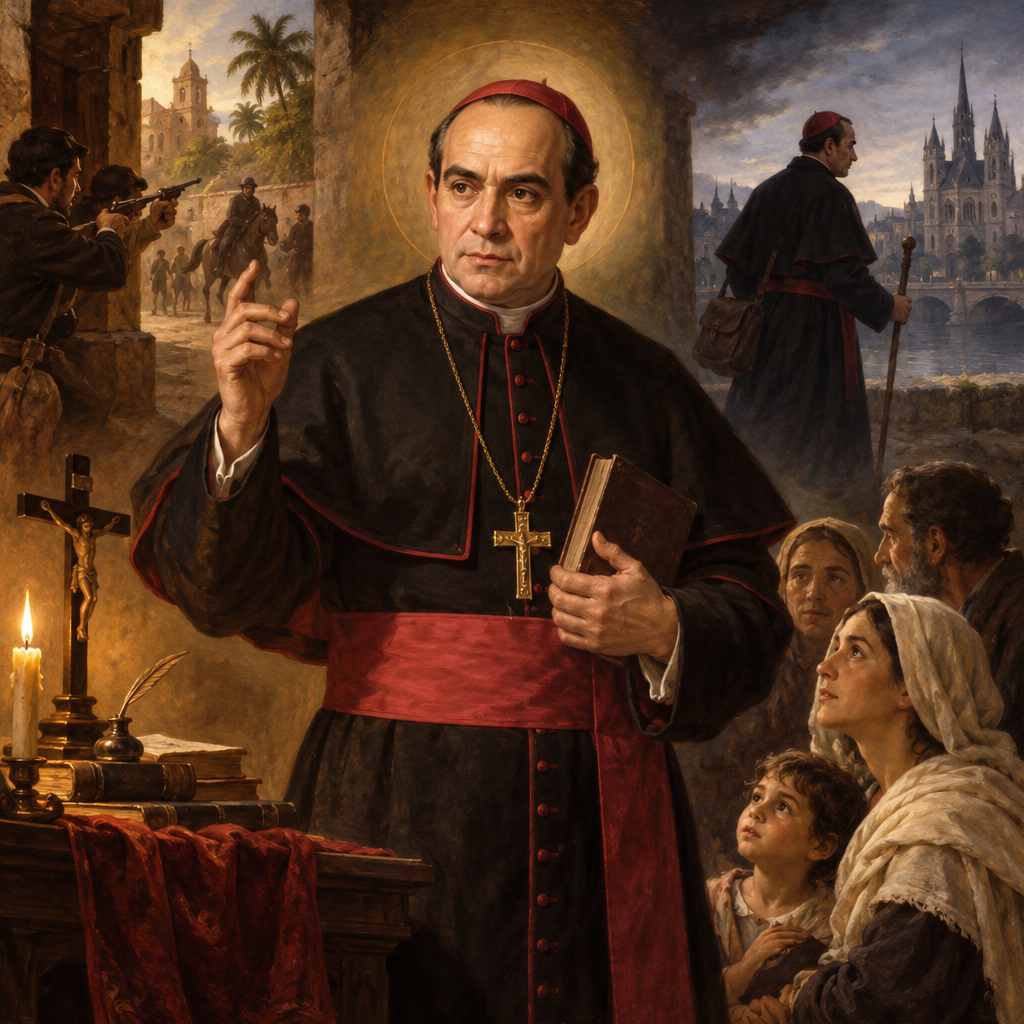
The knife struck his face as Archbishop Anthony Mary Claret was carrying out his ministry in Holguín, Cuba, in 1856. The attack left him seriously wounded. His preaching and efforts at reform had stirred fierce opposition, and now that hostility had become violence.
Yet the wound did not end his mission. He forgave his attacker and continued serving the people entrusted to him. His courage was not the absence of danger, but a determination that hatred would not have the final word.
On 24 October, the Church honours St Anthony Mary Claret: missionary, bishop, founder and a tireless servant of the Gospel.
From the weaving workshop to the priesthood
Born in Sallent, Catalonia, in 1807, Anthony grew up in a family connected with the textile trade. He learned weaving and worked in Barcelona, where he showed considerable skill. A successful working life seemed possible.
But another calling gradually became clearer. The question Jesus asks about gaining the world while losing one’s soul deeply challenged him: what achievement could matter more than belonging to God? (See Mark 8:36.)
Anthony entered the seminary and was ordained a priest in 1835. He eventually devoted himself to travelling missionary work, preaching throughout Catalonia and later in the Canary Islands. He wanted ordinary people to hear the Gospel in language they could understand and to encounter Christ through prayer and the sacraments.
A heart reaching beyond one parish
Anthony understood that a sermon could reach those standing before him, while a small book could travel much further. He wrote and distributed religious works, making Catholic teaching and practical spiritual guidance more widely available.
In 1849, he founded the Missionary Sons of the Immaculate Heart of Mary, commonly known as the Claretians. Their mission was to proclaim God’s word wherever they were sent.
Appointed Archbishop of Santiago de Cuba that same year, he arrived in 1851. He travelled extensively through his vast archdiocese, worked to strengthen the formation of clergy, promoted education and sought practical ways to relieve poverty.
These efforts brought resistance. His years in Cuba remind us that pastoral care is not merely comforting speech: it can require challenging entrenched habits and accepting personal cost.
Faithfulness amid power and exile
In 1857, Anthony returned to Spain to become confessor to Queen Isabella II. Life close to the royal court exposed him to political hostility and public attacks, but he continued preaching, writing and encouraging Christian education.
When the queen was driven into exile in 1868, he also left Spain. He later took part in the First Vatican Council. He died at the Cistercian monastery of Fontfroide in France on 24 October 1870 and was canonised in 1950.
Why he matters today
Anthony’s life asks us what we do with our abilities, our influence and our wounds. His skill with words became a means of evangelisation. His authority became a responsibility to serve. Suffering did not extinguish his vocation.
We need not cross an ocean to follow his example. We can speak about faith without aggression, make time for someone overlooked, and refuse to let resentment govern our hearts. Such faithfulness begins with grace, not self-reliance.
A prayer for his intercession
St Anthony Mary Claret, pray for us, that we may love Christ with generous hearts. Ask the Lord to give courage to those facing hostility, wisdom to those who teach, and compassion to those entrusted with authority. Help us to proclaim the Gospel through truthful words and patient service. Amen.
May Christ give us courage to serve faithfully wherever he has placed us.