Saint of the Day: All Saints (1 November)
All Saints offers hope for ordinary, imperfect people: holiness grows through grace, faithful love and the courage to begin again.
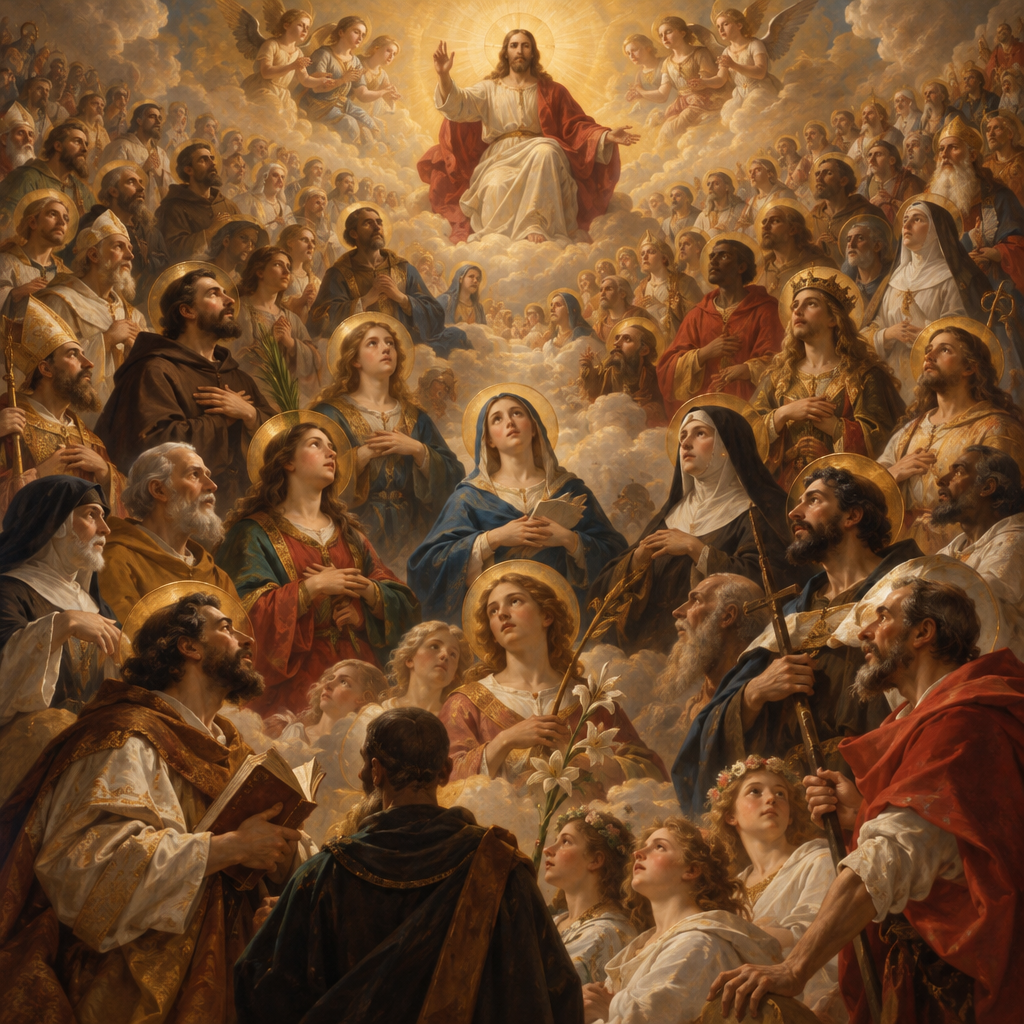
Feeling that we are never quite good enough can make holiness seem like something meant for other people. We notice our impatience, our distracted prayers and the kindness we meant to offer but withheld. The saints knew human weakness too. Their holiness was not self-made perfection, but a life opened to the transforming mercy of God.
On Sunday, 1 November 2026, the Church celebrates the Solemnity of All Saints: not one saint, but the whole company of those who live with God in heaven.
Who are all the saints?
All Saints honours those whose names fill churches and prayer books, alongside the countless holy people whose names we do not know. Some were martyrs, missionaries or founders of religious communities. Others lived their faith quietly, through family responsibilities, honest work, patient suffering and hidden acts of charity.
They came from different nations, centuries and circumstances. What unites them is Jesus Christ. By his grace, they have reached the fullness of life with God towards which every Christian is called.
This feast is distinct from All Souls’ Day, observed on 2 November, when Catholics pray especially for the faithful departed who are still being purified before entering heaven.
Lives changed by grace
There is no single biography for All Saints. Instead, there are countless stories of God meeting people where they were and leading them beyond what they thought possible.
Peter denied knowing Jesus, yet the risen Lord called him again to love and shepherd his people. Augustine spent years searching for truth before his conversion and baptism. Thérèse of Lisieux found a path of holiness in small actions offered with great love.
Their stories are different, but each challenges the idea that our past, our temperament or our ordinary circumstances must have the final word. Repentance, perseverance and trust can become turning points in a life.
The feast itself grew from the early Christian honouring of martyrs. Over time, the Church’s celebration embraced all the saints, including those never formally named or publicly recognised.
A multitude, not a privileged few
The Book of Revelation describes a vast multitude from every nation standing before God and the Lamb (Revelation 7:9–17). It is an image of hope: God’s saving love gathers people across every human boundary.
In the Gospel proclaimed for All Saints, Jesus gives us the Beatitudes (Matthew 5:1–12). He calls blessed the merciful, the meek, the peacemakers and those who hunger for righteousness.
These are not achievements reserved for the unusually gifted. They are invitations to let God reshape our everyday choices.
Why they matter today
The saints remind us that following Christ is possible, even when it is costly. Their example does not remove our struggles; it helps us face them with courage.
Catholics also ask the saints to pray for us. This does not replace our prayer to God or diminish Christ’s unique mediation. It expresses the communion of saints: the bond of love in Christ that death cannot destroy.
Today, choose one small act of faithful love. Apologise sincerely. Give someone your full attention. Make room for prayer. Holiness often grows where nobody applauds.
A prayer for their intercession
All holy saints of God, pray for us. Ask the Lord to strengthen our faith, deepen our hope and teach us to love generously. Help us to persevere when we stumble and to trust the mercy of Jesus. May we one day rejoice with you in the presence of God. Amen.
You do not have to become holy alone; begin again with God’s grace.