A Pilgrim’s Guide to Rome’s Four Major Basilicas
Discover Rome’s four major basilicas: their sacred history, treasures to see and practical advice for a prayerful pilgrimage.
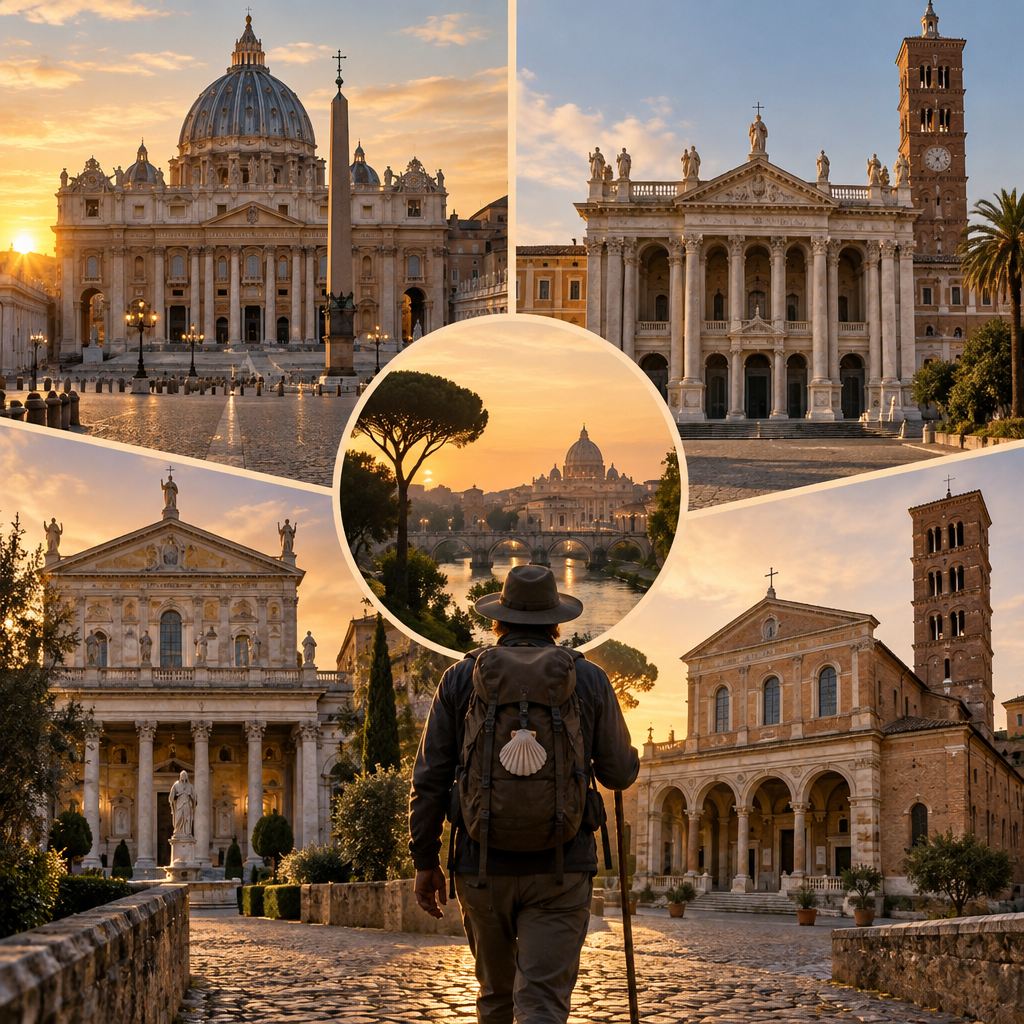
Rome’s great basilicas invite us to do more than admire beautiful buildings. They draw us into the Church’s long memory: the witness of the apostles, the courage of martyrs, the tenderness of Mary and the worship of generations.
Visiting St Peter’s, St John Lateran, St Mary Major and St Paul Outside the Walls can become a pilgrimage through the heart of Christian faith. Come with curiosity, but also leave room for silence. You need not understand every mosaic to offer God a simple prayer.
St Peter’s Basilica: faith beside the apostle’s tomb
The first basilica here was built under Emperor Constantine in the fourth century, over the site Christians venerated as the burial place of St Peter. Tradition holds that Peter was crucified upside down in Rome. The present basilica, begun in 1506 and consecrated in 1626, rose over that ancient place of devotion.
Inside, look for Michelangelo’s Pietà, whose quiet sorrow invites reflection on Mary’s trust amid suffering. Bernini’s great bronze baldachin stands above the papal altar and the area associated with Peter’s tomb. Far overhead, Michelangelo’s dome lifts the eyes towards heaven.
Pause to read Peter’s confession of faith in Matthew 16:13–19. Ask for the grace to follow Christ with greater courage, even when your faith feels small.
Getting there: Ottaviano station on Metro Line A is a convenient approach; allow time to walk to St Peter’s Square and pass through security. Entry to the basilica itself is generally free, while the dome and some additional visits require tickets. The Vatican Museums have a separate entrance and admission arrangements. Visits to the excavations beneath the basilica require advance arrangements through the official Excavations Office.
St John Lateran: the cathedral of Rome
St Peter’s may be more famous, but St John Lateran is the cathedral of the Bishop of Rome, the Pope. Founded in the fourth century under Constantine, it has endured fires, earthquakes and repeated rebuilding. Its dedication honours Christ the Saviour, together with St John the Baptist and St John the Evangelist.
The monumental statues of the apostles lining the nave give a powerful sense of belonging to a faith received and handed on. Spend time with the apse mosaic and, if open, the beautiful medieval cloister, where twisted columns offer a gentler contrast to the basilica’s grandeur.
The nearby Lateran Baptistery recalls the sacrament through which Christians enter the Church. Across the road are the Holy Stairs: tradition holds that these were brought from Jerusalem and were climbed by Jesus during his Passion.
Getting there: San Giovanni station serves Metro Lines A and C. The basilica, baptistery, cloister and Holy Stairs may have different visiting hours and admission arrangements, so check each separately.
St Mary Major: resting beneath Mary’s care
St Mary Major preserves the character of an early Christian basilica, with magnificent fifth-century mosaics. Its Marian identity is closely associated with the Church’s affirmation of Mary as Mother of God at the Council of Ephesus in 431: a title that safeguards the truth that her Son is truly God and truly human.
Tradition holds that a miraculous snowfall in August marked the place where an earlier church should be built. This beloved story is remembered in the title Our Lady of the Snows.
Look up at the biblical mosaics along the nave and the scenes surrounding the triumphal arch. Seek out the revered icon known as Salus Populi Romani, meaning ‘Salvation of the Roman People’. Below the papal altar, the shrine of the Holy Crib contains relics traditionally associated with Jesus’ manger.
Getting there: The basilica is a short walk from Termini station; Cavour on Metro Line B is another option. Allow time simply to sit. This is a fitting place to entrust family worries and hidden burdens to Mary’s intercession.
St Paul Outside the Walls: hope beyond the familiar
Built over the burial place venerated as St Paul’s, this basilica stands beyond Rome’s ancient city walls. A devastating fire in 1823 destroyed much of the earlier building; the reconstructed basilica was consecrated in 1854.
The spacious nave, the portraits of successive popes and the tomb of St Paul beneath the papal altar make this a particularly moving destination. Look also for the medieval Easter candlestick and the cloister, which survived the fire.
Read Romans 8:31–39 before you leave: Paul’s assurance of God’s enduring love is a wonderful companion for the journey home.
Getting there: Take Metro Line B to Basilica San Paolo, then walk to the basilica.
Planning a prayerful visit
Allow two days if possible, pairing St Peter’s with St Mary Major, and St John Lateran with St Paul Outside the Walls. Spring and autumn often offer comfortable walking weather, though crowds remain unpredictable. Earlier visits are usually calmer, except during major services or events.
Check official websites for opening hours, Mass and confession times, accessibility and closures. Worship can restrict sightseeing; give services priority and respect areas reserved for prayer.
Bring comfortable shoes, water, modest clothing covering shoulders and knees, and a light layer. Keep bags small for security checks. A rosary or pocket notebook may help you slow down.
At each basilica, carry one intention rather than a long checklist. May your pilgrimage leave you not only with photographs, but with a little more room for Christ.