A Church That Belongs to Us All: Preparing for 9 November
Discover why Catholics honour the Lateran Basilica on 9 November, with simple ways to prepare for the feast at home.
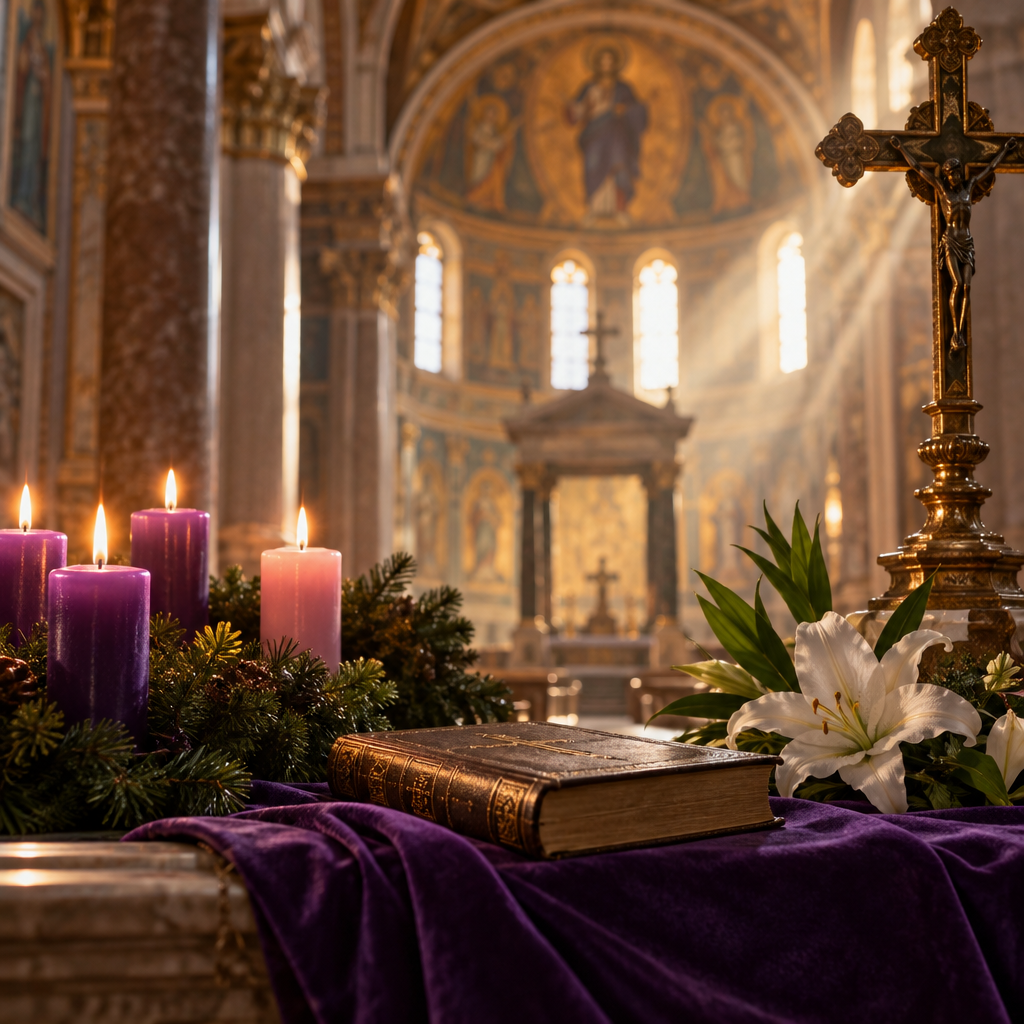
A church doorway can hold so much of a life: the arrival of a child for Baptism, a quiet visit during grief, the joyful steps of a wedding day. These places matter because, within them, God gathers His people and nourishes them with His grace.
This Tuesday, 3 November, we are approaching a feast that invites us to look beyond our own parish doorway. On 9 November, Catholics honour the Dedication of the Lateran Basilica in Rome. It may sound like a celebration of a distant building, but its meaning is wonderfully close to home.
Why this church matters
The Archbasilica of St John Lateran is the cathedral of the Bishop of Rome, the Pope. St Peter’s Basilica is more widely recognised, but the Lateran is where the Pope’s cathedral chair, or cathedra, stands: a sign of his teaching and pastoral office.
The original basilica was dedicated in the fourth century, after the Emperor Constantine’s support helped Christians begin worshipping openly in monumental churches. The building has suffered damage and undergone extensive rebuilding over the centuries. Its continuing role, rather than unchanged stones, connects the present Church with those early Christian generations.
Dedicated to Christ the Saviour, and also associated with St John the Baptist and St John the Evangelist, the Lateran is honoured as the mother church of Catholic churches throughout the world.
Its feast expresses our communion with the Bishop of Rome and with Catholics far beyond our own neighbourhoods.
More than bricks and marble
Catholics dedicate churches to God because worship is not merely an idea. We are embodied people: we enter, kneel, listen, sing and receive. A sacred place helps us offer our whole selves to the Lord.
Yet the feast does not suggest that God can be contained within walls. The readings for 9 November draw our attention to something deeper. Ezekiel’s vision of water flowing from the Temple speaks of life and healing (Ezekiel 47:1–2, 8–9, 12). St Paul describes the Christian community as God’s temple, with Christ as its foundation (1 Corinthians 3:9–11, 16–17).
In the Gospel, Jesus speaks of the temple of His body, pointing towards His Resurrection (John 2:13–22). Every Christian church finds its meaning in Him.
The question is not simply whether our churches are beautiful, but whether we allow Christ to build us into a people of prayer, holiness and charity.
Preparing at home
You do not need an elaborate observance. Between now and Monday, 9 November, try one or two simple practices:
- Pray for the Church. Remember the Pope, your bishop, parish priests and Christian communities facing persecution. Ask for faithfulness, unity and healing wherever trust has been wounded.
- Make a small place for prayer. Set a Bible and a crucifix on a clear surface. This does not turn your home into a consecrated church; it simply makes room for regular attention to God.
- Read one feast-day passage slowly. Begin with 1 Corinthians 3:9–11, 16–17. Consider what it means for your household’s life to rest on Christ.
- Care for your parish. Offer practical help, support its work if you can, or quietly thank someone whose service often goes unnoticed.
If possible, attend Mass on 9 November or visit a church for a few minutes of prayer.
A place in God’s household
This feast reminds us that Catholic life is never a solitary project. We belong to Christ and, through Him, to one another.
Whether your parish is an ancient stone church or a modest room, may you enter it knowing that there is a place for you in God’s household.