Making Room for Holiness: Preparing for All Saints at Home
As All Saints approaches, discover the hope behind the feast and simple ways to prepare for it through prayer and family life.
The washing still needs doing. Someone needs a patient answer. There is work to finish, a meal to prepare, perhaps a worry that will not quite settle. These ordinary places are also where holiness can grow.
On Wednesday, 21 October 2026, the Church is in Ordinary Time, with the feast of All Saints approaching on 1 November. This season invites us to follow Jesus steadily: not only in moments of celebration, but through the repeated choices that shape a life.
All Saints brings that invitation into focus. The saints were people in whom God’s grace bore fruit. Their feast reminds us that holiness is not reserved for a fortunate few.
What All Saints means
All Saints honours everyone who is with God in heaven: the canonised saints whose names we know, and the countless others whose holiness remained largely hidden from the world.
Perhaps their lives included exhausting work, illness, family difficulties or long periods of uncertainty. What united them was not an absence of struggle, but God’s saving grace and their response to it.
In Revelation, the vision of a multitude from every nation standing before God offers a glimpse of this joyful communion (Revelation 7:9–17). Heaven is not a gathering of one kind of person. God calls people from every nation and circumstance into his life.
Catholics ask the saints to pray for us because we believe that those united to Christ remain united to his people. We worship God alone; honouring the saints celebrates what his grace has accomplished.
How the feast took shape
The feast has roots in the early Christian practice of honouring martyrs, including groups whose individual names were not always known.
In 609, Pope Boniface IV dedicated the Pantheon in Rome as a Christian church in honour of Mary and the martyrs. That dedication was celebrated on 13 May. Over the following centuries, 1 November became established in the Western Church as the feast of All Saints.
Its embrace reaches beyond the martyrs to all the blessed in heaven. It is both a celebration of their joy and an encouragement for those still on the journey.
A simple way to prepare at home
You do not need elaborate decorations or a crowded programme. Begin with a small, sustainable practice between now and 1 November.
- Choose one saint to learn about. Read a reliable account of their life. Notice one virtue you could practise, rather than trying to imitate every detail of their circumstances.
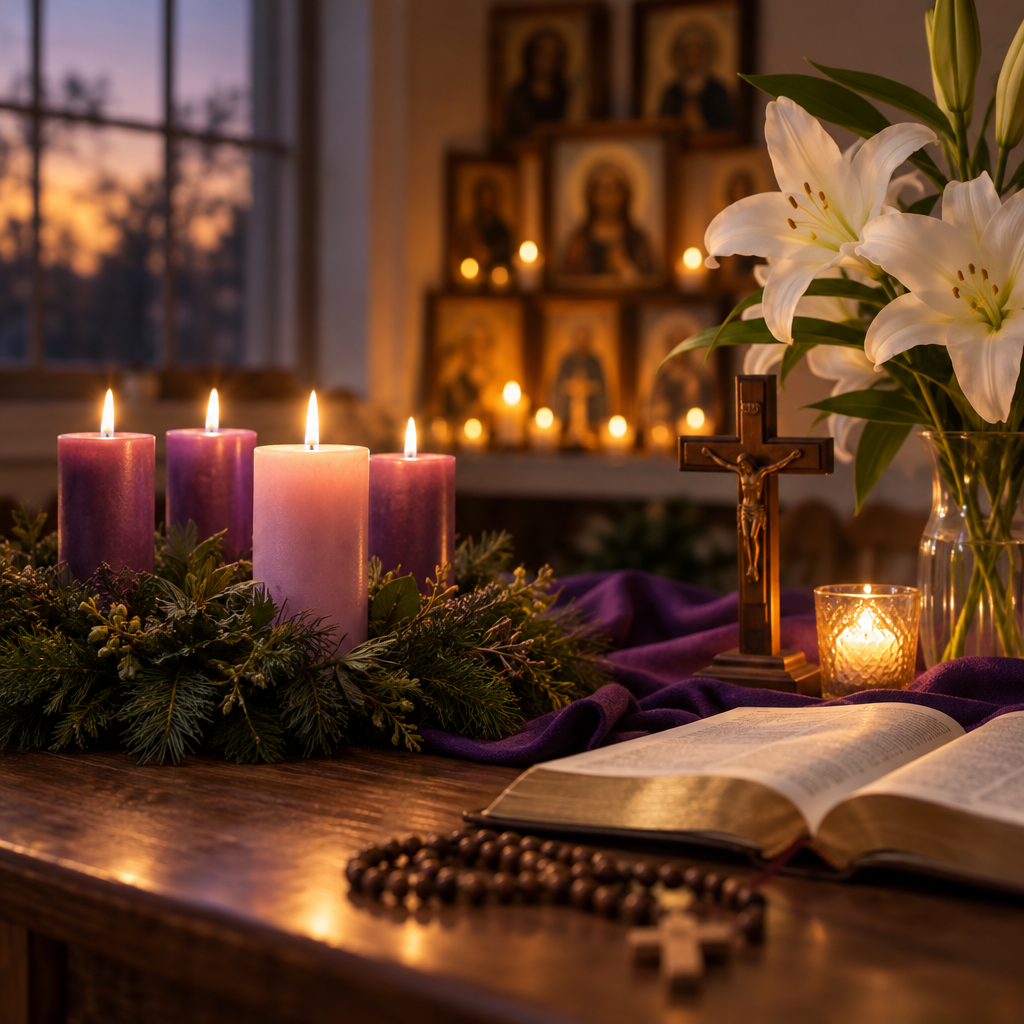
- Make a quiet prayer space. Place a cross, a saint’s image or a safely positioned candle somewhere visible. Spend a few minutes there each day asking God for the grace to love faithfully.
- Practise one hidden kindness. Do an unnoticed task, listen without interrupting, or offer practical help without seeking recognition.
- Prepare for Mass. Check your parish’s arrangements for All Saints. If you have children, explain that the feast honours the whole family of saints in heaven.
Remembering those who have died
All Saints is followed by All Souls on 2 November. The two observances are connected but distinct: All Saints honours those in heaven; All Souls is especially devoted to prayer for the faithful departed who are still being purified.
At home, you might write down the names of loved ones who have died and pray for them. Gratitude and grief can sit together before God.
For now, begin where you are. Offer him the next small act of love. The road to holiness runs through this ordinary day.