Preparing for All Saints: A Home Filled with Hope
Prepare for All Saints and All Souls with simple prayer, family traditions and the Christian hope that love is not ended by death.
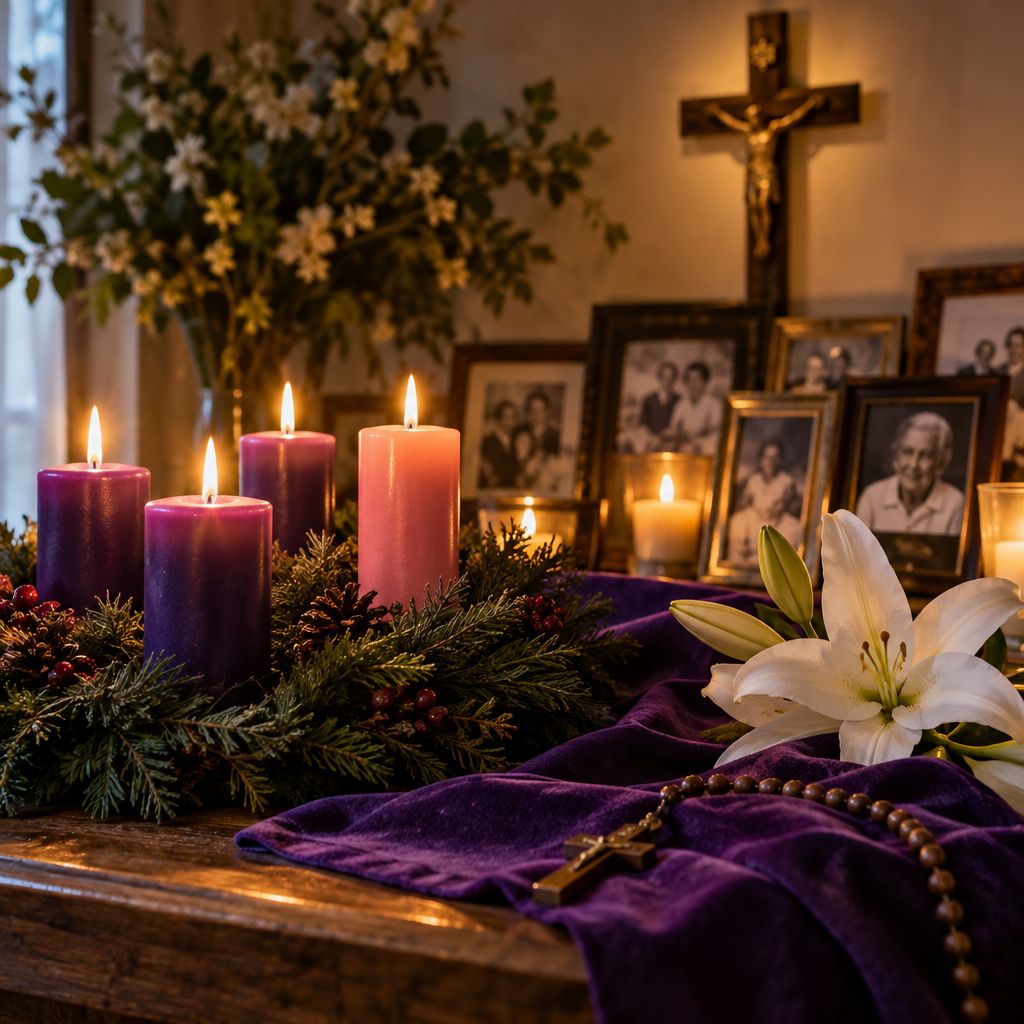
The approach of November invites us to look beyond what we can see. As autumn deepens, the Church turns our attention towards the saints in heaven and the faithful departed: people whose lives remind us that our earthly journey is not the whole story.
This Tuesday, 27 October, offers a little breathing space before All Saints on Sunday, 1 November, and All Souls on Monday, 2 November. We can prepare without elaborate plans. A candle, a remembered name and a few quiet minutes can become a doorway into hope.
All Saints: holiness is our calling too
All Saints honours everyone who is with God in heaven—not only those formally recognised by the Church, but also the countless holy people whose names we will never know.
The feast has deep roots in Christian remembrance of the martyrs. In 609, Pope Boniface IV dedicated the Pantheon in Rome as a church honouring Mary and the martyrs. In the eighth century, Pope Gregory III dedicated a chapel at St Peter’s to all the saints; the observance of All Saints on 1 November spread more widely in the ninth century.
Yet this feast is more than a glance backwards. It tells us something about our own future. Holiness is not reserved for people with extraordinary gifts or dramatic stories. God calls us to become holy through grace, in the circumstances of ordinary life.
The Beatitudes offer a portrait of that life: mercy, purity of heart, peacemaking and faithfulness amid suffering (Matthew 5:1–12). The saints show that these are not merely beautiful ideals. With God’s help, they can become daily habits.
All Souls: love expressed through prayer
All Souls follows with a different emphasis. Rather than honouring those already enjoying heaven, we pray for the faithful departed who are being purified before entering the fullness of God’s presence.
Catholic teaching calls this purification purgatory. It is not a second chance after death, nor a rival to Christ’s saving work. It is the final purification of those who die in God’s friendship but still need to be made perfectly holy.
A significant step in the history of All Souls came in 998, when St Odilo of Cluny established a day of prayer for the departed in the monasteries under his care. The observance gradually spread.
For those carrying grief, this day makes room for both tears and trust. We need not pretend that loss is easy. We can bring the people we miss before the mercy of God.
Simple ways to prepare at home
Choose one saint to learn about. Read a reliable short biography, perhaps of your patron saint or someone whose struggles speak to your own. Ask what one virtue you could practise this week.
Make a small place for prayer. Set out a cross, a safely placed candle and a list of people who have died. With children, explain gently that we entrust those we love to God.
Pray for the departed. You might use the traditional prayer: “Eternal rest grant unto them, O Lord, and let perpetual light shine upon them. May they rest in peace. Amen.”
Let remembrance become charity. Give to someone in need, prepare a meal or visit a lonely neighbour in memory of a loved one. Such kindness does not erase grief, but it gives love somewhere to go.
Plan for worship. Join Mass for All Saints and, if possible, All Souls. A quiet cemetery visit can also become a time of prayer and thanksgiving.
A hope larger than our sorrow
These November days hold together two truths: death brings real sorrow, and Christ has opened the way to eternal life. We honour the saints, pray for the departed and ask for grace to keep walking faithfully ourselves.
Begin simply this week. Let one small act of prayer make room for hope.