Nicaea: Why a Council in 325 Still Matters
Why did bishops gather at Nicaea in 325, and how does their answer to a question about Jesus still shape Christian prayer?
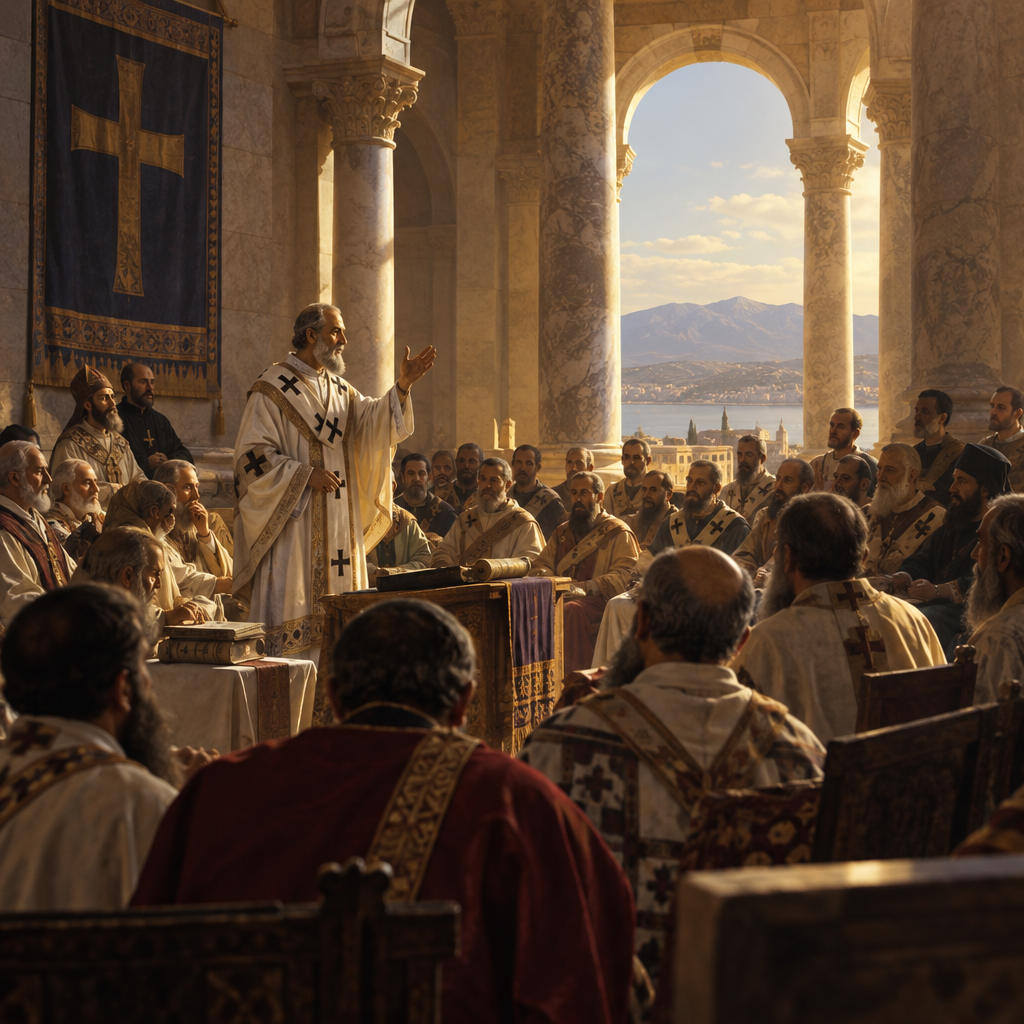
A word spoken at Sunday Mass carries us back more than seventeen centuries, to a gathering of bishops in what is now Türkiye. That word is consubstantial. It can sound forbiddingly technical, yet behind it lies a deeply personal question: when we encounter Jesus Christ, do we truly encounter God?
For this Saturday, 24 October 2026, we look back at the Council of Nicaea — a turning point in Christian history whose teaching still shapes our worship and hope.
A Church emerging into daylight
In 325, Christianity was living through an extraordinary change. Within living memory, Christians had suffered severe persecution under Roman emperors. Now the Emperor Constantine favoured the Church and wanted unity within it.
But a serious dispute had spread from Alexandria in Egypt. Arius, a priest there, taught that the Son of God did not share the Father’s eternal divine being. In his account, the Son was exalted above all other creatures, but had nevertheless been brought into existence.
His bishop, Alexander, opposed this teaching. If the Son was not truly God, the dispute touched far more than theological vocabulary. It concerned Christian worship, the meaning of salvation, and the identity of the Lord whom Christians followed.
Why the bishops gathered
Constantine summoned bishops to Nicaea, now İznik, in 325. They came chiefly from the eastern parts of the empire, though the West was also represented. Some bore the physical marks of persecution.
The emperor hoped to restore religious peace. The bishops, however, faced a question that political agreement alone could not settle: what teaching faithfully expressed the Church’s belief in Jesus Christ?
The council did not invent belief in Christ’s divinity. Christians had long worshipped him, baptised in the name of the Father, Son and Holy Spirit, and read the Scriptures as bearing witness to his divine identity. The challenge was to state that faith clearly enough to exclude an interpretation that made the Son a creature.
One word with lasting importance
The council declared the Son to be homoousios with the Father: of the same substance, or consubstantial.
This did not mean that the Father and the Son were the same person. It meant that the Son truly shares the one divine nature. He is not a lesser god, nor the highest being within creation.
The bishops expressed this through language Christians still recognise: the Son is begotten, not made. His relationship with the Father is not the relationship of a manufactured thing to its maker.
For Catholic faith, this matters profoundly. In Jesus, God has not merely sent a distant representative. The eternal Son has truly entered our human life. Our salvation rests upon God’s own action and love.
What Nicaea did not do
A persistent modern story claims that Nicaea decided which books would belong in the Bible. It did not. The council’s surviving decisions concern matters including the Son’s relationship with the Father, the observance of Easter, and Church discipline — not a vote selecting the biblical books.
Nor did the council instantly end the controversy. Decades of argument, imperial intervention and exile followed. Athanasius, who attended as a deacon accompanying Alexander and later became bishop of Alexandria, emerged as a determined defender of Nicene faith.
The creed commonly called the Nicene Creed at Mass is not simply the council’s original text. Its fuller form is associated with the Council of Constantinople in 381, which further articulated the Church’s confession, especially concerning the Holy Spirit.
History that becomes prayer
Church history includes difficult debates, imperfect people and the pressures of political power. Nicaea’s story contains all three. Yet it also shows the care with which the Church sought to protect something precious: the truth about the One who saves us.
When we profess the Creed, we join generations of Christians who have trusted that Jesus is truly God and truly close to us.
The next time the word consubstantial passes our lips, we might pause inwardly in gratitude. The Lord who comes to meet us is no stranger to our humanity — and no stranger to the eternal life of God.