A Pilgrim’s Guide to Lourdes: St Bernadette, the Grotto and the Gift of Hope
Discover St Bernadette’s story, the grotto and baths at Lourdes, with practical advice for a peaceful, prayerful pilgrimage.
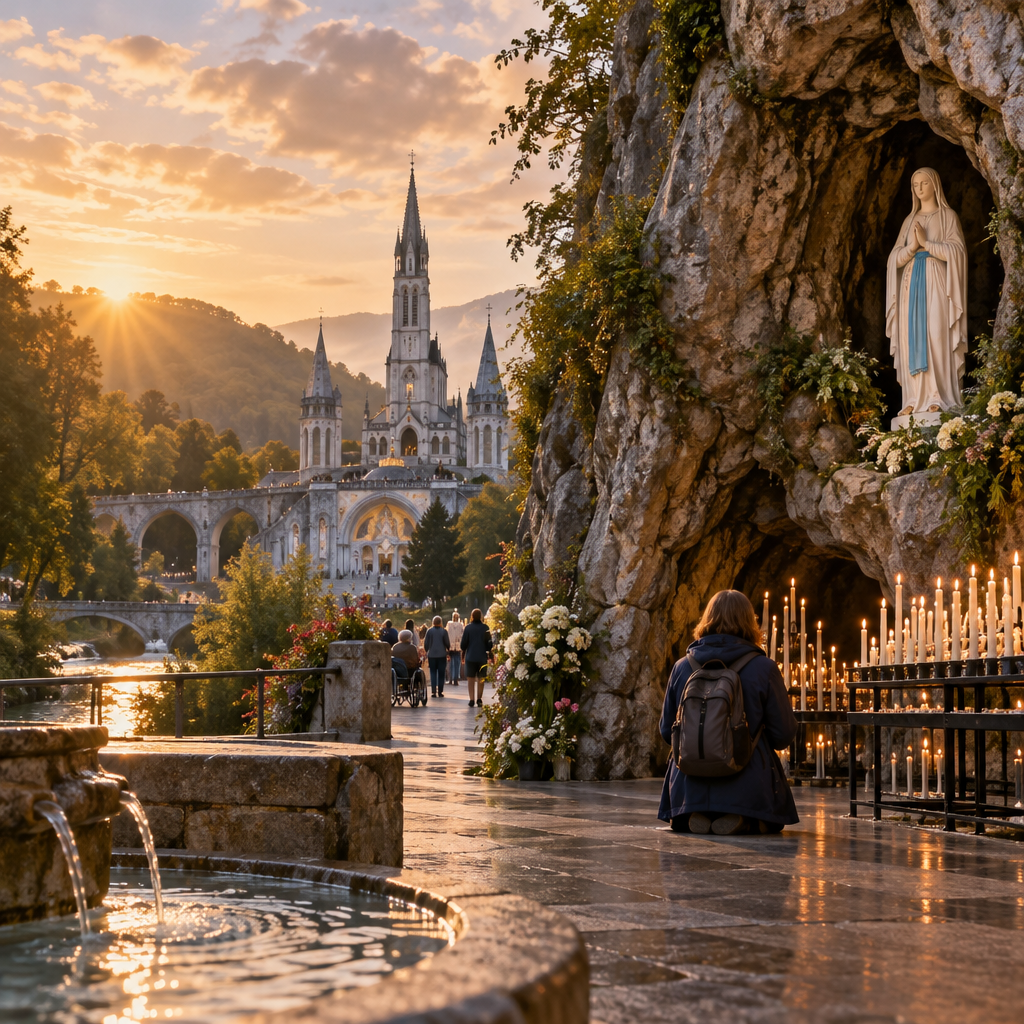
A place to bring your burdens
At the foot of the French Pyrenees, Lourdes welcomes pilgrims carrying hopes, illnesses, grief and gratitude. Some arrive with deep faith; others come with questions they cannot yet put into words.
At its heart is a simple invitation: to draw closer to Christ with Mary’s help. You need not arrive expecting an extraordinary experience. A quiet prayer beside the rock, a candle lit for someone you love, or an act of kindness towards another pilgrim can be enough.
St Bernadette’s story
In 1858, Bernadette Soubirous was a fourteen-year-old girl from a poor family in Lourdes. On 11 February, while gathering firewood near the Grotto of Massabielle, she experienced the first of eighteen apparitions of a lady whom the Catholic Church later recognised as the Blessed Virgin Mary.
During the apparitions, Bernadette was called to prayer and penance. Following the lady’s instruction, she uncovered a spring in the grotto’s muddy ground. The water became closely associated with Lourdes and its ministry to the sick.
On 25 March, the lady identified herself as the Immaculate Conception. For Catholics, this title expresses the belief that Mary, through God’s grace and the merits of Christ, was preserved from original sin from the first moment of her existence.
Bernadette later entered religious life with the Sisters of Charity of Nevers. She died in 1879 and was canonised in 1933. Her body rests in Nevers, not Lourdes—a helpful distinction if you hope to visit her shrine as well.
The Church treats approved apparitions as private revelations: they do not add to the Gospel, but may help the faithful live it more fully.
The grotto: the heart of the pilgrimage
The Grotto of Massabielle remains the sanctuary’s spiritual centre. A statue of Our Lady stands in a niche above the place where pilgrims gather for prayer and Mass.
When access permits, visitors can walk through the grotto, touching the rock as a simple gesture of devotion. There is no obligation to do so. You may prefer to remain nearby, listening to the prayers or sitting quietly before God.
Allow time without a camera or a tightly packed itinerary. Lourdes can be busy, yet a few unhurried minutes often become the most treasured part of a visit.
The water and the baths
Lourdes water is a sign inviting faith and prayer, not a magical remedy or a substitute for medical care. The Church has recognised some healings associated with Lourdes as miraculous, following careful investigation, but no pilgrim is promised physical healing.
Many discover another kind of grace: courage to continue treatment, reconciliation within a family, or the reassurance that suffering need not be carried alone.
The baths are a place of prayerful welcome, assisted by volunteers. Arrangements have changed over time, and a water gesture—washing the hands and face and drinking the water—may be offered rather than immersion. Check the sanctuary’s official information before travelling, and do not assume that immersion will be available.
Bring a small reusable bottle for the designated drinking-water taps. Follow signs carefully: not every water outlet is intended for drinking. Ask sanctuary staff about current bath access, opening times and any arrangements for visitors needing assistance.
What else to see
Above the grotto, the Basilica of the Immaculate Conception rises over the sanctuary. The Basilica of Our Lady of the Rosary is especially known for its mosaics, while the vast underground Basilica of St Pius X accommodates large congregations.
In town, the Boly Mill, where Bernadette was born, and the Cachot, the cramped former prison room where her family lived during the apparitions, reveal the poverty of her early life. Check opening times before setting out.
When scheduled, the evening torchlight Marian procession offers a moving experience of prayer across languages and nations. Consult the daily programme for Masses, Eucharistic processions, confession and other services.
Planning your journey
Lourdes has a railway station with connections to major French cities; some journeys require a change. Tarbes–Lourdes–Pyrénées Airport is nearby, while Pau and Toulouse provide further options. Airport services and onward transport vary, so confirm connections before booking.
From the station, the sanctuary is reachable on foot for many visitors, though luggage, slopes and mobility needs may make a taxi or local transport preferable.
Late spring and early autumn often offer a good balance of milder weather and a fuller pilgrimage programme. Summer and major Marian feasts can be crowded. Winter is generally quieter, but some services and facilities operate reduced schedules.
Pack comfortable shoes, layers, waterproof clothing, sun protection, prescribed medicines and a small day bag. For accessibility support, contact your accommodation and the sanctuary ahead of time; an organised pilgrimage may provide additional assistance.
Come as you are
Lourdes is not a test of how strongly you believe. Bring your questions as honestly as your prayers, and leave room to receive the kindness of others.
May your pilgrimage lead you closer to Christ, who never measures your worth by your strength or health.