Lough Derg: A Guide to Ireland’s Three-Day Pilgrimage
Discover Lough Derg’s story, sacred places and three-day pilgrimage, with practical advice for a prayerful journey to County Donegal.
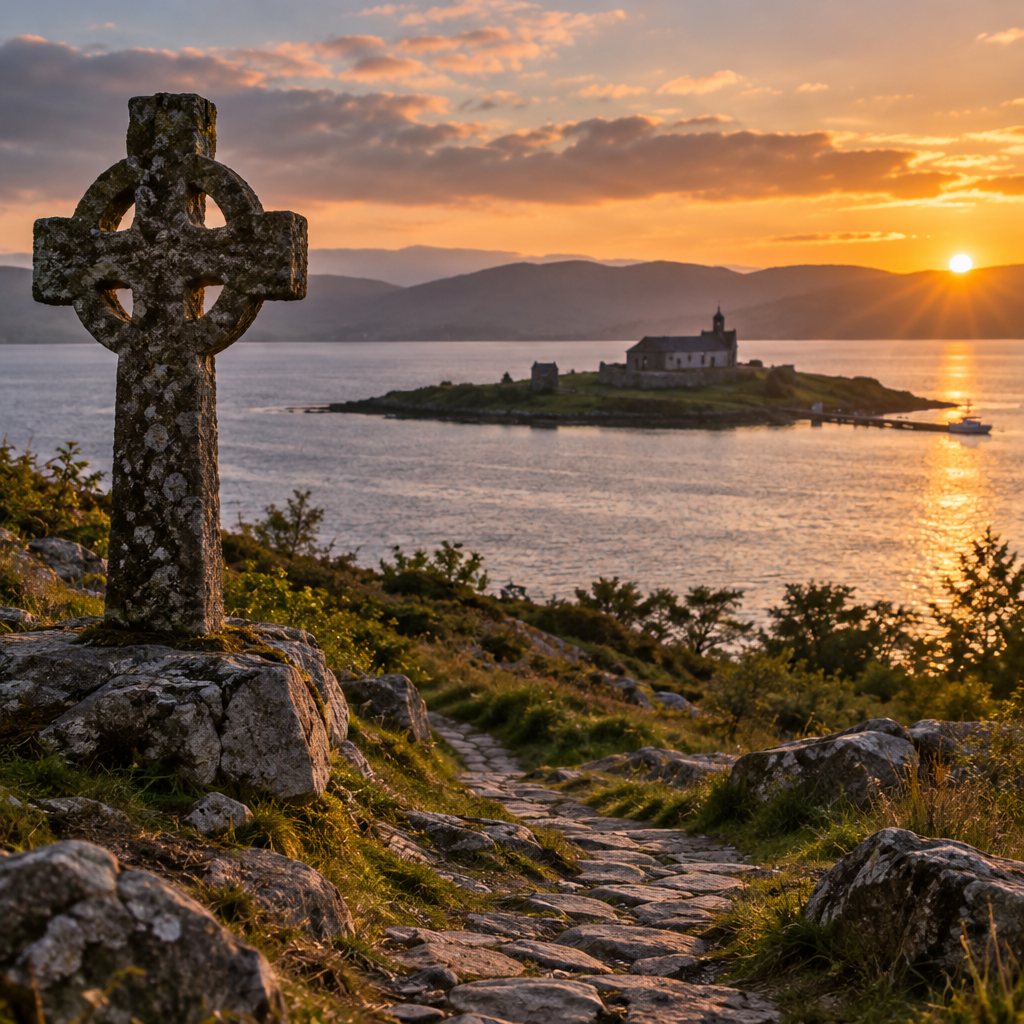
An island where prayer becomes physical
The boat journey to Station Island is short, but the crossing can feel like a threshold. Behind you lies the road through County Donegal; ahead is Lough Derg’s ancient place of pilgrimage, known as St Patrick’s Purgatory.
Here, pilgrims pray barefoot, fast and keep vigil through the night. There is little sightseeing in the usual sense. The invitation is to step away from distraction and turn towards God with honesty, repentance and hope.
This is a demanding Catholic pilgrimage, not a retreat with an optional programme. Its simplicity is part of its gift: people arrive carrying different burdens and follow the same path of prayer together.
The story behind St Patrick’s Purgatory
Tradition holds that St Patrick was shown a cave or pit here where people might be brought to repentance through a powerful encounter with the consequences of sin. The stories associated with that place gave the sanctuary its enduring name.
These accounts belong to the pilgrimage’s legendary tradition; they should not be treated as verified descriptions of Patrick’s life. Nor does the name mean that the island is literally purgatory. In Catholic teaching, purgatory is the final purification of those who die in God’s grace but still need purification before entering heaven.
Lough Derg has deep medieval roots. A monastic community associated with St Davog developed on nearby Saints Island, and medieval accounts of St Patrick’s Purgatory carried its reputation far beyond Ireland. Pilgrims travelled from across Europe.
The sanctuary endured suppression and destruction, yet pilgrimage returned. Over time, Station Island became the centre of the devotion. Its continuing life bears witness to generations who sought God’s mercy here, often at considerable personal cost.
What the three days involve
Pilgrims arrive on the first day and leave on the morning of the third. Soon after reaching the island, they remove their shoes and begin the prescribed pattern of prayer.
The opening vigil lasts through the first night, with pilgrims remaining awake until the second evening. Prayer stations involve walking, standing and kneeling, including rounds of the outdoor penitential beds. Mass, communal prayer and opportunities for the Sacrament of Reconciliation shape the pilgrimage.
Fasting is integral, with very simple food and drink provided according to the sanctuary’s rules. Read the current instructions before travelling: preparation begins before arrival, and the fast continues beyond departure on the third day.
The purpose is not to prove endurance or earn God’s love. Penance is a response to grace, making room for conversion, intercession and a renewed trust in Christ.
What to see—and how to see it
St Patrick’s Basilica is the island’s principal landmark and a focus of communal worship. Let time inside be prayerful rather than hurried: the building makes most sense as part of a living sanctuary.
The penitential beds are low stone enclosures associated with early monastic remains and dedicated to saints. They are not sleeping places. Pilgrims follow a traditional sequence of prayers around and within them.
St Patrick’s Cross and the lakeside setting also form part of the island’s distinctive character. Water, weathered stone and the sound of other pilgrims praying can draw attention towards what ordinary busyness conceals.
Do not expect to explore the legendary cave: it is not an accessible visitor attraction. The pilgrimage centres on the island’s present places of worship and prayer.
Getting there and choosing your season
The sanctuary lies near Pettigo in County Donegal, close to the border with County Fermanagh. Set your route for the Lough Derg visitor centre and boat departure point, not simply “Lough Derg”: another lake shares the name elsewhere in Ireland.
Driving is generally the simplest option. Public transport connections to the surrounding area are limited, so check services carefully and arrange the final journey in advance. Organised parish or pilgrimage coaches may offer another route.
The three-day pilgrimage normally takes place during the summer, broadly from June to mid-August. Confirm the current season, arrival times, booking arrangements and charges at loughderg.org before making plans. Other retreats have different schedules and requirements.
What to bring—and when to pause
Pack lightly: warm layers, waterproof outerwear, a change of clothing, toiletries, a towel and any essential medication. Follow the sanctuary’s current packing guidance for accommodation and bedding. Even summer weather can be cold and wet.
Check the eligibility rules, including the minimum age, currently 15. Barefoot walking, fasting and prolonged wakefulness require serious consideration. Seek medical advice if you have a health condition, are pregnant or take medication affected by food or sleep; never alter prescribed treatment to complete the pilgrimage.
If these demands are unsuitable, ask about a one-day retreat or another supported way to visit. A gentler pilgrimage is not a lesser act of faith.
Come with an intention, but leave room for God’s surprises. You need not arrive unburdened; you need only come willing to pray.