A Pilgrimage to Lisieux: Walking the Little Way of St Thérèse
Discover St Thérèse’s Lisieux: her Carmel, the basilica and family home, with practical advice for a prayerful pilgrimage in Normandy.
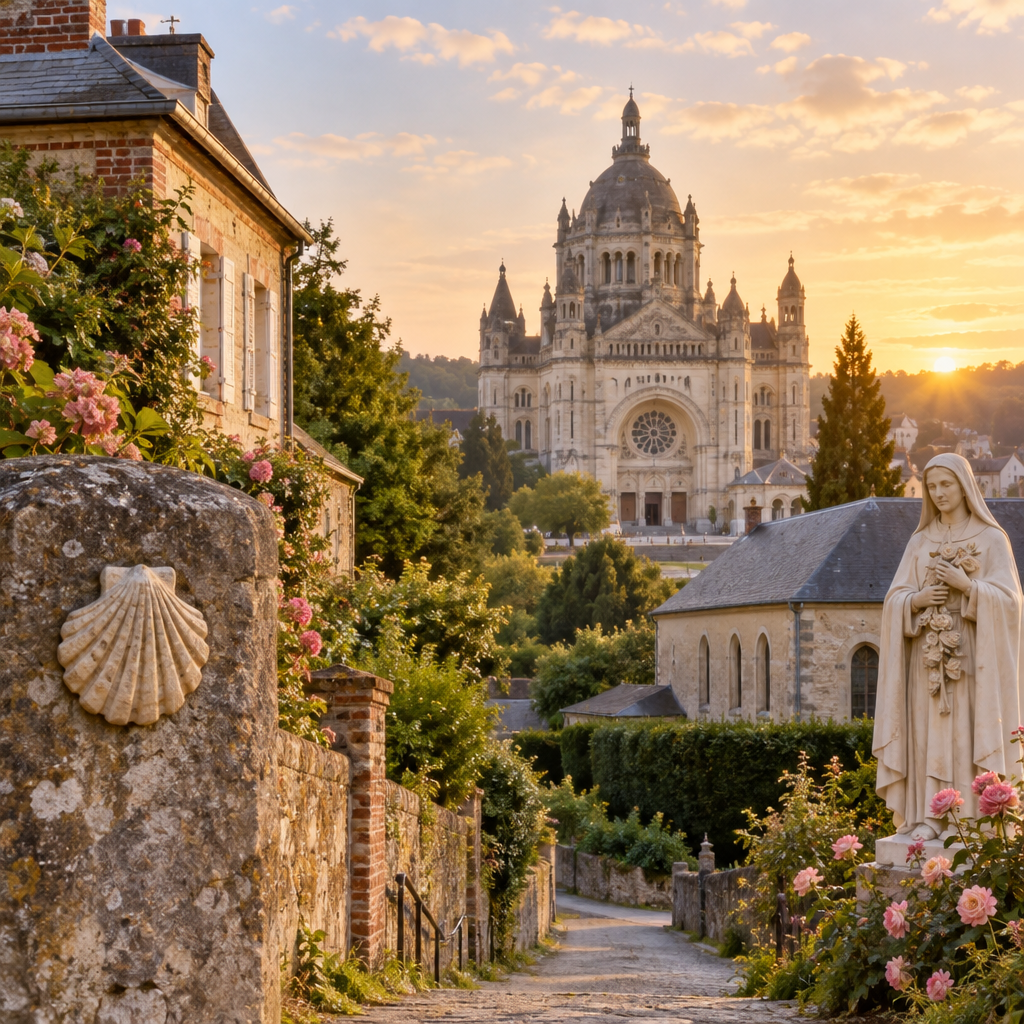
A quiet chapel and a vast basilica tell the same story in Lisieux: holiness is not reserved for those who do extraordinary things. Here in Normandy, St Thérèse of the Child Jesus and the Holy Face discovered a path to God through trust, humility and love in ordinary life.
For pilgrims, Lisieux offers more than monuments to a beloved saint. It offers space to slow down, pray honestly and consider how her “little way” might take root at home.
The young woman behind the pilgrimage
Thérèse Martin was born in Alençon in 1873. After her mother, Zélie, died in 1877, the family moved to Lisieux. Her father, Louis, raised his daughters in a household shaped by affection, faith and sorrow. Louis and Zélie were canonised together in 2015.
In 1888, aged fifteen, Thérèse entered the Carmelite convent in Lisieux. Her enclosed life was outwardly simple: prayer, community duties and the daily challenge of loving the people beside her. She died of tuberculosis in 1897, aged twenty-four.
Her autobiographical writings, published after her death as Story of a Soul, brought her spirituality to readers far beyond Normandy. Canonised in 1925, she was declared a Doctor of the Church in 1997, recognising the significance of her teaching.
Her little way is not an invitation to avoid difficulty. It is a way of meeting our weakness with confidence in God’s mercy, and of doing small things with genuine love.
The Carmel: begin with silence
The Carmel is the spiritual heart of a visit. This is where Thérèse lived her religious vocation, largely hidden from the world that would later come to know her.
The public chapel contains a shrine with a reclining representation of Thérèse and her relics. Allow time simply to sit here. You need not arrive with eloquent prayers; gratitude, grief or a quiet request for help is enough.
Visitor displays introduce her life and spirituality. They can help place the familiar images of roses and the young Carmelite within the reality of a woman who experienced illness, spiritual darkness and the demands of community life.
Remember that the Carmel remains a place of enclosed religious life, not a convent open for unrestricted exploration. Respect barriers, silence and any guidance about photography. If you hope to attend Mass, check the current chapel schedule before travelling.
The basilica: a small life, a worldwide witness
Above the town rises the Basilica of St Thérèse, built to welcome the growing numbers of pilgrims drawn by her witness. Construction began in 1929, and the basilica was consecrated in 1954.
Its scale may seem surprising beside Thérèse’s love of littleness. Yet the building points not to worldly achievement, but to the reach of a life entrusted to God.
Inside, pause over the mosaics and the great sweep of the upper church. Then visit the crypt, whose decoration draws visitors into the story of Thérèse’s life. Rather than trying to absorb every detail, choose one image and let it become a starting point for prayer.
The grounds also offer views across Lisieux. Leave time for the uphill journey and for resting, especially if walking is difficult. Check current accessibility arrangements with the sanctuary if you need step-free routes or assistance.
Her family home and parish church
Les Buissonnets, the Martin family home in Lisieux, brings the pilgrimage back to a domestic scale. Here, Thérèse’s childhood and family relationships become easier to imagine. Check opening arrangements before making a special journey, as access can change.
St Peter’s Cathedral also deserves a visit. Thérèse worshipped here before entering Carmel, and its older stonework places her story within centuries of Christian prayer.
Together, these places reveal something important: her vocation did not appear fully formed behind convent walls. It grew through family life, worship, loss and the gradual learning of trust.
Planning your journey
Lisieux has rail connections with Paris Saint-Lazare, Caen and other Normandy destinations. Check current timetables and whether your chosen service requires a change. From the station, the main pilgrimage sites are accessible on foot for many visitors, though slopes and distances make taxis useful for some.
By car, Lisieux is a practical stop within a wider Normandy journey. Check parking arrangements for each site rather than assuming you can leave your vehicle beside every entrance.
Spring and early autumn often offer a comfortable balance of weather and quieter surroundings. Summer can be busier, while celebrations around Thérèse’s feast on 1 October may draw additional pilgrims. Normandy weather is changeable throughout the year.
Bring comfortable shoes, a waterproof layer, water and any necessary medication. A small notebook, rosary or copy of Story of a Soul can support prayer without making your bag heavy. Dress respectfully for worship spaces.
Allow a full day for the principal sites, or stay overnight for a gentler pace. Before setting out, consult the official Lisieux sanctuary information for opening times, services and temporary closures.
Leave room in the itinerary for silence. The most lasting souvenir may be one small act of love you choose to practise when you return home.