How the Rosary Developed: A Prayer Shaped Across the Centuries
Discover how the Rosary grew over centuries into a beloved prayer of Scripture, meditation and trust in Christ with Mary.
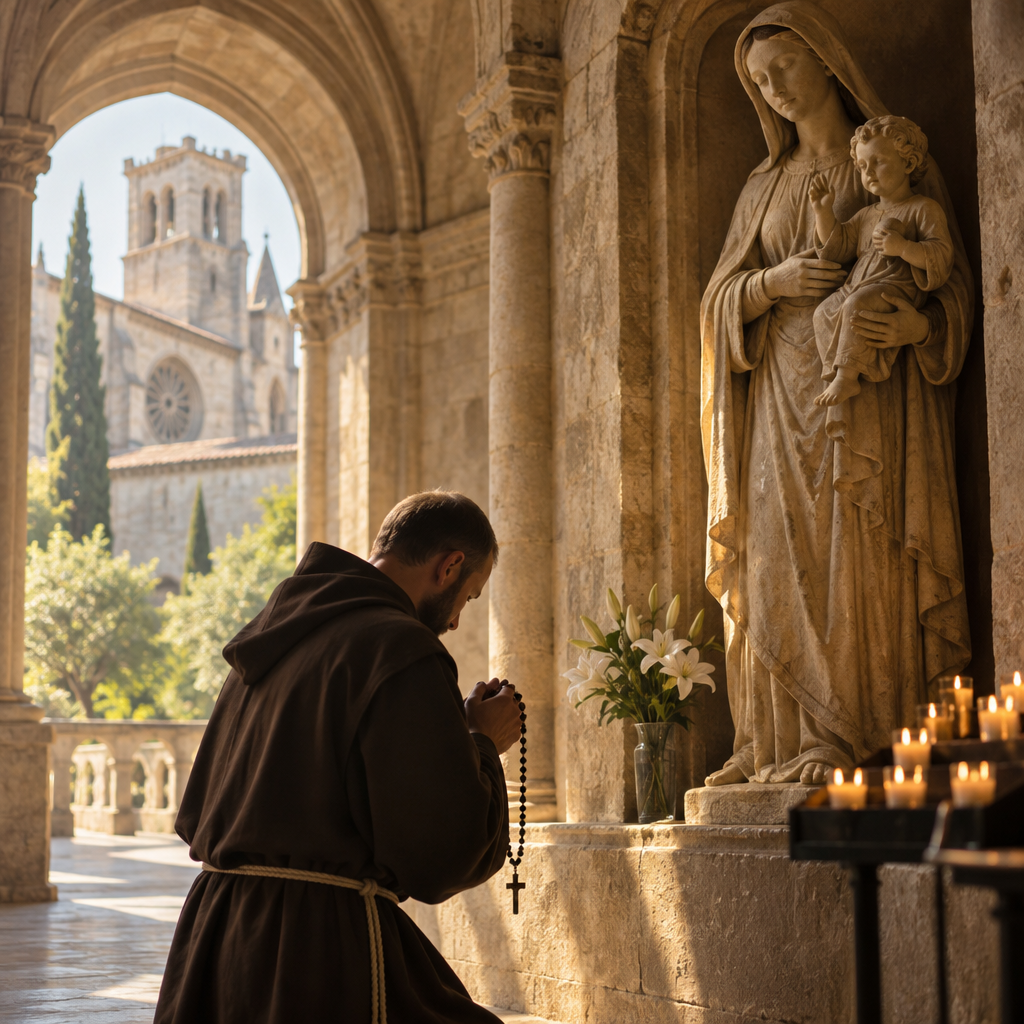
The Rosary can feel timeless: beads passing through the fingers, familiar prayers on the lips, and the life of Jesus unfolding in the heart. Yet the prayer Catholics know today did not appear all at once.
It developed gradually, drawing together older habits of prayer, devotion to Mary and meditation on the Gospel. Its history shows how a simple practice can deepen across generations while remaining accessible to ordinary people.
Before the Rosary: counting prayers
Long before the Rosary took its familiar shape, Christians used practical ways to count repeated prayers. Knotted cords, pebbles and, later, strings of beads helped worshippers keep their place.
Medieval monastic life was shaped by the 150 psalms. Alongside this tradition, repeated Our Fathers became a prayer practice for some people who could not read or readily take part in the full cycle of psalm prayer. Sets of 150 Our Fathers offered an accessible counterpart to the Psalter.
These practices were not yet the Rosary, but they provided part of its foundation: prayer that could be remembered, counted and woven into daily life.
How the Hail Mary took shape
The Hail Mary also developed over time. Its opening draws on Gabriel’s greeting to Mary and Elizabeth’s blessing of her in Luke’s Gospel (Luke 1:28, 42).
During the Middle Ages, Christians increasingly joined these biblical greetings in prayer. Groups of repeated Marian greetings, sometimes numbering 150, became known as a Marian Psalter.
The prayer’s concluding petition, asking Mary to pray for sinners now and at the hour of death, developed later. The familiar wording became established in Catholic use during the sixteenth century.
This gradual history matters: the earliest people praying Marian beads were not necessarily saying exactly the same words Catholics say today.
Did Saint Dominic receive the Rosary?
A beloved tradition holds that the Virgin Mary entrusted the Rosary to Saint Dominic in the early thirteenth century, encouraging him to promote it as an aid to preaching and conversion.
This tradition has deeply influenced Catholic devotion and art. However, surviving evidence from Dominic’s own lifetime does not establish the familiar account of a single occasion when he received the Rosary in its present form. Historians trace the prayer’s development through several centuries rather than to one documented founding moment.
What is clear is the important role of the Dominican Order in spreading the Rosary. In the fifteenth century, the Dominican Alan de la Roche promoted the Marian Psalter and helped foster confraternities: communities committed to praying it.
Catholics can appreciate this Dominican heritage while distinguishing devotional tradition from securely documented history.
From repeated prayers to Gospel meditation
The Rosary became more than a sequence of prayers as meditation on the lives of Jesus and Mary became increasingly joined to it.
Early in the fifteenth century, the Carthusian Dominic of Prussia promoted a method of adding short clauses to Marian greetings, recalling events in Christ’s life. He was one contributor to a wider development, not the sole inventor of the Rosary.
Over time, the arrangement of fifteen decades associated with the joyful, sorrowful and glorious mysteries became established. In 1569, Pope Saint Pius V described and endorsed a form recognisably close to this traditional Rosary.
After the Christian naval victory at Lepanto in 1571, which Pius V associated with the intercession of Our Lady and Rosary prayer, papal observances helped strengthen the devotion’s public place in Catholic life.
An ancient prayer with continuing life
In 2002, Saint John Paul II proposed the luminous mysteries, inviting deeper contemplation of Jesus’ public ministry: his baptism, Cana, his proclamation of the Kingdom, the Transfiguration and the institution of the Eucharist. He offered them as an optional enrichment, not a rejection of the older pattern.
Across these developments, the Rosary’s purpose remains centred on Christ. Catholics ask Mary’s intercession while contemplating the saving work of her Son; they do not worship her.
Its repeated words are not a magic formula. They offer a gentle rhythm for attention, repentance and love. Whether prayed in a church, beside a hospital bed or during a quiet moment at home, the Rosary invites us to dwell with the Gospel—and to let Christ shape our lives.