How All Souls’ Day Grew from a Monastery’s Prayer
How a prayer custom at Cluny helped shape All Souls’ Day, the Church’s annual remembrance of the faithful departed on 2 November.
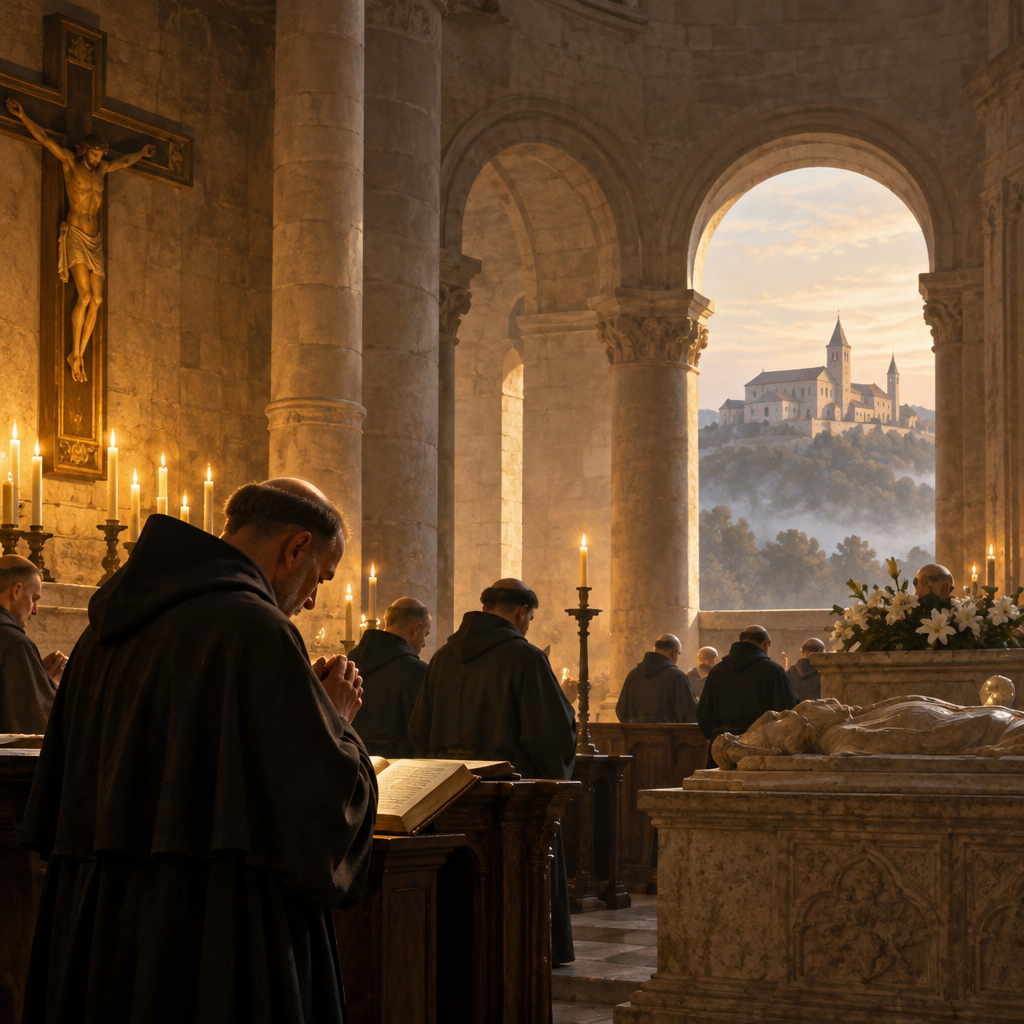
A monastery’s bells called the living to prayer. But the prayer was not only for those gathered within its walls. It reached beyond the cloister, beyond the village, and beyond death itself.
The history of All Souls’ Day leads us to medieval France, where a Benedictine abbot helped establish a remembrance that would eventually spread throughout the Western Church. This Monday, 2 November 2026, Catholics continue that work of love: praying for the faithful departed.
Prayer for the dead came first
All Souls’ Day did not invent prayer for those who have died. That practice is much older than the annual observance.
The Second Book of Maccabees describes prayers and an offering made on behalf of fallen soldiers, linking this action with hope in the resurrection (2 Maccabees 12:43–46). Catholics receive this book as Scripture; many other Christians do not, though it remains an important witness to Jewish prayer for the dead before Christ.
Early Christians also remembered the departed in prayer. Ancient Christian inscriptions ask for peace and refreshment for those who have died, while early accounts of worship show the dead being commemorated at the Eucharist.
In the late fourth century, St Monica asked her son, St Augustine, to remember her at the Lord’s altar. Augustine records her request in his Confessions. Her concern was not chiefly where her body would rest, but that she would be remembered in prayer.
The abbot who gave remembrance a date
The decisive figure in the development of All Souls’ Day was St Odilo, abbot of Cluny in Burgundy from 994 to 1049.
Cluny stood at the heart of an influential network of monasteries. Its communities placed great emphasis on worship, intercession and remembrance of the dead. A practice adopted there could travel far beyond a single monastery.
Around 998, Odilo established an annual commemoration of all the faithful departed for the monasteries under Cluny’s authority. It was to take place on 2 November, immediately after All Saints’ Day.
The arrangement carried a beautiful meaning. On 1 November, the Church honoured the saints in heavenly glory. The following day, it prayed for the departed who still needed purification before entering the fullness of that joy.
This was not an instant decree binding every Catholic community. The observance spread gradually, through monastic influence and wider acceptance over the following centuries.
A famous story—and a necessary distinction
A later account connects Odilo’s decision with a traveller who heard from a hermit about souls undergoing purification and the help they received through prayer, especially the prayers of Cluny’s monks.
Tradition holds that this report encouraged Odilo to establish the commemoration.
It is a memorable story, but it should not be treated as securely documented evidence for the observance’s origin. The firmer historical point is Odilo’s role in establishing the annual remembrance within the Cluniac monasteries, from which it spread more widely.
Faith does not require us to turn every cherished story into a proven fact.
What the Church is praying for
Catholic teaching about purgatory can sound unfamiliar or unsettling. Yet its central claim is hopeful: those undergoing this purification have died in God’s grace and are assured of salvation.
Purgatory is not a second chance after rejecting God, nor a destination competing with heaven. It is the final purification of those whom God is preparing for complete communion with himself.
Prayer for the dead expresses trust in Christ’s mercy and in the communion of saints. Death does not dissolve the bonds of love within his Body. We entrust the departed to God, asking that they may be cleansed and welcomed into his presence.
An ancient remembrance, close to home
The history of All Souls’ Day stretches across monasteries and centuries, but its practice remains deeply personal.
We can attend Mass, visit a cemetery, or pause quietly to pray for family, friends and those who have no one to remember them. We need not pretend that grief has disappeared.
Cluny’s enduring gift was to give this love a shared day of remembrance. We bring our sorrow and our hope to Christ, trusting that no life is forgotten by him.