St Winefride’s Well: A Pilgrimage to the ‘Lourdes of Wales’
Discover St Winefride’s Well in Holywell: its story, sacred buildings and practical advice for a prayerful pilgrimage to the ‘Lourdes of Wales’.
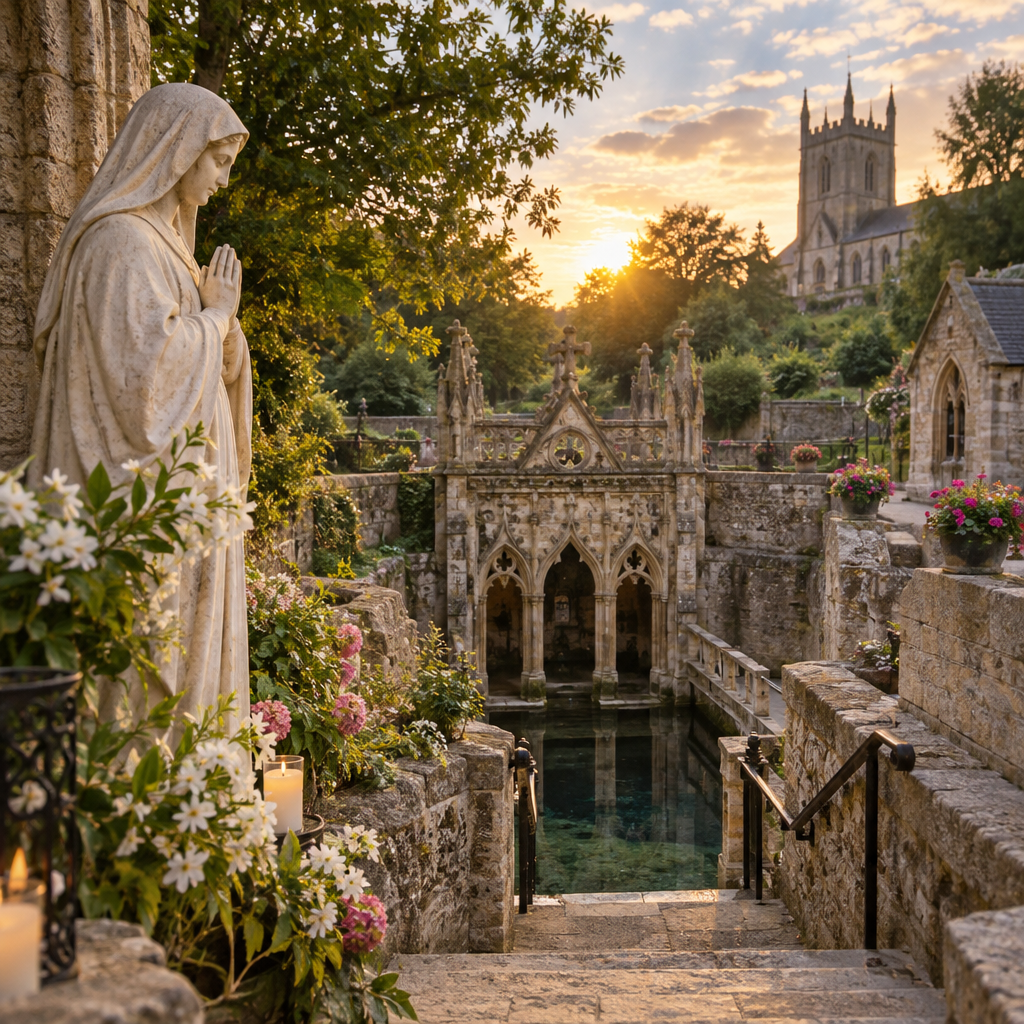
Some journeys begin with a longing we cannot quite put into words: for healing, for peace, or simply for somewhere quiet enough to pray. At St Winefride’s Well in Holywell, north Wales, pilgrims have brought such hopes to the water for centuries.
Often called ‘the Lourdes of Wales’, this ancient Christian shrine invites visitors to encounter a tradition of prayer much older than Lourdes itself. Whether you arrive with a firm faith, unanswered questions or an interest in sacred history, there is room to pause here.
The story of St Winefride
Winefride, also known by her Welsh name Gwenfrewi, is associated with seventh-century Wales. The surviving accounts of her life were written centuries later, so the dramatic details should be understood as devotional tradition rather than securely documented biography.
Tradition holds that Winefride wished to dedicate her life to God. When she resisted the advances of a man named Caradog, he struck off her head, and a spring appeared where it fell. Tradition holds that her uncle, St Beuno, prayed for her and that she was restored to life.
Tradition also holds that Winefride later lived as a nun and became an abbess at Gwytherin. Beneath the extraordinary elements of her story lies a deeply Christian witness: a woman’s dignity, her freedom to answer God’s call, and the conviction that violence does not have the final word.
Catholics ask St Winefride to pray with and for them, directing their hope towards Christ, the source of healing and salvation.
Centuries of pilgrimage
The well became an important medieval pilgrimage destination, attracting ordinary travellers as well as royal visitors. Winefride’s relics were transferred from Gwytherin to Shrewsbury Abbey in 1138, but Holywell remained a place of devotion in its own right.
The elaborate well building that visitors see today dates from around the turn of the sixteenth century and is associated with the patronage of Lady Margaret Beaufort, mother of Henry VII. Its survival gives a remarkable glimpse of the care and craftsmanship once lavished on Britain’s holy wells.
Pilgrimage continued through the religious upheavals of the Reformation and the restrictions that followed. That persistence helps explain the shrine’s special place in Catholic memory: a place where prayer endured even when public expressions of Catholic faith became difficult.
The name ‘Lourdes of Wales’ reflects its association with prayers for healing. Accounts of favours and cures belong to its long devotional history, but no visitor should feel that a particular physical outcome is promised.
What to see at the well
Begin with the late-medieval well chamber. Look for its star-shaped basin, richly worked stone vaulting and carved details. The architecture encourages you to slow down: water, stone and filtered light make this a place to notice rather than hurry through.
The bathing pool is another important part of the shrine. Pilgrims have entered its waters as an expression of faith and prayer. Bathing is a devotional practice, not a sacrament or a substitute for medical care, and it is entirely optional.
Above the well chamber stands St Winefride’s Chapel. Its relationship with the spring below makes the whole building especially distinctive. Access to the chapel may be managed separately from the shrine, so check arrangements if you hope to visit both.
Allow time, too, for the shrine’s displays and devotional spaces where accessible. A visit need not be crowded with activity. Sitting quietly and placing one intention before God can be the heart of the pilgrimage.
Getting to Holywell
Holywell is in Flintshire, within reach of the A55 along the north Wales coast. Drivers should follow current directions to the shrine and use designated local parking, checking restrictions rather than assuming parking is available at the entrance.
For public transport, Flint is a useful nearby railway station, with onward travel to Holywell by local bus or taxi. Check current connections and return services before setting out, particularly on Sundays and bank holidays.
Holywell is hilly. If you have limited mobility, contact the shrine beforehand about the most suitable approach, step-free access, seating and access to the pool area.
When to visit and what to bring
Spring and early autumn often offer a comfortable balance of weather and quieter surroundings. Weekdays outside school holidays may allow more space for reflection. For communal worship, check the shrine’s current programme of Masses and organised pilgrimages.
Confirm opening hours, admission arrangements and bathing availability before travelling; these can change, and different parts of the site may keep different hours.
Bring comfortable shoes with a good grip, a waterproof layer and drinking water. If you hope to bathe, ask about current requirements and bring suitable bathing clothes, a towel and warm, dry clothing. Follow staff guidance and take care around wet surfaces.
A rosary, small prayer book or notebook may help, but none is essential. You do not need perfect words to make a pilgrimage.
A prayer to carry home
Before leaving, entrust yourself or someone you love to Christ’s care, asking St Winefride’s intercession. Healing may involve the body, but it can also mean renewed courage, reconciliation or strength to live faithfully with suffering.
Come without pressure to feel something extraordinary. A quiet moment offered to God is already a worthwhile beginning.