A First Pilgrimage to the Holy Land: Bethlehem, Nazareth, Galilee and Jerusalem
A Catholic guide to the Holy Land’s sacred places, with history, prayerful stops and practical advice for a first pilgrimage.
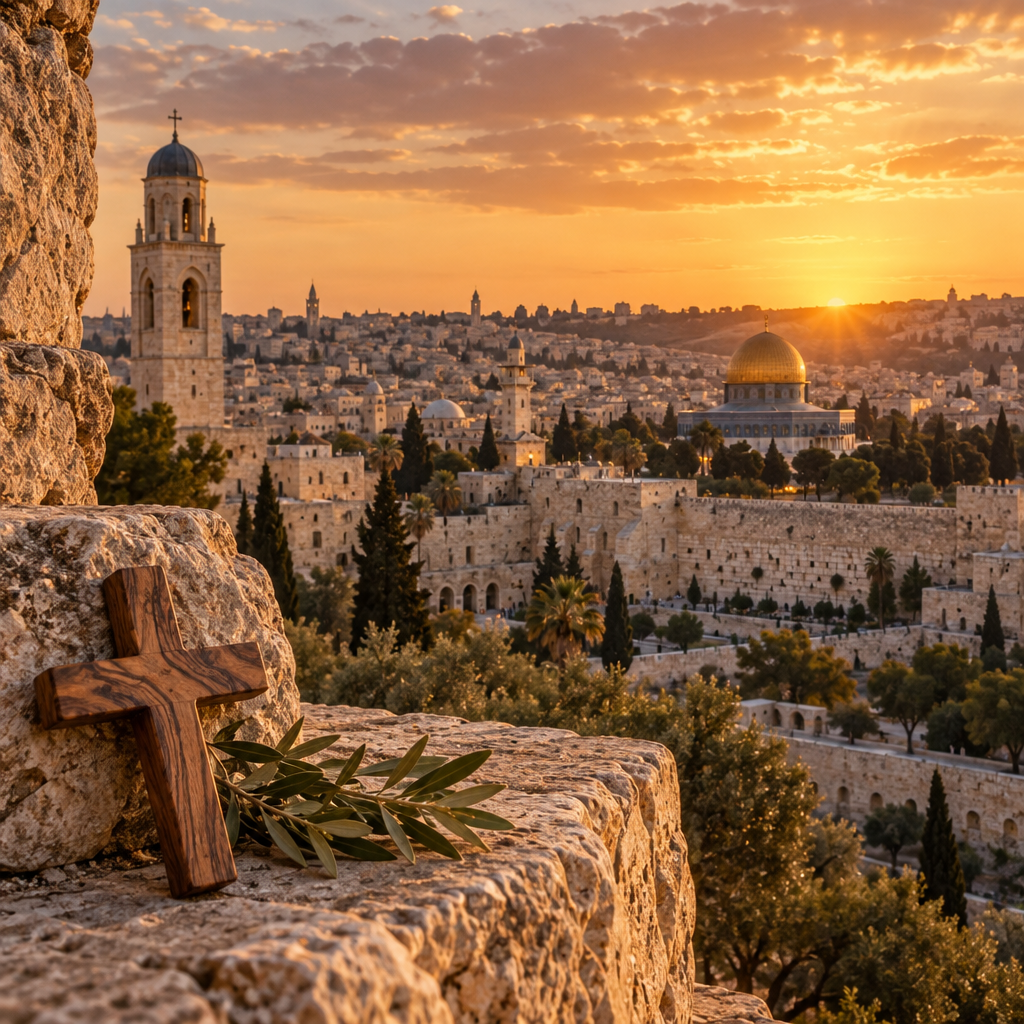
A pilgrimage to the Holy Land brings the Gospel into a landscape of hills, shorelines, crowded streets and places of prayer. Here, the mysteries we ponder in the Rosary acquire a new closeness: the Annunciation, the Nativity, Christ’s public ministry, His Passion and Resurrection.
Yet this is not simply a journey into the past. These places are home to living communities, including Christians whose worship and witness continue amid hardship. Come as a pilgrim: ready to listen, to pray and to encounter people with reverence.
Before you book: safety comes first
Check current government travel advice before booking, again before departure and throughout your journey. For British travellers, consult the Foreign, Commonwealth & Development Office’s separate advice covering Israel and the Occupied Palestinian Territories. Other travellers should consult their own government’s guidance.
Conflict, security restrictions, border arrangements and access to holy sites can change quickly. Advice may differ between destinations, and a familiar pilgrimage route may not be safe or possible. Travel against government advice can invalidate insurance.
Choose an experienced pilgrimage operator with reliable local partners, clear cancellation terms and a realistic contingency plan. Postponing a pilgrimage when conditions require it is a prudent decision, not a failure of faith.
Bethlehem: the humility of the manger
Bethlehem, in the West Bank, draws pilgrims to the mystery of God becoming man. The Church of the Nativity stands over the grotto traditionally venerated as Jesus’ birthplace. Its origins reach back to a fourth-century church commissioned under Emperor Constantine; much of the present basilica dates from the sixth century.
Enter through the low Door of Humility and allow time to notice the ancient columns and surviving mosaics. Access to the grotto may involve queues, steep steps and limited time for prayer. The adjoining Catholic Church of St Catherine is another important place of worship.
Nearby Shepherds’ Fields recall the announcement to the shepherds in Luke 2:8–20. More than one local site preserves this remembrance; their devotional significance should not be confused with certainty about the exact location.
Make room, too, for Bethlehem’s Christian community. Where possible, use trusted local guides and buy locally made goods from reputable businesses.
Nazareth: learning to say yes
Nazareth invites a quieter kind of attention. Here, Mary received the angel’s message, and Jesus grew up within the ordinary life of a family.
The present Basilica of the Annunciation, completed in 1969, incorporates remains of earlier churches. Its lower level shelters the grotto which tradition holds formed part of Mary’s home. Around the basilica, images of Our Lady from different countries express the worldwide reach of her faithful response.
Visit St Joseph’s Church nearby. Tradition holds that its site is associated with the Holy Family’s home or Joseph’s workshop. These traditions invite prayer without establishing every historical detail.
Read Luke 1:26–38 before entering the basilica. Rather than trying to see everything, give yourself a few unhurried minutes to consider where God may be inviting your own trust.
Galilee: walking beside the water
Around the Sea of Galilee, the Gospel speaks of calling, healing, teaching and meals shared with Jesus.
At Capernaum, see the remains of an ancient village, a later synagogue and the site traditionally associated with Peter’s house. The visible synagogue ruins should not simply be identified as the building in which Jesus taught.
At Tabgha, the Church of the Multiplication recalls the feeding of the multitude, while the nearby Church of the Primacy of St Peter recalls the risen Christ’s encounter with His disciples in John 21. The Mount of Beatitudes offers a place to reflect on Matthew 5–7; tradition holds that this hillside is associated with the Sermon on the Mount.
If conditions permit, leave time for quiet beside the lake. A pilgrimage needs pauses as much as destinations.
Jerusalem: the Cross and the empty tomb
Jerusalem is sacred to Jews, Christians and Muslims. Approach its holy places with humility and respect for those who worship there.
Begin on the Mount of Olives and visit Gethsemane, where the Church of All Nations recalls Jesus’ agony. Within the Old City, the Via Dolorosa follows a devotional route commemorating His journey to Calvary; its present form developed over centuries.
The Church of the Holy Sepulchre encompasses the sites venerated as Calvary and Jesus’ tomb. Christian worship here reaches back to the fourth century. Several Christian communities share responsibility for the church, so expect different liturgies, languages and customs.
Planning the practical details
When travel is advised and routes are operating, many overseas pilgrims arrive through Ben Gurion Airport near Tel Aviv. Bethlehem requires travel into the West Bank; arrange transfers with knowledgeable local providers and verify current crossing requirements.
Spring and autumn often offer milder weather. Summer can be intensely hot, while winter brings rain and chilly evenings. Major religious holidays may mean crowds and restricted access.
Bring comfortable walking shoes, modest clothing covering shoulders and knees, layers, sun protection, water, prescribed medicines and copies of essential documents. Confirm passport and entry requirements, insurance cover and accessibility needs before booking.
Carry a small Gospel or prayer book—and leave space in your itinerary for grace.