Glendalough and St Kevin: A Pilgrimage into Prayerful Stillness
Explore Glendalough and St Kevin’s story, with sacred sights, peaceful walking routes and practical advice for a Wicklow pilgrimage.
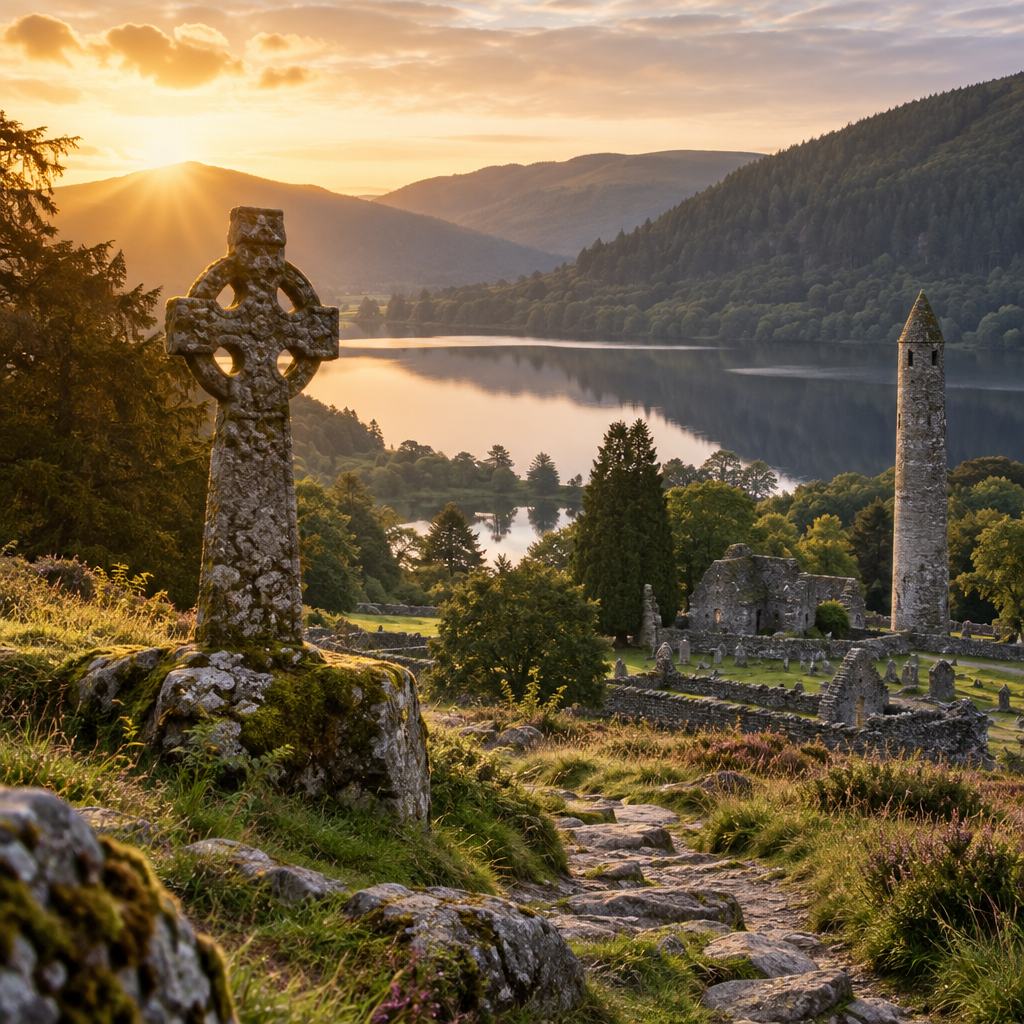
Some places invite us to lower our voices before we know why. At Glendalough, in County Wicklow, wooded slopes, ancient stone churches and two lakes create a setting where prayer can begin with simply paying attention.
The Irish name Gleann Dá Loch means “valley of the two lakes”. For centuries, Christians have come here seeking the quiet that drew St Kevin into a life centred on God. A visit can be both a walk through Ireland’s Christian heritage and a small pilgrimage of the heart.
St Kevin and the valley’s story
St Kevin is associated with the beginnings of monastic life at Glendalough in the sixth century. Much of his personal story comes through later accounts, so precise biographical details should be approached with care.
Tradition holds that Kevin withdrew into this valley to live in solitude, prayer and self-denial, and that others gradually gathered around him. What began with a hermit’s search for God developed into an important monastic settlement, drawing monks, students and pilgrims.
One beloved story expresses the patience associated with the saint: tradition holds that, while Kevin prayed with an outstretched hand, a blackbird nested in his palm, and he remained still until its young had hatched and flown. This is a devotional legend rather than a securely documented event, but its image invites reflection on gentleness towards creation.
Glendalough flourished over the following centuries. Its surviving buildings belong to different periods, rather than all dating from Kevin’s lifetime. Despite raids, destruction and changes in ecclesiastical life, the valley remained a place of pilgrimage long after its medieval prominence faded.
What to see in the monastic settlement
Begin at the ancient gateway, the surviving entrance to the monastic enclosure. Passing through it offers a natural moment to pause and place the visit in God’s hands.
The round tower, approximately 30 metres high, is Glendalough’s most recognisable landmark. Such towers served as bell towers and could also safeguard precious possessions. Its elevated doorway and slender stonework speak of the skill of its medieval builders; it is not a public viewing tower.
Nearby stand the cathedral ruins, once the settlement’s largest church. Walk slowly among the roofless walls and imagine generations gathering for worship here. The surrounding graveyard remains a place for reverence, not merely a backdrop for photographs.
Look also for St Kevin’s Church, often called “St Kevin’s Kitchen”. Despite the nickname, it is a church: its small tower resembles a chimney, which explains the popular name. Its steep stone roof makes it especially distinctive.
St Kevin’s Cross, a large granite cross within the settlement, offers another fitting place for quiet prayer. You need no elaborate words; bringing one person or concern before Christ is enough.
Towards the lakes
From the monastic settlement, follow the signed paths towards the Lower and Upper Lakes. Choose a route suited to your mobility, the weather and the daylight available. Some paths are gentle, while upland routes involve steep climbs and rough ground.
Near the Upper Lake, Reefert Church preserves another part of the valley’s sacred landscape. Its name is commonly understood as referring to a burial place of kings.
Across the Upper Lake lies the small cave known as St Kevin’s Bed. Tradition holds that Kevin used it as a retreat. It is not an ordinary walking destination: appreciate its setting from a safe, permitted viewpoint rather than attempting to reach or enter it.
Let the walk remain a pilgrimage rather than a checklist. At the lakeshore, stop for a few minutes without your phone. Give thanks, name a sorrow, or simply rest in God’s presence.
Getting there and choosing your time
Glendalough lies near Laragh in County Wicklow, south of Dublin. Driving is straightforward, but narrow local roads and busy parking areas call for patience. Parking charges and arrangements can change; check current information before travelling.
Public transport options are more limited than those within Dublin. Check current coach or bus services to Glendalough or Laragh, including return times and the exact stopping point. Do not assume a late service will be available.
Spring and autumn often offer a quieter atmosphere, while summer brings longer daylight and more visitors. An early weekday arrival can help you find stillness. Winter visits can be beautiful, but short days, ice and poor weather may limit walking. Check official visitor information for opening hours, trail closures and weather advice.
What to bring
Wear supportive footwear with good grip and bring waterproof layers, water, a snack and any necessary medication. Carry a charged phone and a route map; do not depend entirely on mobile reception. For longer walks, pack for changing mountain weather.
A small prayer book or rosary may help, but neither is essential. Leave no litter, protect the ruins and respect graves and other visitors.
Kevin’s valley offers no promise of instant peace. It does offer room to listen—and an invitation to carry a little more prayerfulness home.