A Pilgrimage to Fátima: Prayer, Peace and the Sanctuary in Portugal
Discover Fátima’s story, its sacred places and practical advice for a peaceful pilgrimage to Portugal’s much-loved Marian sanctuary.
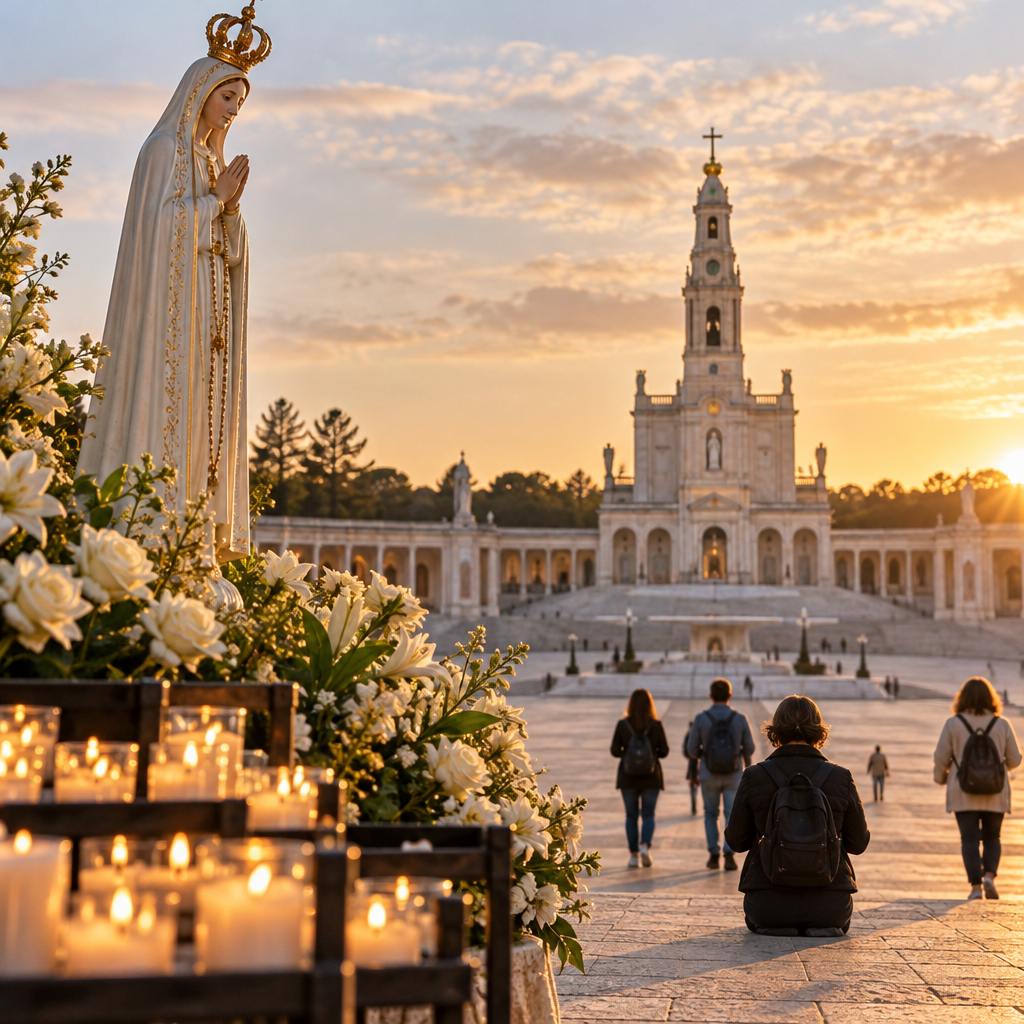
Some places invite us to slow down before we have found the words to pray. At Fátima, the wide sanctuary square, the little chapel and the steady movement of pilgrims create space to bring our burdens before God.
This Portuguese pilgrimage town is closely associated with Our Lady’s call to prayer, repentance and peace. Whether you arrive with a parish group, with family or simply with questions, a visit need not be hurried or complicated.
The story of the three shepherd children
On 13 May 1917, three children tending sheep at the Cova da Iria reported seeing the Virgin Mary: ten-year-old Lúcia dos Santos and her cousins, nine-year-old Francisco Marto and seven-year-old Jacinta Marto.
The children described a lady who asked them to pray the Rosary daily and return on the thirteenth of the following months. The August apparition took place instead at nearby Valinhos, on 19 August, after the children had been detained by local authorities.
The message centred on conversion, prayer and offering sacrifices for sinners. Against the background of the First World War, its appeal for peace had particular urgency.
On 13 October 1917, a large crowd gathered at the Cova da Iria. Many witnesses reported extraordinary appearances of the sun, an event commonly called the “Miracle of the Sun”. Accounts differed, and not everyone described the same experience.
In 1930, the Bishop of Leiria declared the apparitions worthy of belief and authorised devotion to Our Lady of Fátima. In Catholic teaching, such apparitions are private revelation: they do not add to the Gospel, and Catholics are not obliged to believe in them. Their purpose is to help people live the faith more fully.
Francisco and Jacinta died in 1919 and 1920 respectively and were canonised in 2017. Lúcia became a religious sister, later entering Carmel, and died in 2005.
Begin at the Chapel of the Apparitions
The Chapel of the Apparitions is the spiritual heart of the sanctuary. First built in 1919, it marks the place associated with the apparitions; the statue of Our Lady stands where the small holm oak described by the children once grew.
Its simplicity is striking. Rather than beginning with photographs, consider sitting quietly for a few minutes. You might pray a decade of the Rosary, name someone who needs peace, or simply ask God to help you listen.
Masses and Rosary prayers take place regularly, with languages and times varying. Check the sanctuary’s official programme before arranging your day.
What to see around the sanctuary
The Basilica of Our Lady of the Rosary rises above the esplanade. Inside are the tombs of Saints Francisco and Jacinta and Sister Lúcia. Many pilgrims pause here to reflect on how God can work through ordinary lives, including the lives of children.
At the opposite end stands the Basilica of the Most Holy Trinity, inaugurated in 2007. Its spacious, modern interior contrasts with the older basilica while serving the same purpose: gathering people for worship.
Between them stretches the vast prayer area. It can feel remarkably still outside major gatherings, but it fills with pilgrims during significant celebrations. When scheduled, the evening candlelight procession offers a moving experience of communal prayer. Participation is welcome; quiet observation is also respectful.
Allow time, too, for the sanctuary museum’s exhibitions if they are open during your visit. Check current displays, admission arrangements and opening hours in advance.
Walk towards the children’s village
For a fuller understanding of Fátima, visit Aljustrel, where the children’s family homes have been preserved. The modest rooms help place their story within the rural life of early twentieth-century Portugal.
Nearby Valinhos and the Way of the Cross offer a quieter setting for walking and reflection. These places are associated with the August apparition and the children’s accounts of earlier angelic appearances in 1916. Wear comfortable shoes and allow generous time rather than treating the walk as another attraction to complete.
Getting there and choosing your time
Fátima lies roughly 125 kilometres north of Lisbon. Direct coaches connect it with Lisbon and other Portuguese cities; the coach station is within walking distance of the sanctuary. Check current operators and timetables before travelling.
Driving is another option, with access from the A1 motorway. Do not assume that a railway station bearing Fátima’s name will leave you near the sanctuary: rail access is not conveniently located for most visitors.
Spring and autumn generally offer comfortable walking conditions. The twelfth and thirteenth of each month from May to October can be especially busy, particularly in May and October. Book accommodation early for these periods. Weekdays outside major pilgrimage gatherings usually provide more quiet.
What to bring—and what to leave space for
Pack supportive footwear, drinking water, sun protection and a light waterproof layer. Evenings can be cool. Choose clothing appropriate for worship, and bring a Rosary or small prayer book if helpful.
Ask the sanctuary about accessible routes or assistance if needed. Leave room in your plans for rest, confession or an unhurried Mass.
You do not need to arrive with perfect faith. Come with the heart you have, and let your pilgrimage become a gentle turning towards Christ.