A Pilgrim’s Guide to Jasna Góra and the Black Madonna
Discover Jasna Góra in Częstochowa: the Black Madonna’s story, sacred places to visit, and practical advice for a prayerful pilgrimage.
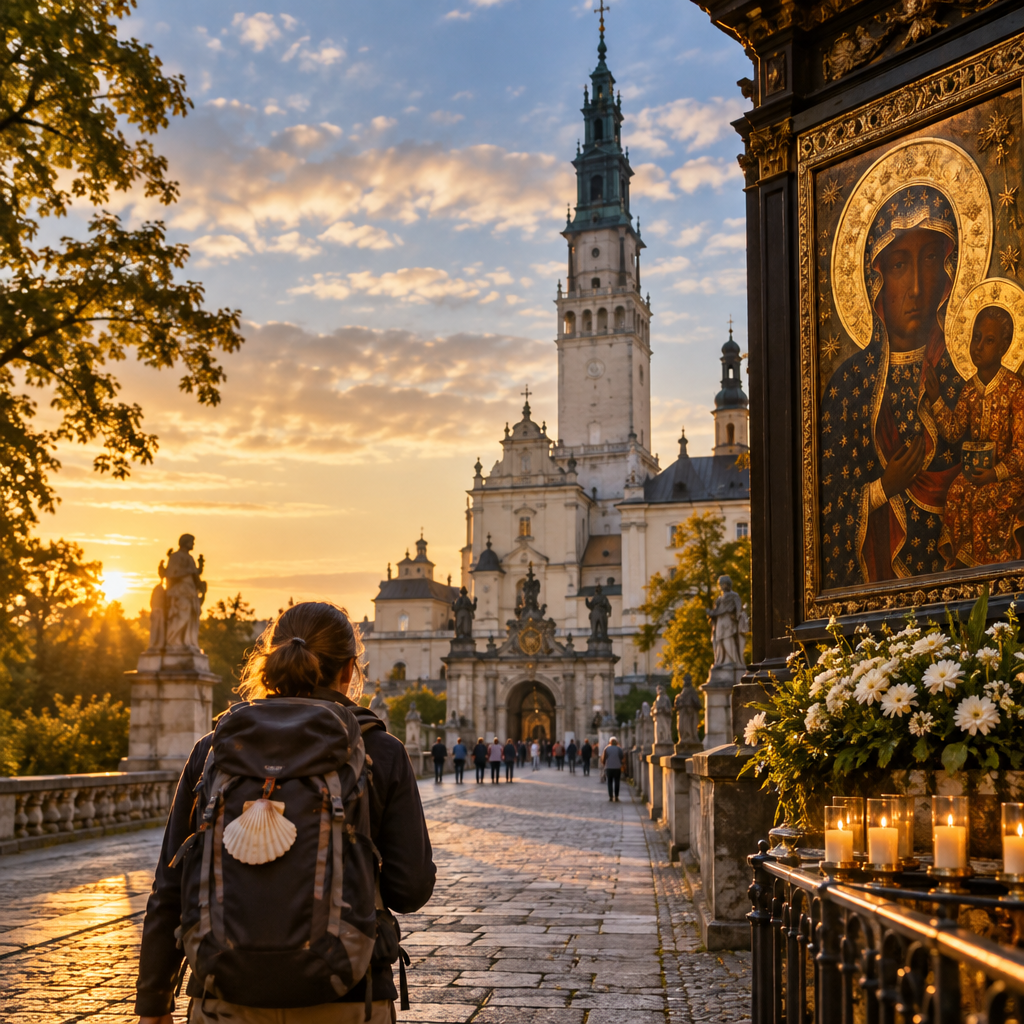
Some pilgrimages begin with a long walk; others begin with a quiet longing for peace. At Jasna Góra in Częstochowa, Poland, both find a home. For centuries, pilgrims have climbed this hill to pray before the image of Our Lady of Częstochowa, widely known as the Black Madonna.
This is a living monastery and sanctuary, not simply a historic attraction. Come ready to look, but also to listen: to Scripture, to the prayers around you, and to whatever you are carrying in your own heart.
A hill at the heart of Polish faith
Jasna Góra means “Bright Mountain”. Its Pauline monastery was founded in 1382 by Duke Władysław of Opole, and the revered image of Mary and the Child Jesus was brought here in 1384.
Over the centuries, the shrine became deeply woven into Poland’s religious and national life. Its successful resistance during a Swedish siege in 1655 strengthened its place in Polish memory as a sign of hope amid danger. In 1656, King John II Casimir entrusted his kingdom to Mary, proclaiming her Queen of Poland in Lwów, now Lviv.
Saint John Paul II visited Jasna Góra repeatedly and spoke of its importance to his homeland. Yet its welcome is not confined to Polish Catholics. Pilgrims and visitors from many countries come here seeking stillness, understanding and renewed faith.
The Black Madonna: history and tradition
The icon shows Mary holding Jesus on her left arm while her right hand directs attention towards him. It belongs to the tradition known as Hodegetria: Mary as the one who shows the way. Her gesture offers a simple lesson in Catholic devotion: she leads us to Christ.
Tradition holds that Saint Luke painted the image on a tabletop used by the Holy Family. This cherished account is not established history; the icon’s precise origins remain debated, and its appearance reflects a complex history of painting and restoration.
The title “Black Madonna” refers to the dark appearance of the faces of Mary and Jesus. The reasons for that appearance are not entirely settled and should not be reduced to one confident explanation.
The marks on Mary’s right cheek recall the attack on the monastery in 1430, when the image was damaged and subsequently restored. For many pilgrims, her wounded face has become a powerful invitation to bring suffering into prayer.
Catholics do not worship the painting. They honour Mary, ask her intercession, and worship God alone. The image helps direct the heart towards the persons it depicts.
What to see and where to pray
Begin in the Chapel of the Miraculous Image, the spiritual heart of the sanctuary. If possible, allow time simply to remain there rather than moving immediately to the next sight. The icon is ceremonially unveiled and veiled at scheduled times; check the sanctuary’s current information before planning around these moments.
Visit the basilica, whose richly decorated interior invites a slower pace. If you attend Mass, remember that sightseeing and photography should give way to worship. Visitors who are not Catholic are welcome to pray quietly; receiving Holy Communion is ordinarily reserved for Catholics properly prepared.
The treasury and museum collections offer a different perspective through votive gifts, sacred objects and historical displays. These gifts bear witness to generations of gratitude, grief and trust. Access and opening hours can vary.
Outside, follow the Stations of the Cross along the ramparts. If the tower is open and you are comfortable with stairs, its views help place the monastery within the surrounding city.
Getting to Częstochowa
Częstochowa has rail connections with major Polish cities, including Warsaw, Kraków and Katowice. Check current timetables and your arrival station: Częstochowa and Częstochowa Stradom are separate stations.
From the main Częstochowa station, the walk towards the monastery follows the city’s broad central avenue and takes roughly half an hour to forty minutes. Local buses and taxis provide alternatives.
Katowice and Kraków airports are useful arrival points, with onward transport requiring some planning. Drivers should check parking arrangements near the sanctuary, especially during major pilgrimages.
When to go and what to bring
Spring and early autumn often offer a gentler balance of weather and crowds. August is especially busy, particularly around the Assumption on 15 August and the feast of Our Lady of Częstochowa on 26 August. These gatherings can be deeply moving, but accommodation and transport need advance planning.
Bring comfortable shoes, layers, a waterproof jacket and water. Dress respectfully for a church, with shoulders and knees covered. A rosary, small prayer book or notebook may help you slow down. Check current arrangements for step-free access if needed, and follow posted photography rules.
Allow at least half a day. Above all, leave some unplanned time. You need not arrive with perfect words or strong feelings: a simple willingness to be present is enough to begin.