Croagh Patrick: A Pilgrim’s Guide to Ireland’s Holy Mountain
Discover Croagh Patrick’s sacred history, Reek Sunday traditions and practical advice for a prayerful pilgrimage in County Mayo.
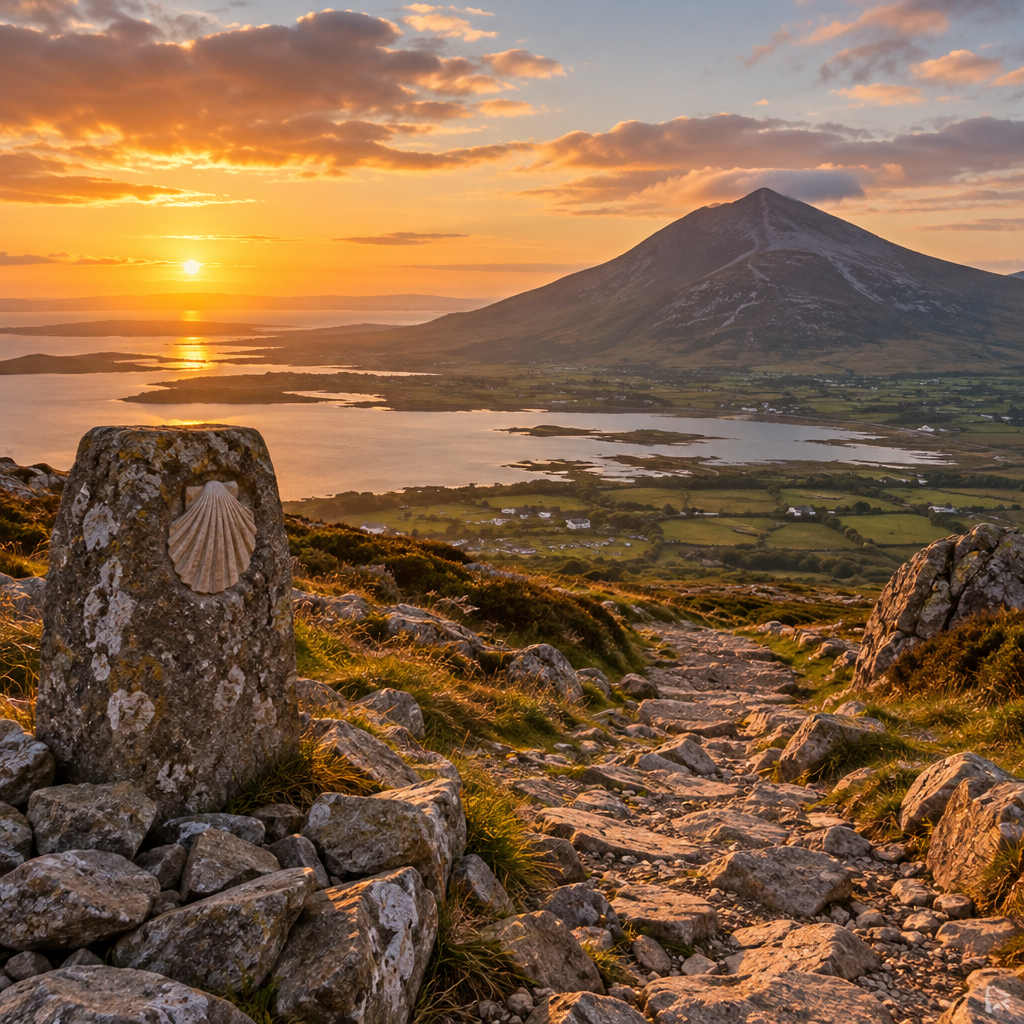
Some pilgrimages lead through a church door; others begin with a mountain rising above the sea. On the shores of Clew Bay in County Mayo, Croagh Patrick invites pilgrims to step away from ordinary routines and make room for prayer.
Known locally as “the Reek”, the mountain stands 764 metres high. Its beauty draws walkers from around the world, while its association with St Patrick gives the ascent a particular meaning for Christians: an opportunity for repentance, thanksgiving and renewed trust in God.
St Patrick and the mountain’s story
Tradition holds that St Patrick spent forty days fasting and praying on Croagh Patrick in AD 441, following the pattern of Christ’s forty days in the wilderness. The mountain became closely associated with Ireland’s patron saint and, over the centuries, a place of Christian pilgrimage.
Tradition holds that Patrick’s spiritual struggles here included confrontations with demonic forces. Such accounts belong to the mountain’s devotional heritage rather than to securely documented biography. Their enduring message is that prayer and perseverance matter, especially when faith feels difficult.
Archaeological evidence points to a long history of human activity on the summit, including an early Christian place of worship. The white chapel visible there today was built in 1905, continuing the mountain’s long connection with Christian prayer.
A pilgrimage here need not be an attempt to prove strength or earn God’s love. That love is already freely offered. The climb can instead become a response: a bodily expression of turning towards Christ.
What is Reek Sunday?
Reek Sunday falls on the last Sunday in July, when large numbers of pilgrims gather to climb Croagh Patrick. It is the mountain’s best-known annual pilgrimage, bringing together personal intentions and a shared expression of faith.
Mass and opportunities for confession are normally provided as part of the organised pilgrimage, with arrangements dependent on conditions. Check the current pilgrimage announcements before travelling; severe weather can affect both the climb and services.
Some pilgrims have traditionally climbed barefoot as an act of penance. This is not required, and the rocky ground makes it hazardous. Sturdy walking footwear is the sensible choice. A sincere prayer does not become less valuable because you have protected your feet.
What to see along the way
The usual ascent begins at Murrisk, west of Westport. Near the start, a statue of St Patrick offers a natural place to pause, gather your intentions and begin quietly.
As the path climbs, Clew Bay opens below, scattered with islands and edged by the Mayo coastline. In clear weather, the views are extraordinary. In cloud, the experience can be very different: a reminder to attend carefully to the next step rather than hurry towards a distant goal.
At the summit, the small white chapel is the spiritual focal point. Do not assume it will be open outside organised services. Whether its doors are open or closed, you can stop nearby for a brief prayer before descending.
Back in Murrisk, allow time for the ruins of Murrisk Abbey, founded for Augustinian friars in the fifteenth century. Nearby, the National Famine Memorial’s bronze “Coffin Ship” invites reflection on the suffering and loss associated with Ireland’s Great Famine.
Getting there and planning your climb
Westport is the most convenient main base, with rail connections from Dublin Heuston and a range of accommodation. Murrisk lies roughly 8 kilometres west of the town along the R335. Travel onward by car, taxi or local bus where available; check current timetables rather than assuming a service will suit your return.
Parking is available near the main trailhead, but Reek Sunday brings crowds and possible traffic arrangements. Book accommodation early and consult local pilgrimage information.
The standard return walk is approximately 7 kilometres. Allow around four to six hours, including rests, and longer if your pace or conditions require it. The ascent is strenuous, with steep, uneven ground. Improved stone steps on parts of the route do not remove the mountain’s risks.
When to go and what to bring
Late spring to early autumn generally offers longer daylight and milder conditions, although Atlantic weather can change rapidly in any season. Reek Sunday offers a strong sense of shared pilgrimage; a quieter weekday may better suit those seeking solitude.
Check a mountain-specific weather forecast before setting out. Strong winds, low cloud, heavy rain or ice may make postponing the safest decision.
Bring:
- Sturdy walking boots with good grip.
- Waterproof jacket and trousers, warm layers, a hat and gloves.
- Water, food and an extra snack.
- A charged phone, an offline map and a small first-aid kit.
- Walking poles if helpful, plus sun protection in brighter weather.
Tell someone your route and expected return time. Stay on the established path, carry litter home and turn back if necessary.
If climbing is beyond your ability, prayer at the mountain’s foot is no lesser offering. You might read about Christ’s forty days in the wilderness in Matthew 4:1–11, or simply entrust one concern to God.
The deepest purpose of pilgrimage is not reaching a summit. It is making space for the Lord to draw near.