A Pilgrim’s Guide to Canterbury and St Thomas Becket
Discover Canterbury’s pilgrimage story, the lost shrine of St Thomas Becket, and practical advice for a prayerful visit.
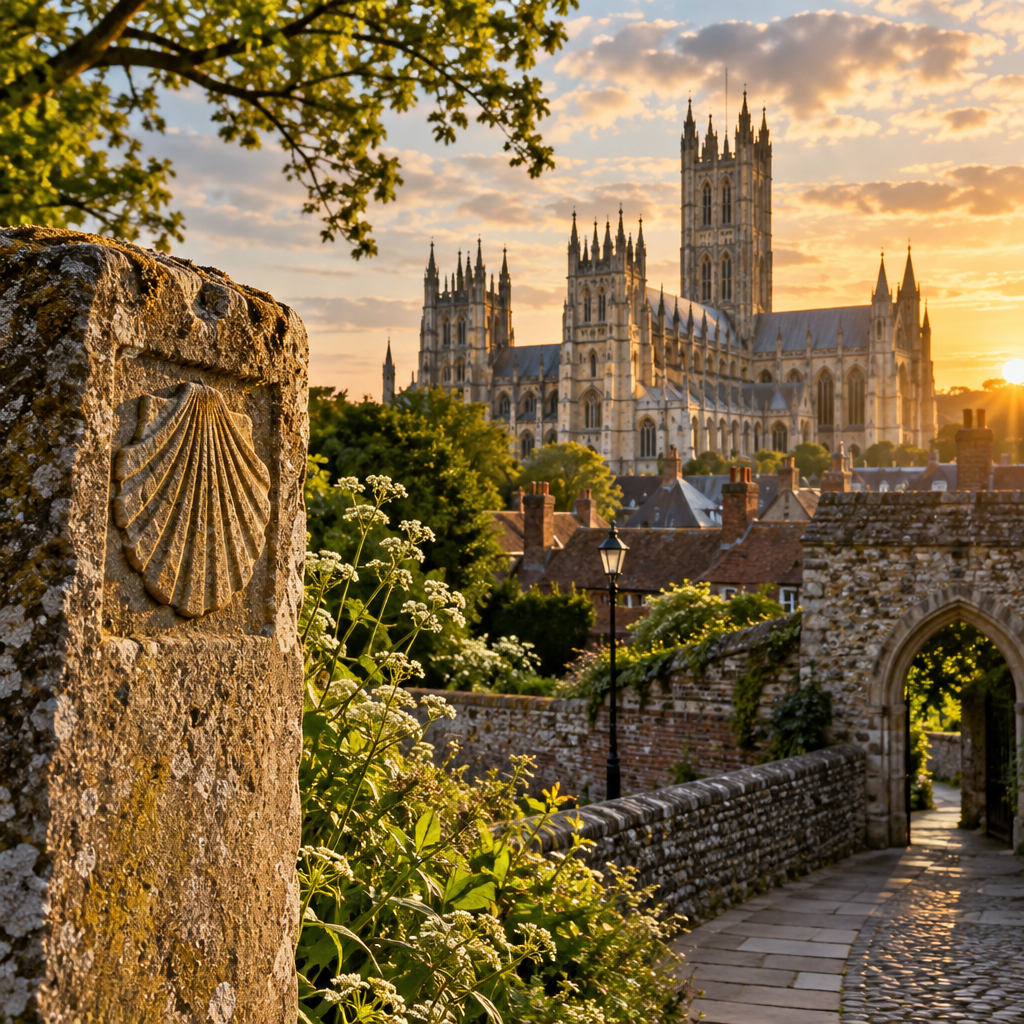
Some places invite us to slow our steps before we understand why. Canterbury is one of them. Beneath its cathedral’s soaring stonework lies a story of friendship, conflict, martyrdom and generations of pilgrims seeking healing and hope.
For Catholics, a visit offers an encounter with St Thomas Becket and an opportunity to pray for Christian unity. Canterbury Cathedral is an Anglican cathedral, yet its medieval history belongs to the shared Christian inheritance of these islands.
The story of St Thomas Becket
Thomas Becket became Archbishop of Canterbury in 1162, having served as chancellor to King Henry II. Once close allies, the two men became divided over the relationship between royal authority and the Church, particularly the treatment of clergy accused of crimes.
The dispute brought years of exile for Thomas. After returning to England, he was killed by four knights inside Canterbury Cathedral on 29 December 1170.
The familiar story of Henry uttering an angry demand that prompted the knights survives in differing accounts. His exact words should not be treated as a reliable quotation, nor should the killing be reduced to a simple, documented royal order.
Thomas was canonised in 1173. Reports of miracles associated with him drew pilgrims from across Europe, and Canterbury became one of medieval Christendom’s great pilgrimage destinations.
In 1220, his remains were transferred to a magnificent shrine in the cathedral’s Trinity Chapel. Offerings and prayers surrounded it for more than three centuries. Chaucer’s Canterbury Tales later gave enduring literary life to the varied company travelling towards the saint’s shrine.
In 1538, during Henry VIII’s campaign against shrines, Becket’s shrine was destroyed and its treasures removed. The magnificent medieval shrine no longer survives: that absence is an essential part of what pilgrims encounter today.
What to see in the cathedral
Begin at the Martyrdom, the place where Becket was killed. A modern memorial evokes the violence of his death. Allow yourself a few quiet moments here, remembering Christians who suffer for their faith and asking for courage without bitterness.
Continue to the crypt, one of the cathedral’s oldest and most atmospheric spaces. Becket’s first tomb stood here before the transfer of his remains in 1220. Respect any requests for silence or restrictions on photography.
In Trinity Chapel, a candle marks the site of the destroyed shrine. Rather than expecting an elaborate reliquary, prepare to encounter an empty space that still draws people to prayer.
Look also for the medieval miracle windows, which depict stories of people seeking Becket’s intercession and receiving healing. These are medieval accounts expressed in glass, not modern medical records. They reveal the hopes, hardships and devotional imagination of the pilgrims who came before us.
Nearby are the tomb of Edward, the Black Prince, and the tomb of Henry IV and Joan of Navarre. The architecture, stained glass and monuments reward attention, but a pilgrimage need not become a checklist. Choose time for prayer over seeing everything.
A Catholic place of prayer nearby
A short walk from the cathedral, St Thomas of Canterbury Catholic Church offers a natural companion visit. The church houses relics associated with St Thomas Becket and provides a setting for Catholic worship.
Check its current opening arrangements and Mass times before travelling. Catholics wishing to attend Mass should plan for a Catholic church; cathedral services are Anglican. Visitors can respectfully attend cathedral worship while observing the guidance given for participation.
Getting to Canterbury
Canterbury is easily reached by train from London. High-speed services from St Pancras International serve Canterbury West; services from London Victoria serve Canterbury East. Check current routes, fares and engineering works before booking.
Both stations are within walking distance of the cathedral, though uneven paving and busy streets may affect the journey. Drivers should check current city parking and park-and-ride arrangements rather than expect parking beside the cathedral.
If you want a walking pilgrimage, consider a section of the Pilgrims’ Way towards Canterbury. Use an up-to-date route guide and choose a distance suited to your fitness, daylight and accommodation plans.
When to go and what to bring
Spring and autumn often offer a good balance of comfortable walking weather and fewer visitors than peak summer. Weekdays can feel quieter, although services, school visits and special events affect access throughout the year.
Check the cathedral’s official website for admission charges, opening times, accessibility information and closures. Arrangements for worship differ from sightseeing admission; follow the published guidance.
Bring comfortable shoes, waterproof clothing, drinking water and a warm layer: old stone buildings can feel cool even in mild weather. A small prayer book or rosary may help you pause. Walking pilgrims should also carry maps, snacks and basic blister care.
Carrying the pilgrimage home
At the place where Becket’s shrine once stood, pray for pastors, public servants and everyone facing a costly decision of conscience. Ask, too, for reconciliation between Christians.
You need not leave Canterbury with every historical question resolved. It is enough to leave more willing to listen to Christ, and to take the next faithful step.