The Camino Francés: A Complete Beginner’s Guide from Saint-Jean to Santiago
Plan your first Camino Francés with a beginner’s guide to its history, holy places, daily walking, accommodation and practical essentials.
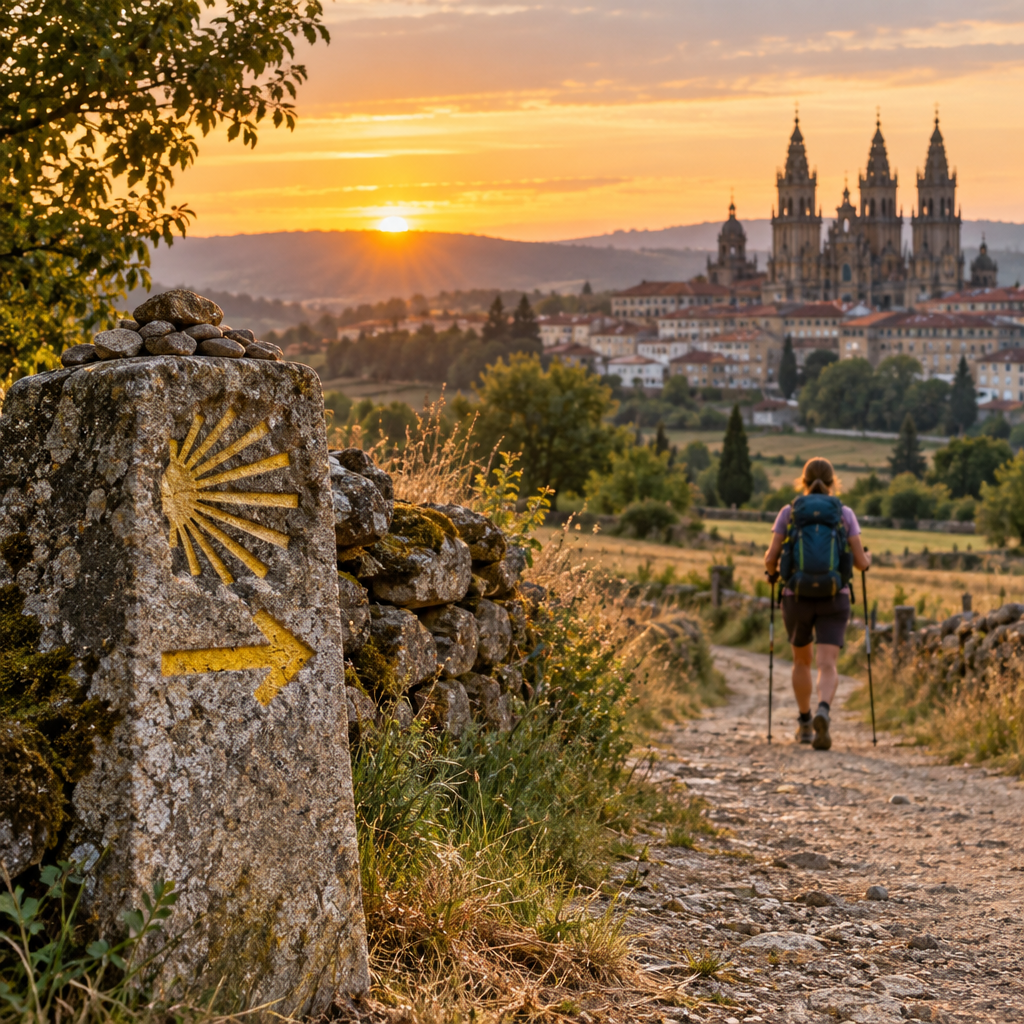
A pilgrimage taken one step at a time
The Camino Francés leads from Saint-Jean-Pied-de-Port, in the French Basque Country, across northern Spain to Santiago de Compostela. Around 780–800 kilometres long, depending on your route, it usually takes five to six weeks to walk.
For Catholics, its destination is the shrine of St James the Apostle. Yet the road also welcomes other Christians, seekers and those still discovering what pilgrimage might mean. You need not arrive with perfect fitness or perfect faith: begin with preparation, humility and a willingness to receive.
The story behind the road
Tradition holds that the remains of St James were brought to Galicia after his martyrdom in Jerusalem. A tomb believed to be his was discovered in the ninth century, and Santiago became one of medieval Christianity’s great pilgrimage destinations.
The Camino Francés developed into a major route linking pilgrims arriving through France with Santiago. Churches, monasteries, bridges and hospitals grew along it to offer worship, shelter and care.
After periods of decline, the route experienced a remarkable modern revival. Its deepest invitation remains unchanged: to turn ordinary walking into a journey of prayer, repentance and hope.
Understanding the route
Think of the journey in broad sections rather than an intimidating list of stages:
- Saint-Jean to Pamplona: a demanding Pyrenean crossing to Roncesvalles, followed by wooded paths and villages.
- Pamplona to Burgos: Navarre and La Rioja, with vineyards, historic towns and changing terrain.
- Burgos to León: the wide horizons of the Meseta, where shade can be scarce and quiet becomes a companion.
- León to Ponferrada: a gradual return to hill country, passing Astorga and the Cruz de Ferro.
- Ponferrada to Santiago: the ascent towards O Cebreiro, then Galicia’s green lanes, villages and frequent rain.
Many pilgrims average 20–25 kilometres daily, but shorter days are sensible at first. Build in rest days and room for illness, blisters or simply staying somewhere that invites prayer.
Holy places and memorable stops
At Roncesvalles, the collegiate church offers a beautiful introduction to the Camino’s tradition of hospitality. Ask locally about Mass and pilgrim blessings.
Burgos Cathedral and León Cathedral reward an unhurried visit; León is particularly celebrated for its stained glass. Remember that tourist admission and access for worship may differ.
At the Cruz de Ferro, pilgrims often leave a small stone as a sign of a burden entrusted to God. This is a custom, not an obligation: a quiet prayer is enough.
The stone village of O Cebreiro has a long history of welcoming pilgrims. Finally, Santiago Cathedral gathers the journey around the apostle’s shrine and the Eucharist. Check current arrangements for visiting the tomb and attending Mass. The great swinging incense burner, the Botafumeiro, is not used at every service.
Getting there and choosing a season
Saint-Jean-Pied-de-Port is commonly reached by train from Bayonne, with onward connections from elsewhere in France. Biarritz is a nearby airport; allow time for transfers and check current transport schedules.
For returning home, Santiago has an airport and rail and coach connections. A flexible departure date, where affordable, can prevent the final days becoming a race.
May–June and September–early October often offer a useful balance of daylight and temperatures, though popular stretches can be busy. Summer brings heat, especially across exposed country. Winter means shorter days, fewer open hostels and potentially dangerous mountain conditions.
The high Route Napoléon between Saint-Jean and Roncesvalles is subject to seasonal closure and weather restrictions. Consult the pilgrim office before setting out; the Valcarlos alternative also requires preparation and care.
Sleeping, eating and pilgrim paperwork
Obtain a credencial, or pilgrim passport, from an authorised provider or pilgrim office. Collect stamps along the way: it records your journey and is commonly required at pilgrim hostels, called albergues.
Accommodation ranges from simple dormitories to private rooms. Some albergues accept reservations; others do not. Book the opening nights and plan more carefully during busy periods, especially beyond Sarria.
Budget for accommodation, meals, laundry, occasional transport and unexpected rest. Carry some cash, and check the next day’s food and water opportunities rather than assuming every village has an open shop.
For the Compostela, the certificate associated with pilgrimage to Santiago, the standard walking requirement includes at least the final 100 kilometres on an accepted route, undertaken for religious or spiritual reasons. Obtain two stamps daily over that final stretch and confirm current requirements with Santiago’s Pilgrim Reception Office.
What to bring—and how to prepare
Choose well-tested walking shoes, comfortable socks, a light rucksack, waterproofs, sun protection, refillable water bottles and blister supplies. Bring essential medicines, identification, appropriate insurance details, a phone charger and suitable bedding for your accommodation. Walking poles can help on descents.
Practise consecutive walking days with your loaded pack. Keep it as light as reasonably possible, and resist copying someone else’s pace. Seek help early for persistent pain, heat illness or exhaustion.
Making room for God
Begin each morning with a simple offering. Carry one intention, pause in an open church, or pray a decade of the Rosary as you walk.
The Camino is not a test of holiness. Rest, assistance and changed plans need not diminish a pilgrimage. Let the road teach you to receive each day—and each person—as a gift.