A Pilgrimage to Assisi: Walking with St Francis and St Clare
Explore Assisi’s basilicas and San Damiano, with Franciscan history, places for prayer and practical advice for a peaceful pilgrimage.
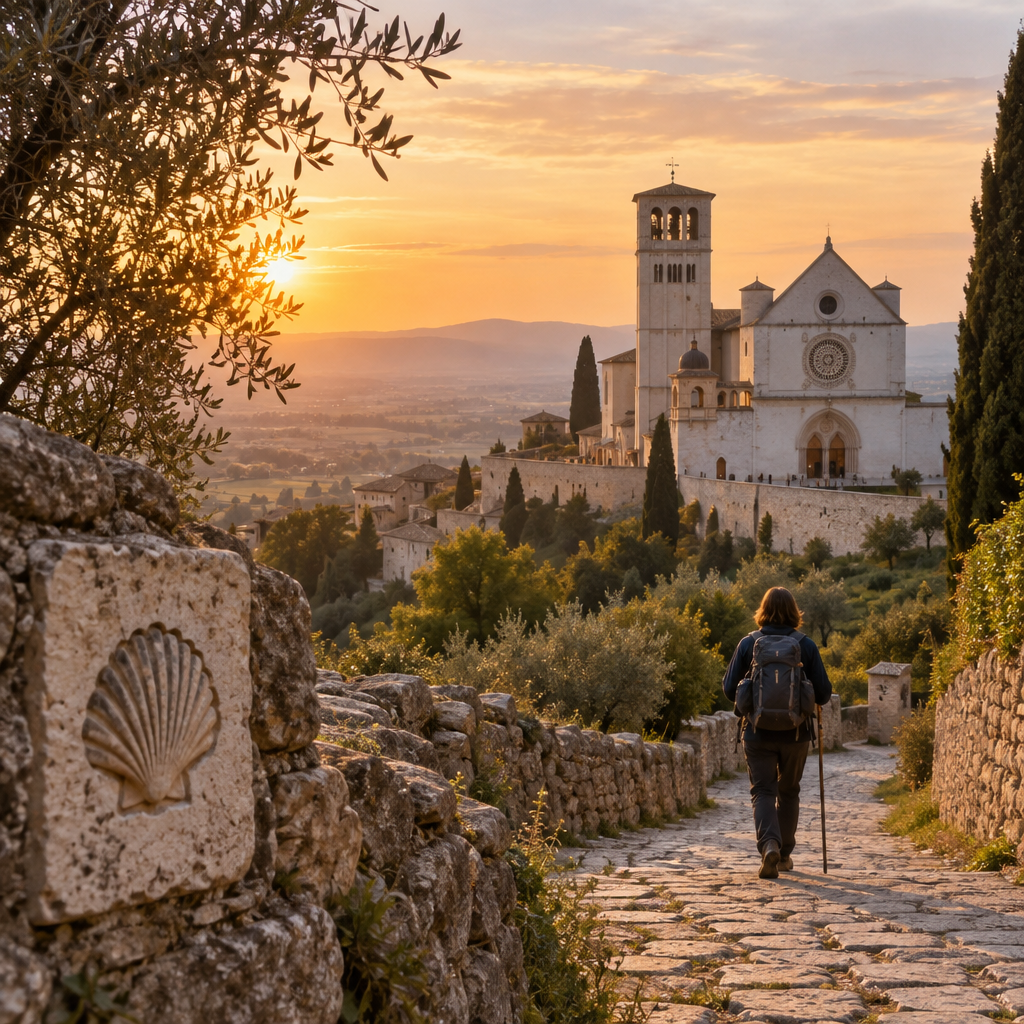
Assisi invites you to slow down. Its pale stone streets climb above the Umbrian plain, opening onto churches, quiet courtyards and views that seem made for prayer. Yet the deepest reason to come is not the scenery. It is the witness of two saints who allowed Christ to reshape their lives: Francis and Clare.
A pilgrimage here need not be hurried or complicated. Give yourself time to listen, to walk gently and to carry one simple question: what might God be asking me to rebuild?
The story of Francis and Clare
Francis was born in Assisi around 1181–1182, the son of a prosperous cloth merchant. After youthful ambitions, warfare and imprisonment, his life gradually turned towards prayer, poverty and service, especially among people with leprosy.
Tradition holds that, while Francis prayed before a crucifix in the little church of San Damiano, Christ called him to repair his house. Francis first understood this literally and began restoring churches. His vocation would grow into a wider renewal through Gospel living, fraternity and love for the poor.
Clare, born in Assisi in 1194, was also drawn to a life centred on Christ. In 1212 she left her family home and embraced a life of poverty and prayer with Francis’s support. She eventually settled at San Damiano, where a community of sisters took shape. Their way of life became the foundation of the Poor Clares.
Francis died in 1226 and Clare in 1253. Assisi preserves their memory not simply as local history, but as an invitation to follow Jesus with greater freedom and trust.
The Basilica of St Francis
Begin at the Basilica of St Francis, built after his canonisation in 1228. Its two churches offer contrasting experiences: the Lower Church is intimate and shadowed, while the Upper Church rises in light and colour.
In the Upper Church, spend time with the fresco cycle depicting Francis’s life, traditionally associated with Giotto and his workshop. Rather than trying to study every scene, choose one and notice what it reveals about conversion, generosity or trust in God.
The Lower Church contains further remarkable frescoes and leads to the crypt where Francis’s tomb rests. Here, let sightseeing give way to prayer. You might bring before God someone who is poor, displaced or forgotten, asking for the grace to recognise Christ in them.
The basilica is a working place of worship. Allow services to shape your visit, and follow the current rules on silence, photography and access.
The Basilica of St Clare
Across the town stands the Basilica of St Clare, begun in 1257. Its pink-and-white stone façade and spacious forecourt offer another place to pause above the valley.
Inside, seek out the original San Damiano crucifix, brought here by Clare’s sisters after they moved from San Damiano. This is the crucifix before which tradition holds Francis received his call to rebuild the Church. Look closely at the figure of Christ: the image invites contemplation of his suffering and his living victory.
The crypt holds Clare’s tomb. Her witness adds an essential dimension to an Assisi pilgrimage. Franciscan life is not only walking the roads and preaching; it is also steadfast prayer, community and daily fidelity in a hidden place.
San Damiano: the quieter heart of the journey
Below Assisi, reached by a downhill walk through olive groves, San Damiano feels more secluded than the great basilicas. This small church and former convent connect Francis’s conversion with Clare’s long life of prayer.
Clare and her sisters lived here, and she died here in 1253. Visitors can encounter the church and simple convent spaces associated with their community, subject to the site’s current arrangements.
Do not rush the return uphill. The modest scale of San Damiano offers its own lesson: holiness grows through ordinary acts of love, repeated faithfully.
Getting there and planning your visit
Assisi railway station is in Santa Maria degli Angeli, below the hill town. Buses and taxis connect the station with the historic centre; check current routes and timetables before travelling. Drivers should use designated car parks outside the restricted historic streets.
Allow at least one full day, or preferably two, for these three sites without rushing. Check official opening hours and service times: prayer, restoration work or community needs may affect access.
Spring and autumn generally offer comfortable walking weather. Summer can be hot and busy, while winter is quieter but brings shorter daylight hours. Around the feasts of St Francis on 4 October and St Clare on 11 August, expect more pilgrims and book accommodation early.
What to bring
Wear supportive shoes: Assisi has steep slopes, steps and uneven paving. Carry water, weather-appropriate layers and sun protection, with clothing suitable for entering churches.
A small prayer book or notebook may help you gather your thoughts. If mobility is limited, ask each site about accessible entrances and consider transport for San Damiano; the uphill return can be demanding.
Above all, leave some space in your plans. You do not have to see everything to receive something precious. May your steps through Assisi lead you towards Christ’s peace.