Assisi, 27 October 1986: A Day of Prayer for Peace
Forty years after John Paul II’s gathering in Assisi, discover why a day of prayer for peace mattered—and what it did not mean.
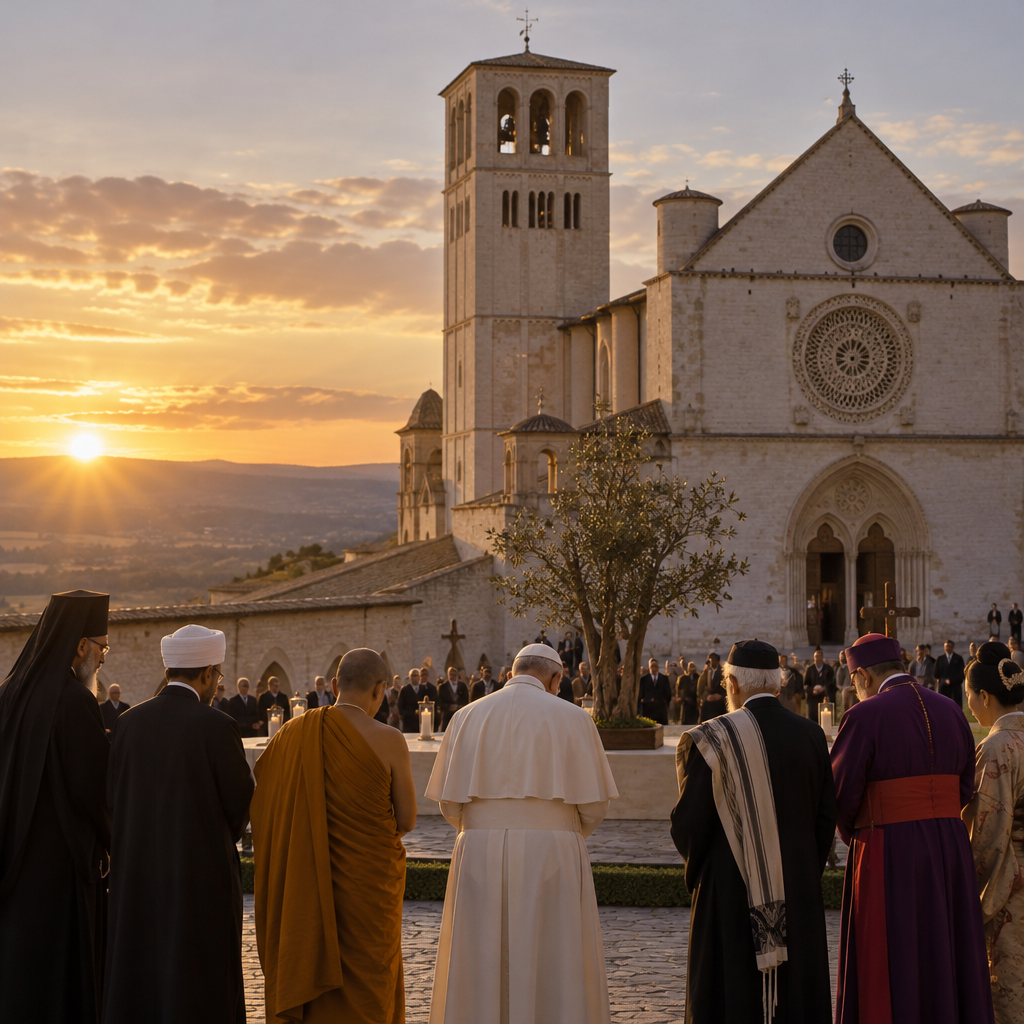
A pope, Christian leaders and representatives of other religions gathered in an Italian hill town—not to settle their differences, but to bear witness to the urgent need for peace.
On Tuesday, 27 October 2026, forty years have passed since the World Day of Prayer for Peace in Assisi, convened by Pope St John Paul II in 1986. The gathering offered a striking image: people divided by profound religious convictions standing alongside one another rather than treating those differences as reasons for hostility.
But what actually happened, and how should Catholics understand it?
Why Assisi?
John Paul II announced the gathering in January 1986, during a visit to the Basilica of St Paul Outside the Walls in Rome. That year had been designated the International Year of Peace by the United Nations.
The world remained shadowed by the Cold War, the threat of nuclear weapons and armed conflicts in many regions. Against that background, the Pope invited religious leaders to give visible expression to a shared longing for peace.
Assisi was a meaningful choice. It is the town of St Francis, whose life of poverty, humility and love for God’s creation has touched people far beyond the Catholic Church.
Francis also crossed a dangerous boundary during the Fifth Crusade, meeting Sultan al-Malik al-Kamil in Egypt in 1219. The encounter did not erase their religious differences. It nevertheless provided a powerful historical example of approaching another person without surrendering faith or resorting to hatred.
What happened on 27 October?
The day brought together representatives of Christian Churches and communities, alongside representatives of other religions, including Judaism, Islam, Buddhism and Hinduism.
Prayer, fasting and pilgrimage shaped the programme. Participants first gathered at the Basilica of St Mary of the Angels, which shelters the little Portiuncula chapel so closely associated with St Francis.
They then went to different places in Assisi to pray according to their own traditions. Later, they assembled in the square before the Basilica of St Francis, where the different groups offered prayers in succession while others listened respectfully.
This arrangement mattered. The gathering was not designed as a single service in which all religions used the same prayers or professed a common creed. Its unity lay in the purpose of peace, not in agreement about God.
Did the gathering suggest that all religions are the same?
No. John Paul II explicitly rejected the idea that the event was an attempt to blend religions or negotiate a shared religious belief.
For Catholics, Jesus Christ remains the Son of God and the Saviour of the world. Respect for another person’s conscience does not require setting that conviction aside.
The distinction is essential: people can cooperate in seeking peace while continuing to disagree about matters of ultimate importance.
Assisi reflected the Second Vatican Council’s teaching in Nostra Aetate: the Church recognises what is true and holy in other religions, encourages dialogue and cooperation, and continues to proclaim Christ. Dialogue and Christian witness are not meant to be enemies.
The gathering nevertheless prompted questions about how its images might be understood. Its meaning depends on remembering both sides of the Pope’s intention: genuine respect for others and fidelity to one’s own faith.
Prayer was not a substitute for responsibility
Assisi did not end the world’s wars. Nor should its place in history be exaggerated into a claim that one gathering brought about later political changes.
Its contribution was different. It presented religious commitment as a call to peacemaking rather than an excuse for violence. It also challenged the assumption that peace can be secured by diplomacy or power alone, without any conversion of the human heart.
For Christians, that challenge is rooted in the Gospel. Jesus calls his disciples to be peacemakers and to love their enemies (Matthew 5:9, 44).
What Assisi asks of us now
Forty years later, the photographs remain memorable. The quieter challenge is what happens beyond the photograph.
We need not travel to Assisi to pray for people we fear, refuse contempt or listen honestly to a neighbour whose beliefs differ from ours. Such actions do not make truth less important. They allow truth to be spoken with charity.
Peace begins neither with pretending that differences are trivial nor with allowing them to become hatred.
May Christ make us faithful witnesses to his peace, wherever he has placed us.