A Pilgrimage to Ars-sur-Formans: In the Footsteps of St John Vianney
Discover Ars-sur-Formans, the village of St John Vianney, with its pilgrimage story, sacred places and practical advice for your visit.
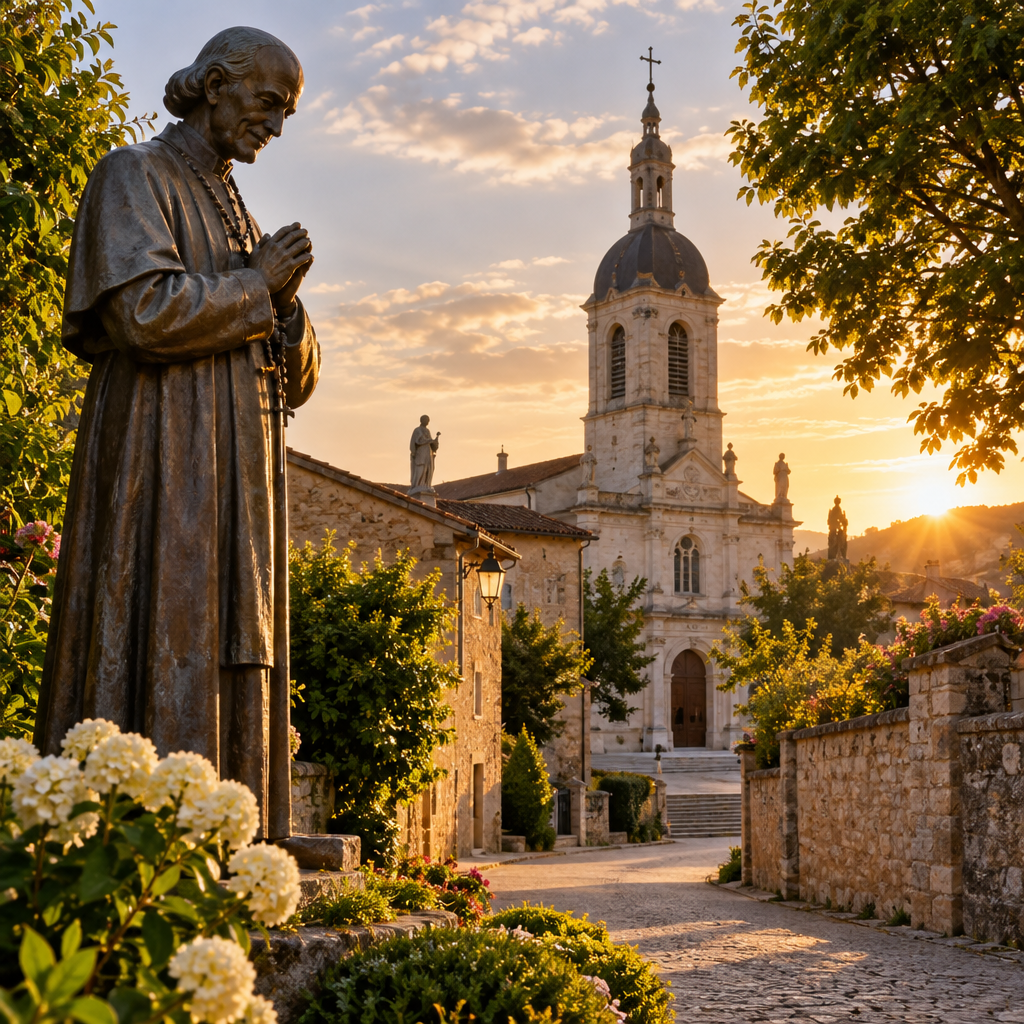
Some pilgrimage places draw us towards mountains or magnificent vistas. Ars-sur-Formans draws us towards a quieter wonder: the mercy of God at work through one parish priest.
In this small village in the Ain department of eastern France, north of Lyon, St John Vianney spent more than forty years serving his people. A pilgrimage here is an invitation to slow down, pray honestly and rediscover the grace offered through ordinary parish life.
The village that became a place of pilgrimage
Born in Dardilly near Lyon in 1786, John Vianney grew up amid the upheaval of the French Revolution. His path to priesthood was difficult, particularly because of his struggles with academic study and Latin. Ordained in 1815, he was sent to Ars in 1818.
The parish was small, and religious practice had weakened. Vianney began with the essentials: prayer, preaching, visits to families, care for those in need and patient availability to his parishioners. His own life was marked by striking simplicity and demanding penance.
Tradition holds that, while approaching Ars for the first time, he asked a young shepherd for directions and promised, in return, to show him the way to heaven. The encounter remains a cherished image of his vocation: helping people find their way towards God.
Over time, visitors came from far beyond the village. Many sought him out for confession, and he spent extraordinarily long hours listening to penitents. His reputation rested not on worldly success, but on the conviction that no soul was beyond the reach of divine mercy.
Vianney died in Ars in 1859. He was canonised in 1925 and proclaimed patron saint of parish priests in 1929. The title Curé d’Ars simply means the parish priest of Ars.
What to see at the sanctuary
Begin in the old parish church, where Vianney prayed and ministered. Its modest scale helps bring his story close: this was a real parish, with neighbours, daily duties and people carrying private sorrows.
The adjoining basilica, developed after his death, expresses the devotion that grew around him. Here you can pray before the shrine containing his relics. Allow time simply to sit; a pilgrimage need not become a checklist of sacred objects.
Visit the former presbytery, now presented as the saint’s house, when it is open. Its rooms and preserved belongings offer a concrete impression of his austere daily life. They also remind visitors that holiness took shape here through small, repeated acts of faithfulness.
The sanctuary also includes the Chapel of the Heart, associated with the relic of Vianney’s heart, and the large underground church of Notre-Dame de la Miséricorde, used for larger gatherings. Access to particular spaces may vary, so check locally before planning your route.
Beyond the buildings, take a gentle walk through the village. Ars is best approached without hurry, leaving room for silence between visits.
Make room for prayer and reconciliation
For Catholic pilgrims, attending Mass or receiving the sacrament of reconciliation can be the heart of the visit. Check the sanctuary’s current timetable and ask about confession in your language; do not assume an English-speaking priest will always be available.
If you are not Catholic, you are welcome to enter respectfully, sit quietly and bring your hopes or questions before God. Follow local guidance during services; visitors who are not receiving Holy Communion can remain in their place in prayer.
A simple intention might guide the day: pray for your parish priest, seek healing in a strained relationship, or ask for courage to return to prayer.
Getting to Ars-sur-Formans
Lyon is the main regional gateway, with major rail connections and an international airport. From Lyon, a practical public-transport approach is to take a train to Villefranche-sur-Saône, then arrange an onward taxi or check current local bus services to Ars.
The village has no railway station. Bus routes and frequencies can change, particularly at weekends and on public holidays, so confirm both outward and return journeys before travelling. A car offers greater flexibility; use designated parking and follow signs for the sanctuary.
Best time to visit and what to bring
Spring and early autumn often offer comfortable conditions for walking. Summer can be hot and busier, especially around St John Vianney’s feast on 4 August. Winter may be quieter, but daylight is shorter and visitor facilities may have reduced hours.
Bring comfortable shoes, water, weather-appropriate layers and modest clothing for church visits. A small notebook, rosary or prayer book can help you keep the day reflective rather than rushed.
Before setting out, consult the sanctuary’s official information for opening times, services, accessibility and group arrangements. Allow at least half a day, or longer if you hope to attend Mass and pray without watching the clock.
You need not arrive with perfect faith. Bring the life you actually have, and make a little room for God’s mercy.